Quick answer
Choose an Alessi wall clock when the clock is part of the room's design and you want a recognisable Italian piece with a designer story behind it. Choose a standard clock when you need the lowest price, a specific size or finish that matches existing hardware, or a clock for a garage, utility room, or rental where appearance matters least. The trade-off is straightforward: Alessi gives you design authorship and a conversation piece; a standard clock gives you budget and easy replacement.
What actually differs between an Alessi clock and a standard one
The difference is not accuracy. Any quartz movement keeps time to the same practical standard, so the real variables are the designer, the materials, the finish, and how long the design stays in production. Alessi clocks are signed pieces from named designers, produced as part of a catalogue that treats everyday objects as design objects. A standard clock is engineered to a price and a size grid, then sold in volume.
That changes how you shop. With a standard clock you start from dimensions and colour. With an Alessi clock you start from the room and the designer's intent, then check whether the size and finish suit the wall. If you are matching an existing kitchen or hallway scheme, bring a photo of the wall and your cabinet or tile colour when you compare options.
Where each type works best in a UK home
Kitchens and hallways are the two rooms where a wall clock is looked at most often, so they reward a design you actually enjoy. A designer clock for kitchen walls works when the room already has one strong visual element, such as a statement kettle or a colourful jar, and the clock echoes or balances it. In a hallway, a larger clock can carry a bare wall on its own.
Standard clocks win in rooms where the clock is purely functional: a utility room, a garage, a child's bedroom, or a rental property where the fitting may be replaced between tenants. They also win when you need an exact diameter to fit a narrow gap between cabinets, because standard ranges cover more sizes at lower cost.
How to judge an Alessi clock before buying
Check three things in order. First, the designer and the collection, because that is what you are paying for and it tells you whether the piece is a long-running catalogue design or a limited seasonal idea. Second, the materials and finish, since a clock that sits near a hob or a sunny window will age differently from one in a shaded hallway. Third, the size relative to the wall, not the room.
If the listing does not state a specification you need, treat that as a gap rather than guessing. Ask before you buy, or choose a piece whose listed materials you can verify. This is the same discipline that applies across the Alessi range, from tableware to Christmas decorations: the catalogue facts tell you what the object is, and the design tells you why it exists.
The gift question
A designer clock is a stronger gift than a standard clock because it carries a name and a story, which is exactly what makes it harder to buy for someone else's wall. If you do not know the recipient's wall colour or size, choose a smaller piece or a different category entirely, such as a bauble or a serving fork, where fit matters less.
A standard clock is the safer gift only if you know the recipient wants plain and practical. Otherwise the design piece is the one that gets kept.
Trade-offs to weigh before you decide
- Design authorship vs price: An Alessi clock costs more because you are paying for a named designer and a catalogue piece, not for better timekeeping. A standard clock does the same job for less. Pay the difference only if the clock will be seen and enjoyed daily.
- Longevity vs availability: Alessi keeps historical designs in production for decades, as the 5076 pepper castor has been since 1978. Standard clocks are often discontinued and replaced by a near-identical model. If you may need a matching second clock later, buy both now.
- Statement vs fit: A designer clock is usually bought as a focal point, which means size and finish matter more than they do with a plain clock. A standard clock is easier to slot into an awkward gap. Measure the wall and the gap before you choose, not after.
- Gift appeal vs certainty: Design pieces carry a story that makes them memorable gifts, but the wrong size or colour on someone else's wall is a wasted gift. A standard clock is safer but forgettable. If you do not know the recipient's wall, choose a different Alessi category.
Alessi pieces that show the design-first approach
- Gianni a little man holding on tight: The classic kitchen jar reinterpreted by designer Mattia Di Rosa, with the design on the inside and a little man clinging to the lid; the hermetic jar has a glass body and a thermoplastic resin lid. A useful benchmark for the Alessi approach: a functional object where the designer's idea, not the spec sheet, is the reason to buy. If that appeals to you on a jar, it will appeal to you on a clock.
- Caccia: The caccia-163933">caccia-163932">caccia-163931">caccia-163930">Caccia serving fork is designed by Luigi Caccia Dominioni, Livio Castiglioni, and Pier Giacomo Castiglioni, part of the Caccia collection. Shows how Alessi credits named designers and keeps collections in production, which is the same reason a designer clock holds its place on a wall for years.
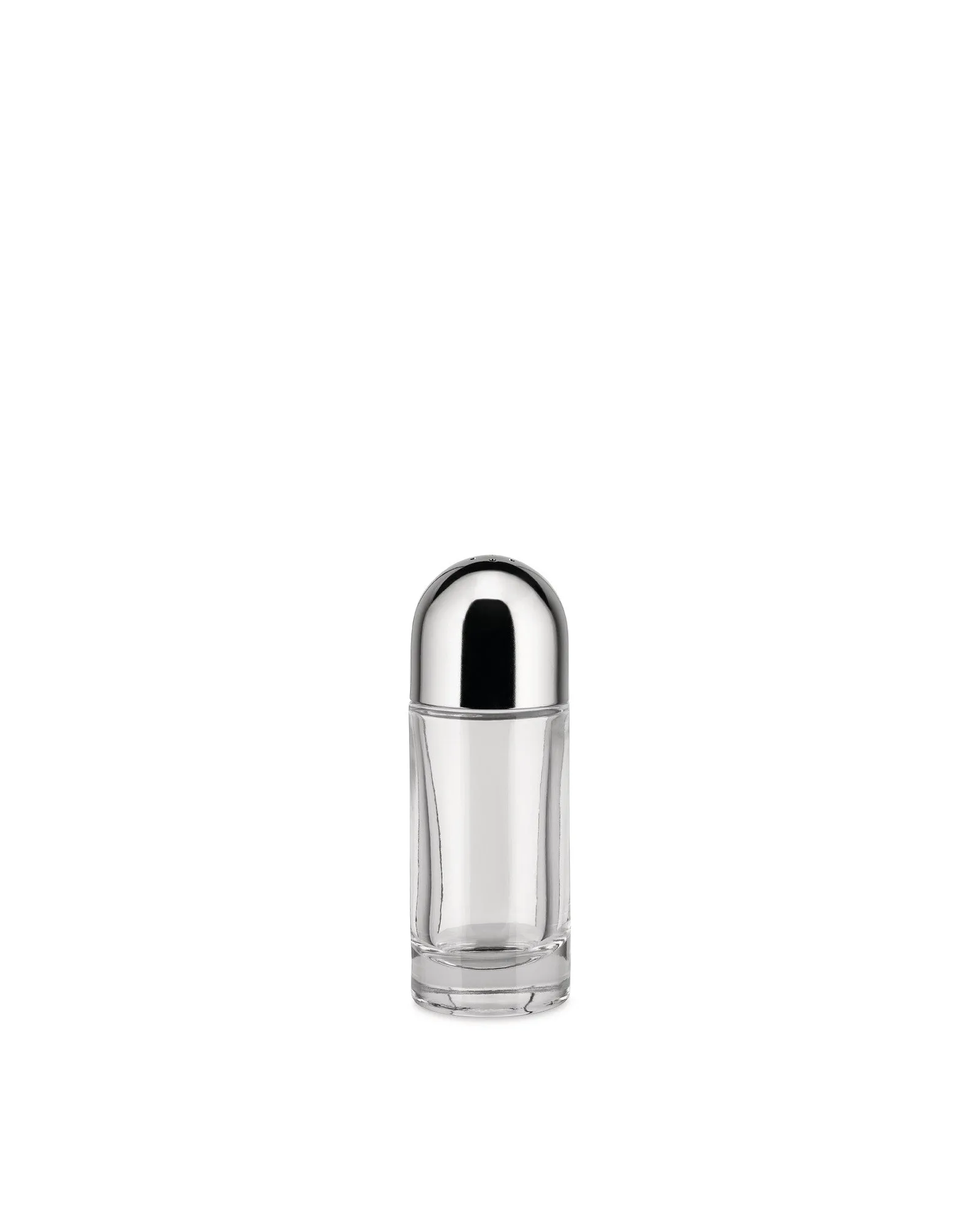
- 5076: The 5076 pepper castor, designed by Ettore Sottsass, has been in the Alessi catalogue since 1978 and is described as an archetype of restaurant and private service. Proof that a well-designed everyday object can stay current for decades. That longevity is the strongest argument for paying more for a designer piece.
- Delight: The Delight Christmas bauble by Nika Zupanc reinterprets traditional baubles in four designs and two sizes, using white, red and gold with stripes, diamonds and spots. If you are weighing a designer clock as a gift, this shows the alternative: a lower-commitment design object that does not depend on wall size or colour.
Which should you choose?
Choose an Alessi wall clock if
- The clock will hang in a kitchen, hallway, or living space where you want a designed focal point
- You value a named designer and a piece that stays in production for years
- You are buying a gift for someone who already collects Italian design
- You are happy to pay more for design authorship rather than timekeeping
Choose a standard clock instead if
- You need the lowest possible price for a functional clock
- The clock is for a garage, utility room, or rental where appearance is secondary
- You need an exact size or finish that only a standard range offers
- You are unsure about the recipient's wall colour or available space