Two Handhelds, One Stadium of Games
If you're choosing between the All-Star Stadium Pocket Player and the All-Star Stadium Nano Player, the main difference is screen size and overall dimensions. Both devices pack the same 7 retro sports titles, but one is built for a slightly larger viewing experience while the other prioritizes maximum pocketability. Here's how they compare.
Screen Size and Game Library at a Glance
-
All-Star Stadium® Pocket Player: The All-Star Stadium Pocket Player features a full color 2.75” screen. The larger screen makes text and fast-moving action easier to see during long play sessions.
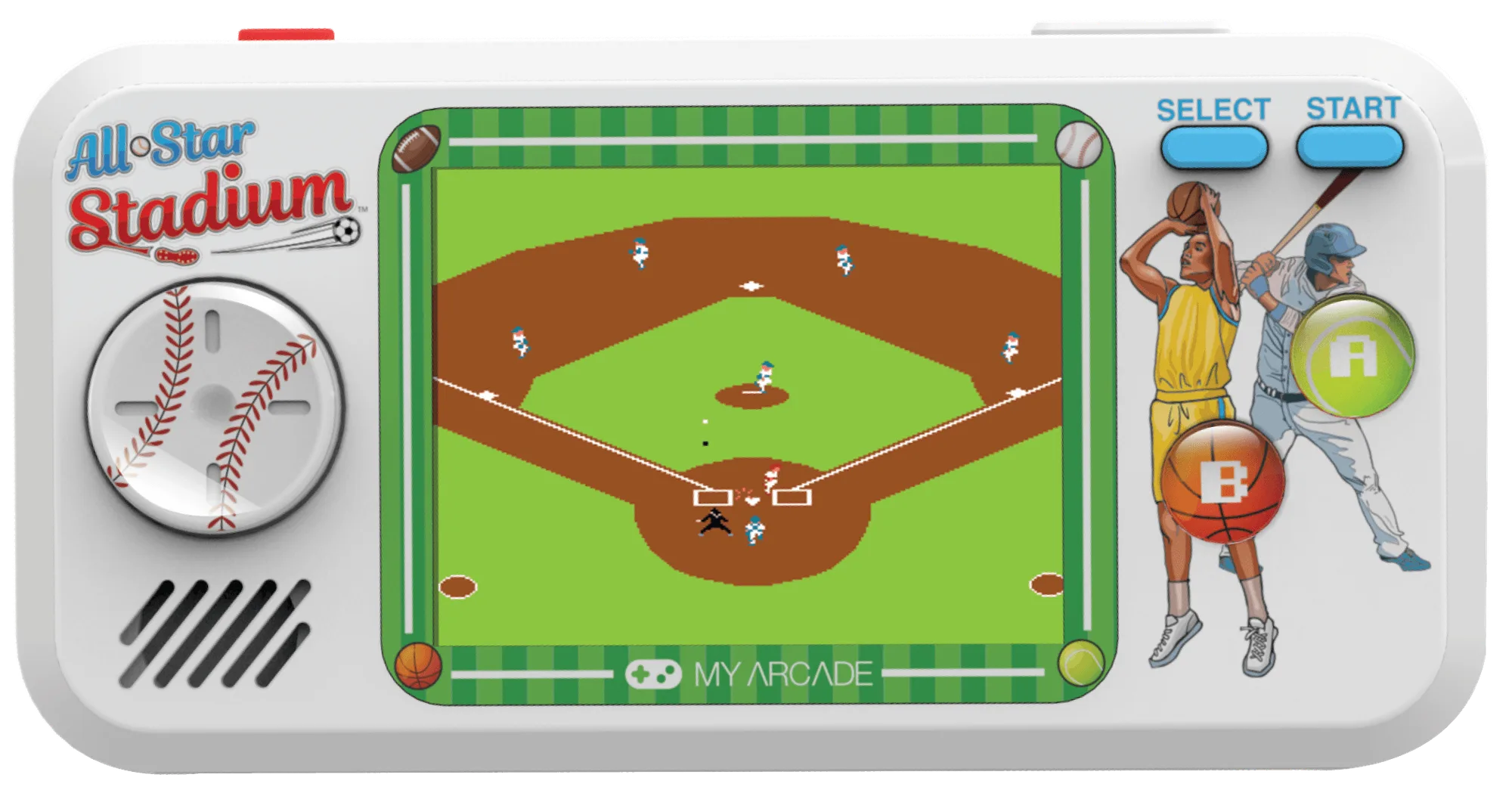
All-Star Stadium® Pocket Player
-
All-Star Stadium Nano Player: The All-Star Stadium Nano Player features a full color 2.4” screen. The slightly smaller screen reduces the device's footprint, making it even easier to slip into a pocket or bag.
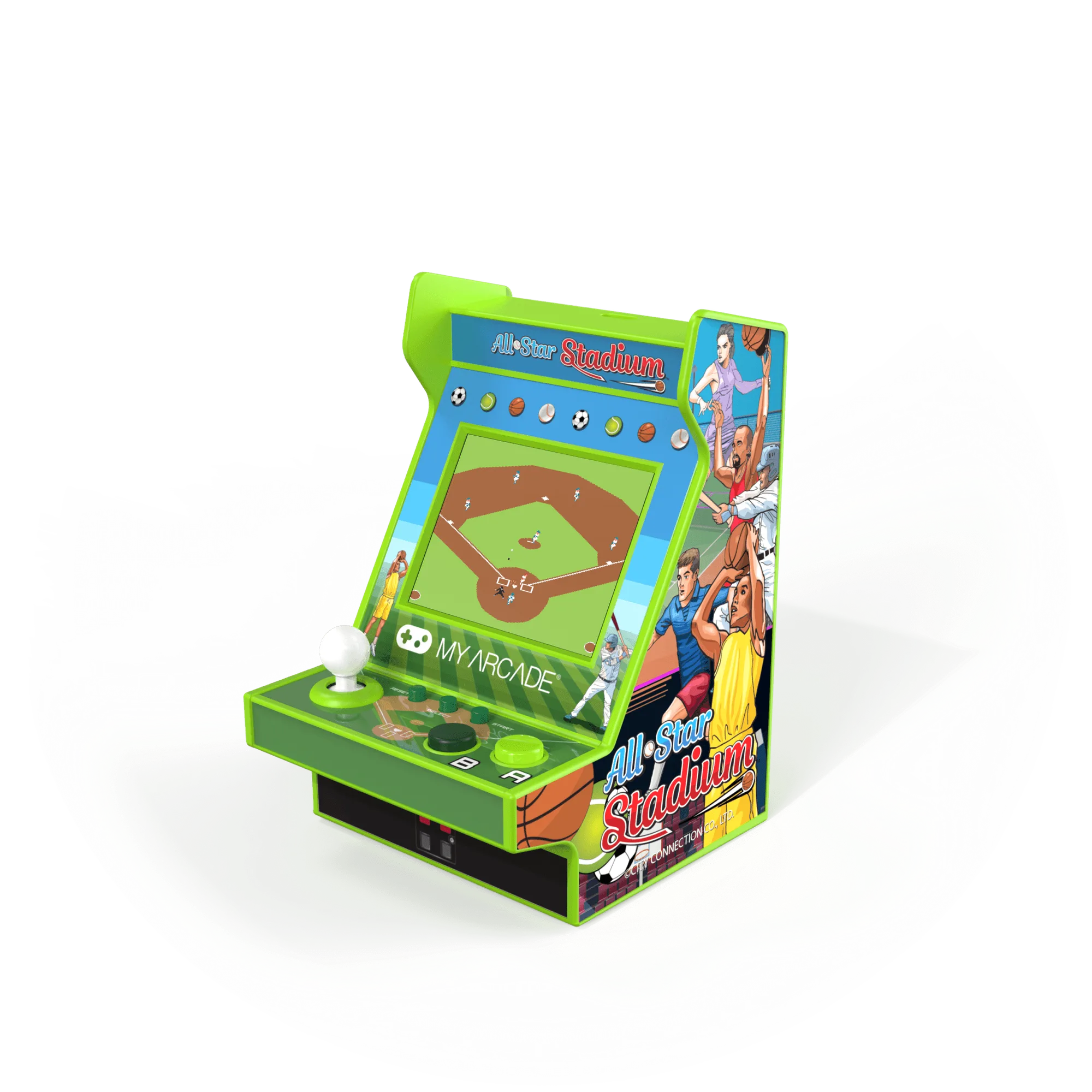
All-Star Stadium Nano Player
Pocket Player vs Nano Player: Key Differences
- Screen Size: Pocket Player: 2.75” screen. Nano Player: 2.4” screen. The difference is noticeable when reading scoreboards or tracking small objects.
- Game Library: Both include BASES LOADED 1-4, GOAL!, RACKET ATTACK, and HOOPS. The Pocket Player also advertises 307 games-in-1, while the Nano Player's catalog lists the same 7 titles without a total count.
- Portability: Both are described as ergonomic and compact, but the Nano Player's smaller screen typically means a smaller overall shell, making it the more travel-friendly choice.
- Price: Pocket Player: $29.59 (catalog comparison $39.99). Nano Player: $25.89 (catalog comparison $34.99). The Nano Player is about $4 less.
Which One Should You Pick?
Choose the All-Star Stadium Pocket Player if you want a larger screen and the full 307-game library. It's better for home or desk play where size matters less. Pick the All-Star Stadium Nano Player if you want the most portable handheld that still plays the same core sports titles. The $4 savings is a bonus, but the real trade-off is screen real estate. Both devices share the same ergonomic emphasis, so comfort is not a deciding factor.