Quick answer
Pack the All-Weather 40L Duffle first with a dry-bag core of clothes and a separate wet zone, then build the All-Weather Dopp Kit as a flat, leak-aware toiletry layer. The order matters more than the gear list.
Why two bags beat one for wet weekends
A single duffle forces clean clothes, damp layers, and toiletries into the same compartment. Splitting the load between the 40L duffle and a dopp kit gives each item a defined home and limits cross-contamination when something leaks or stays wet.
The trade-off is one extra item to carry. If you are moving between hotels or tents, the dopp kit can stay packed while the duffle is repacked daily.
Where the 40L size stops working
Forty liters suits a weekend of layers, one pair of shoes, and a toiletry kit. It gets tight for cold-weather trips with bulky insulation or for travelers who pack multiple pairs of footwear. In that case, use the duffle for soft goods and carry shoes separately rather than overcompressing the bag.
Step-by-step: pack the duffle and dopp kit for a wet weekend
- 1. Start with an empty, dry duffle: Turn the All-Weather 40L Duffle inside out and check the seams and bottom boot for grit or moisture before packing. Common mistake: packing onto a damp base from a previous trip, which traps moisture under your clothes. A dry start is the only way the water-resistant materials protect what is inside.
- 2. Build a dry core in the main compartment: Roll clothes and place them in a dry bag or stuff sack at the center of the duffle, away from the zipper opening. Keep the heaviest items closest to your back if you use the shoulder straps. Common mistake: spreading loose clothes against the shell, where condensation and splashes reach them first. Treat the duffle as a weather shield, not a waterproof container.
- 3. Create a separate wet zone: Put damp layers, rain shells, or muddy footwear in a sealed plastic bag or dedicated stuff sack at one end of the duffle. Common mistake: stuffing wet items into the same compartment as clean clothes and assuming the TPU coating will keep everything dry. Isolation, not coating, keeps clean clothes dry.
- 4. Pack the dopp kit flat and upright: Lay the All-Weather Dopp Kit open and load the zippered pocket with leak-prone items such as liquids, then use the mesh pocket for items you need to see fast. Close all caps and place the kit upright in the duffle. Common mistake: overfilling the kit so the zipper strains and the shape collapses. A flat, upright kit is easier to grab and less likely to leak under pressure.
- 5. Place the dopp kit at the top of the load: Set the dopp kit near the duffle opening, above the dry core, so it is the first thing you reach. Common mistake: burying toiletries at the bottom, which forces you to unpack the whole duffle at check-in or at camp. Access order should match your first-night routine.
- 6. Close, compress, and test the carry: Zip the duffle fully, then lift it by the shoulder straps to check balance. Adjust the sternum strap if you will carry it hands-free. Common mistake: leaving the dopp kit loose so it slides to the bottom during carry. A quick lift test catches shifting loads before you leave.
Product facts that shape the packing plan
-
All-Weather 40L Duffle - Buckskin Camo: 300D ripstop main body with a 600D Oxford bottom boot, both treated with TPU to resist water entry. The reinforced base handles wet campsite floors while the lighter body keeps the bag manageable for a 40L weekend load.
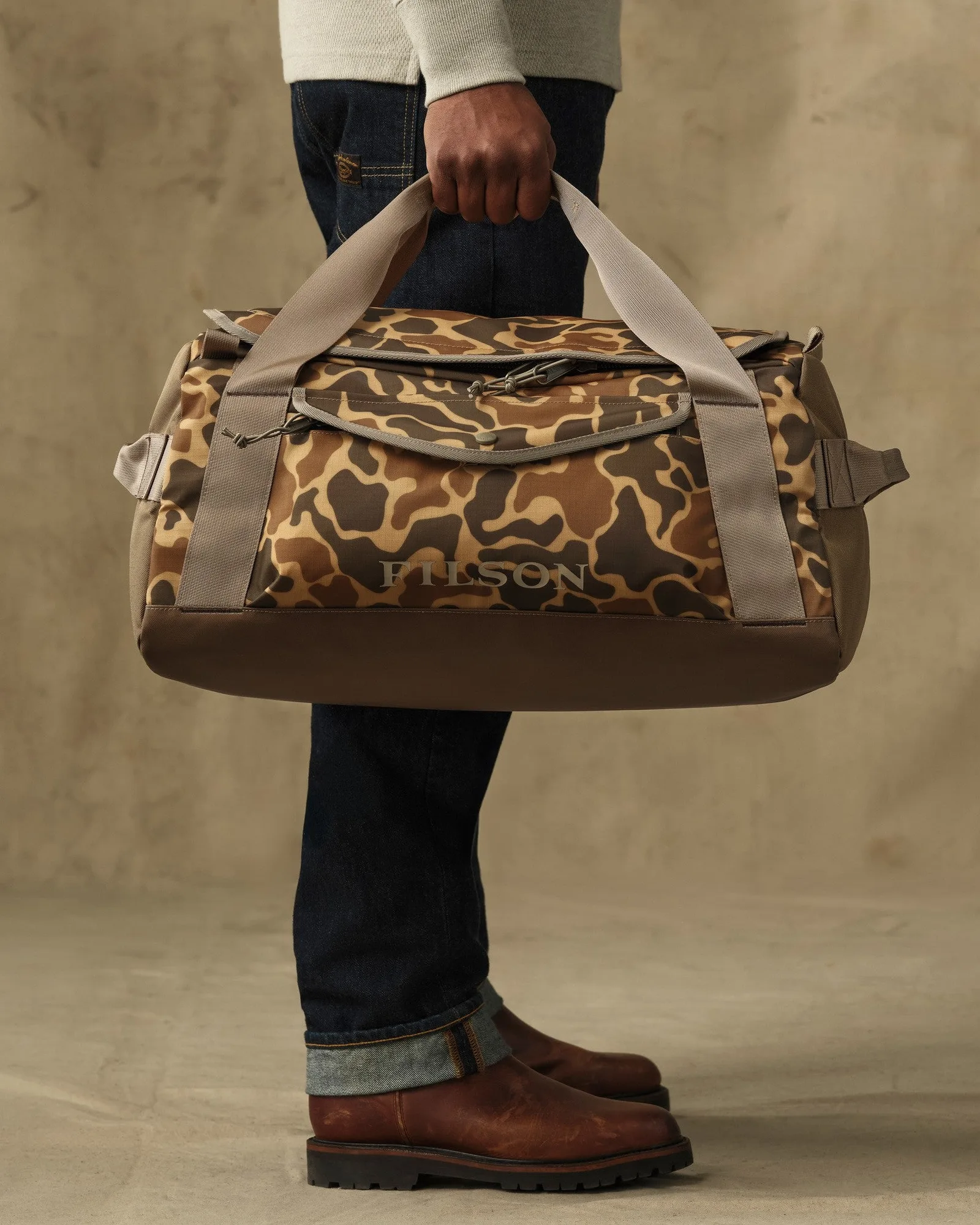
All-Weather 40L Duffle - Buckskin Camo
-
All-Weather Dopp Kit - Buckskin Camo: 300D TPU-coated polyester shell with a 600D reinforced base and two interior pockets, one mesh and one zippered. The separate pockets let you isolate small items and see them quickly, which reduces the chance of a leak spreading inside the kit.
All-Weather Dopp Kit - Buckskin Camo
All-Weather Dopp Kit - Buckskin Camo