Two lead types, two different connection problems
Alligator clips and breadboard jumper wires both make temporary connections, but they solve different problems. Alligator clip test wires grip component leads, battery terminals, and bare wire ends, while breadboard jumper wires plug into a breadboard's grid. Choosing between them starts with the physical connection point, not the project name.
The Kunkune catalog offers a 10-piece double-ended alligator clip set and a 65-piece jumper wire kit. Each has a clear role in a prototyping bench, and the evidence below shows where each one fits.
Connection type: clip-on vs plug-in
The two products differ most in how they attach to a circuit. That difference determines which one you reach for first.
- Alligator clip test wires: Double-ended alligator clips create temporary electrical connections between two points without soldering. The spring-loaded jaws grip component leads, battery terminals, and bare wire ends, and allow quick repositioning. They are a natural fit for continuity testing, battery pack assembly, and breadboard-to-component connections.
- Breadboard jumper wires: The 65pcs Jumper Wire Cable Jumpers are designed for breadboard use. They fit all breadboards according to the supplied record, and the set includes lengths of 25cm, 20cm, 16cm, and 12cm, grouped by size for quick selection.
What the alligator clip set gives you
-
10pcs Alligator Clips Double End Test Wire: 10-piece set with five colour-coded pairs (red, green, yellow, white, black), each colour appearing twice. Colour coding supports consistent polarity marking and signal tracing when several connections run at once.
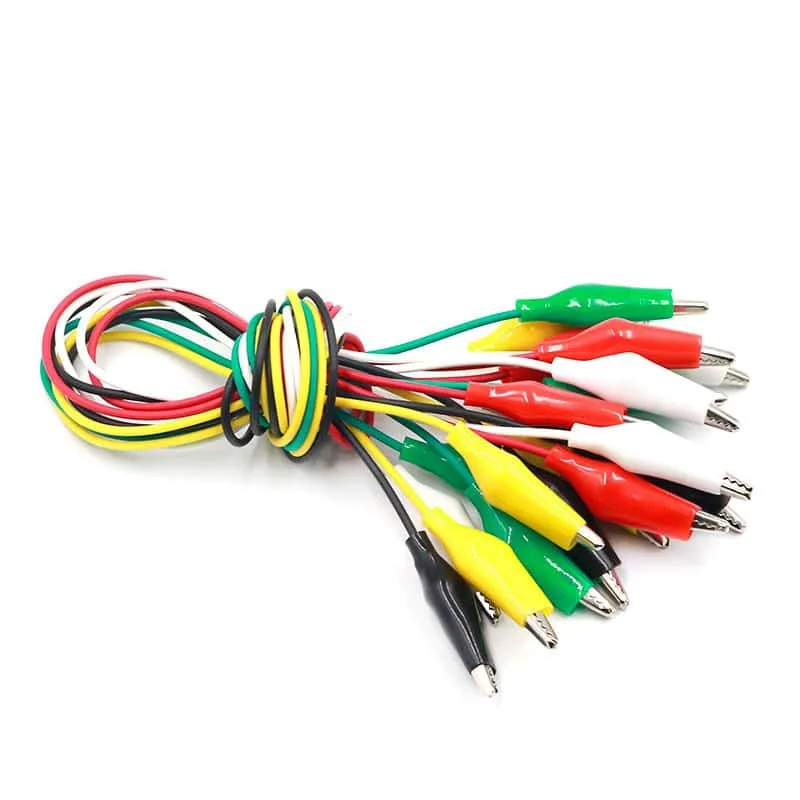
10pcs Alligator Clips Double End Test Wire
-
10pcs Alligator Clips Double End Test Wire: Each test lead measures 46cm in total length; clips measure 24mm. The 46cm reach suits compact workspaces, and the 24mm clip size is intended for small-gauge wire, PCB test points, and standard through-hole component leads.
-
10pcs Alligator Clips Double End Test Wire: Larger terminals may require heavy-duty clips with wider jaw openings. If your target is a large battery post or thick terminal, these clips may not grip securely; plan for a different lead.
What the 65-piece jumper wire kit gives you
-
65pcs Jumper Wire Cable Jumpers for Breadboard: 65 pieces in assorted lengths of 25cm, 20cm, 16cm, and 12cm, grouped by size. Having four lengths on hand reduces the need to chain wires or stretch a connection across a breadboard.
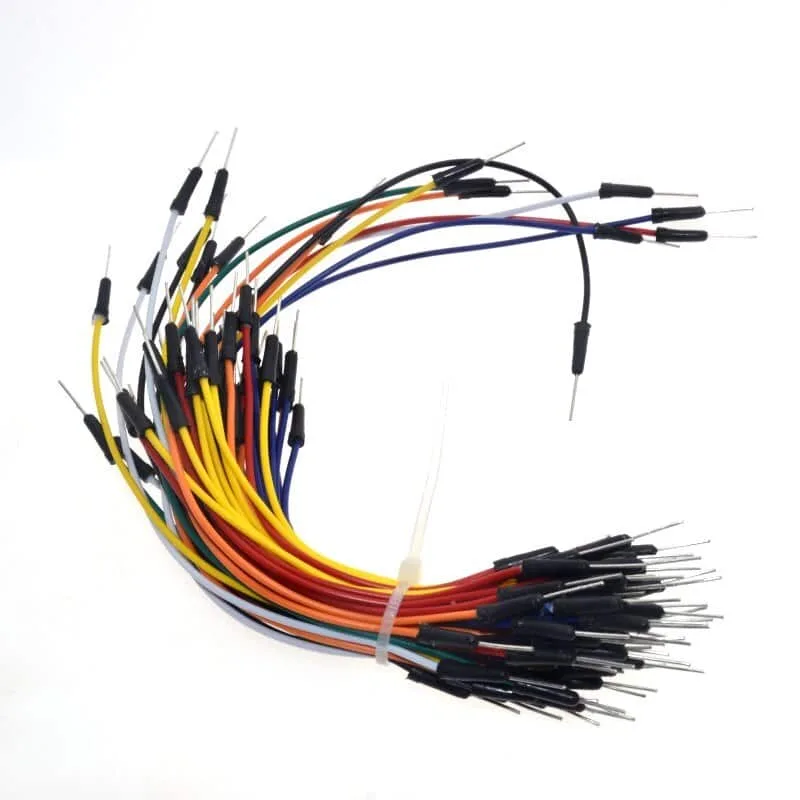
65pcs Jumper Wire Cable Jumpers for Breadboard
-
65pcs Jumper Wire Cable Jumpers for Breadboard: Designed to fit all breadboards, with a snug and secure fit according to the supplied record. If your prototype is built on a breadboard, these are the leads that match the board's socket spacing.
Reach and workspace fit
Length matters when your components are spread out. The alligator leads offer a single 46cm length, which the record notes suits compact workspaces. For larger projects, the record suggests users may need to chain multiple leads or source longer alternatives.
The jumper wire kit provides four lengths from 12cm to 25cm. That range covers short hops between adjacent breadboard rows and slightly longer runs across a board, but it is not intended for long-distance connections off the breadboard.
- Short, dense breadboard layouts: The 12cm and 16cm jumper wires keep wiring tidy without excess loop.
- Medium runs across a breadboard: The 20cm and 25cm jumper wires handle rows farther apart.
- Connections to off-board parts: Alligator clips grip bare wire ends and component leads, so they bridge between a breadboard and a part that has no breadboard-friendly pin.
A practical way to choose
Use this sequence to decide which lead type to buy first, or whether you need both.
- Identify your connection points: If every connection lands in a breadboard socket, the 65pcs jumper wire kit covers the job. If you need to grip a battery terminal, a bare wire end, or a component lead, alligator clips are the better match.
- Check the size of what you are gripping: The alligator clips measure 24mm and are sized for small-gauge wire, PCB test points, and standard through-hole leads. Larger terminals may need heavy-duty clips with wider jaws.
- Count your simultaneous connections: The alligator set provides five colour-coded pairs, which helps when several connections run at once. The jumper kit provides 65 pieces, so it covers a densely populated breadboard.
- Plan for mixed setups: Many prototypes use both: jumper wires inside the breadboard and alligator clips to reach a battery pack or an off-board component. Buying both is reasonable if your build crosses that boundary.
What the supplied information does not confirm
Neither record states a maximum voltage or current rating, so check your circuit's requirements against the lead specifications before use. The alligator record does not confirm clip material or insulation rating, and the jumper wire record does not confirm wire gauge. The jumper wires are described as fitting all breadboards, but the record does not list specific breadboard models. If your project depends on a particular rating or fit, verify it before relying on either product.