Start with what the Aloha Flag - TAN is made of
The Aloha Flag - TAN is a hand-made flag built from washed tan canvas with an off-white hand-screen print. Each flag is topped with natural twine and twill tape and stamped with Slightly Choppy branding. The size is 12" x 20", give or take, so expect slight variation from piece to piece.
That combination matters for care: washed canvas is a textured, matte fabric that can hold dust and show marks, while the off-white print sits on top of the tan ground. The twine and twill tape top adds a natural-fiber element that reacts differently from the canvas. Before you clean anything, identify which part you are treating — canvas, print, or twine top — because each needs a different level of caution.
Aloha Flag - TAN details that shape your care plan
-
Aloha Flag - TAN: Washed tan canvas with off-white hand-screen print. The tan ground is the largest surface and the most likely to show dust, smudges, and handling marks. The off-white print is a separate layer, so cleaning that is safe for the canvas may not be safe for the print.
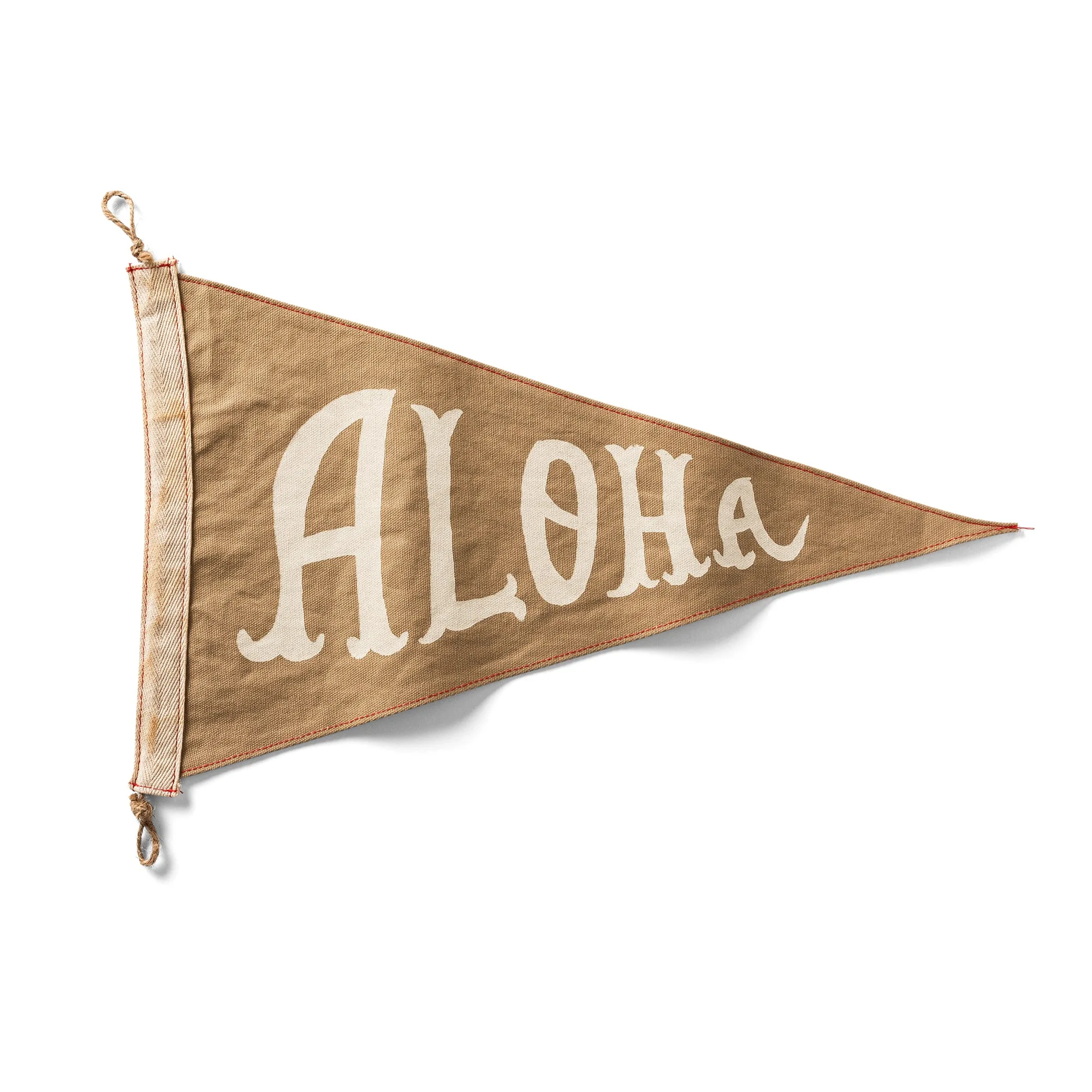
Aloha Flag - TAN
-
Aloha Flag - TAN: Natural twine + twill tape top, stamped with Slightly Choppy branding. Natural twine can absorb water and lose shape if soaked. Keep cleaning focused on the canvas and avoid saturating the top unless you can dry it thoroughly.
-
Aloha Flag - TAN: Size: 12" x 20", give or take. The modest size makes spot cleaning practical — you can work on a small area without wrestling a large flag — but the hand-made variation means no two flags are identical, so test any method on a hidden corner first.
What actually makes a tan canvas flag look dirty
Tan canvas is honest about dirt. Unlike dark fabrics that hide dust, a washed tan surface shows everyday accumulation: airborne dust settling into the weave, finger oils from handling, and occasional splashes. The off-white print can also pick up grime along its edges.
The goal is not to scrub the flag back to factory-new — it is hand-made and slightly varied by design. The goal is to remove surface soil before it works into the fibers, and to avoid the two things that cause real damage: overwetting the twine top and rubbing the print too hard. If a mark does not come off with gentle methods, that is a sign to stop rather than escalate.
A gentle cleaning sequence for the tan canvas
These steps are general guidance for a screen-printed canvas flag; the supplied product information does not include a manufacturer cleaning procedure, so treat this as a careful starting point and test first.
- Test on a hidden area: Dampen a small cloth and dab an inconspicuous corner of the canvas. Let it dry fully and check that the tan color and the print edge look unchanged before continuing.
- Dust first, wet second: Brush or gently vacuum loose dust from the canvas before introducing any moisture. Wetting dust can turn it into a mud-like mark that is harder to lift.
- Spot clean with a barely damp cloth: Use a soft, light-colored cloth wrung out until nearly dry. Work from the outside of the mark inward with light dabs rather than scrubbing, and keep the twine top out of the wet zone.
- Rinse by blotting, not soaking: Blot with a clean damp cloth to lift residue, then press with a dry towel. Do not submerge the flag or run it under a tap — the twine and twill tape top are natural materials that can distort when soaked.
- Air dry flat and shaped: Lay the flag flat or hang it with support so the canvas dries in its intended shape. Keep it out of direct sun while drying, and make sure the twine top dries completely before storage.
Prevent flag stains before they set
- Keep hands clean and dry: Most handling marks on tan canvas come from natural skin oils. Lift the flag by the twill tape top when possible rather than gripping the printed face.
- Choose the display spot deliberately: Avoid hanging the flag where cooking splatter, open windows, or high-traffic brushing can reach it. A 12" x 20" flag is small enough to relocate easily if a spot proves risky.
- Rotate and dust regularly: A light dusting with a soft dry brush or a vacuum on low suction with a brush attachment keeps grit from settling into the weave. Do this before dust becomes visible.
- Address marks promptly: Fresh marks lift more easily than set ones. If something lands on the canvas, blot it gently while it is still fresh rather than waiting.
Storage that protects the twine top and the print
For aloha flag storage tips, the main risks are creasing the canvas, crushing the twine top, and trapping moisture. Store the flag flat if you have the space, or roll it loosely around a clean tube with the printed side facing out. Avoid folding along the print, since a hard crease can stress the screen-printed layer.
Keep the flag in a dry, dark place. The twine and twill tape top should be fully dry before storage — a slightly damp twine stored in a closed box is an invitation for mustiness. If you stack other items on top, place the flag on top of the pile rather than underneath.
Keeping tan flags bright without harsh treatment
Brightness on a tan flag is mostly about cleanliness and light exposure, not bleaching. Do not use chlorine bleach or optical brighteners on the washed tan canvas — they can alter the tan tone and are not supported by the supplied product information. Instead, focus on regular dusting and prompt spot cleaning.
For display, keep the flag out of prolonged direct sun. The supplied information does not specify lightfastness for this print, so the honest approach is to limit strong sun exposure as a precaution rather than assume the colors are immune. If the flag lives near a bright window, rotating it occasionally spreads any fading evenly rather than concentrating it in one area.
What the Aloha Flag - TAN listing does not tell you
The supplied product information does not include a manufacturer care label, washing instructions, or specific cleaning agents. It also does not state whether the canvas is pre-shrunk or how the print responds to water and detergent. That means any cleaning method beyond light dusting and spot cleaning carries some risk you are accepting.
If the flag has sentimental value or a mark that worries you, the safest path is to treat it as a display piece and avoid aggressive cleaning. The hand-made nature and the 12" x 20" size, give or take, mean the flag is meant to have character — a little variation in the tan tone over time is part of that, not a defect to scrub away.