The real difference is in the head, not the legs
The Alta Pro 3VLT 235AV 10 and 235AV 12 share the same core tripod design: a super light CNC machined aluminium travel tripod with a built-in levelling base and 5-section, 23mm diameter legs. Both fold to 54cm and reach 148cm without extending a central column. The decision comes down to the video head fitted on top, and the small weight difference that follows.
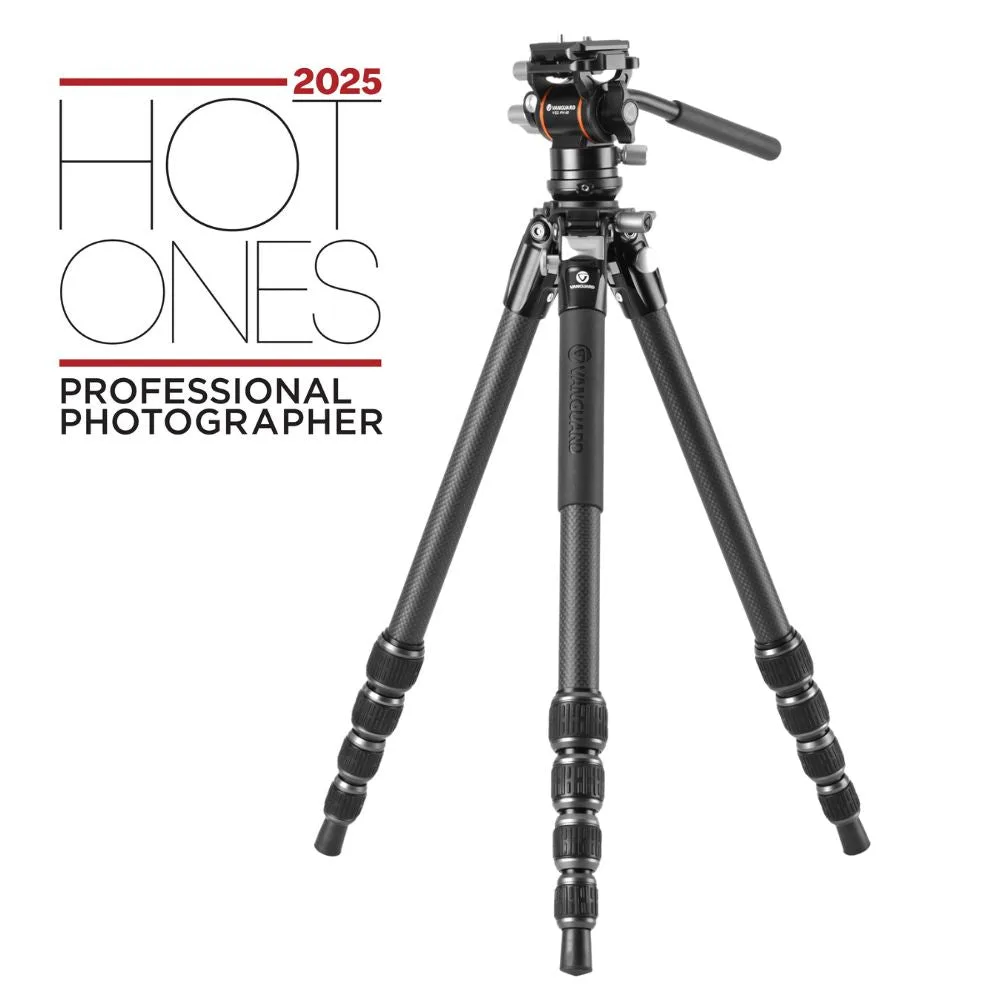
The 235AV 10 uses the closed bridge VEO PV-10 head, while the 235AV 12 uses the open bridge VEO PV-12. Vanguard describes the open bridge as saving a little weight without compromising stability, whereas the closed bridge has two points of contact either side of the body. That design choice affects the head weight and the overall kit weight, but both kits are rated to the same 5kg load capacity.
Head and kit weight: what the numbers say
-
Alta Pro 3VLT 235AV 10 - Aluminium Travel Tripod with levelling base and video head - 5kg load capacity: The closed bridge VEO PV-10 Arca compatible video head weighs just 370g, and the complete tripod weighs 1560g. The PV-10 is the heavier of the two heads, so the 235AV 10 kit is 35g heavier overall. That is unlikely to matter for most users, but it is the only weight penalty for the closed bridge design.
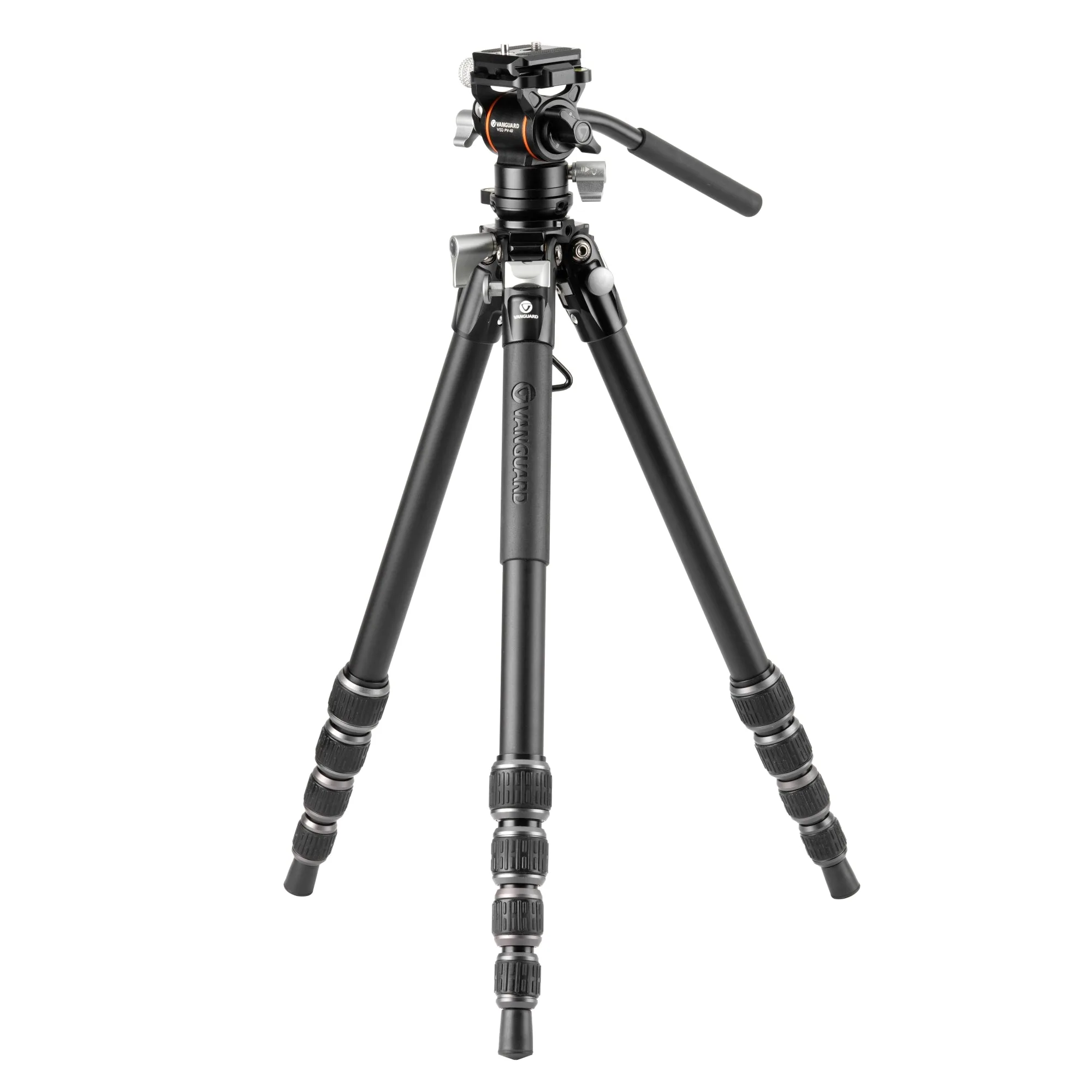
Alta Pro 3VLT 235AV 10 - Aluminium Travel Tripod with levelling base and video head - 5kg load capacity
-
Alta Pro 3VLT 235AV 12 - Aluminium Travel Tripod with levelling base and video head - 5kg load capacity: The open bridge VEO PV-12 Arca compatible video head weighs just 335g, and the complete tripod weighs 1525g. The PV-12 saves 35g on the head and the same on the kit. If you are counting every gram for travel, the 235AV 12 is the lighter package.
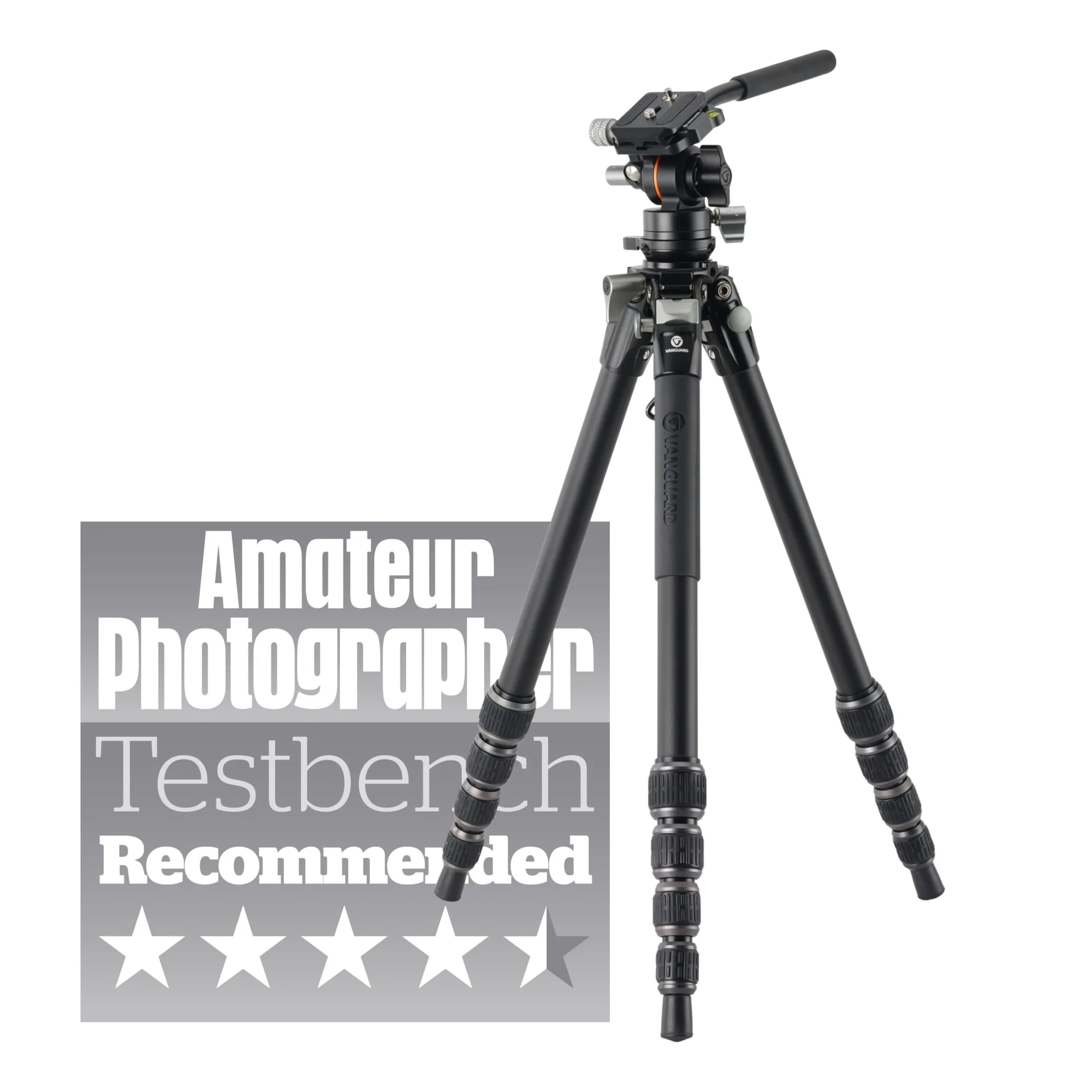
Alta Pro 3VLT 235AV 12 - Aluminium Travel Tripod with levelling base and video head - 5kg load capacity
Closed bridge vs open bridge: what changes in use
Both heads are Arca compatible and supplied with the compact QS-56P quick shoe, which includes a non-twist spring pin to keep your camera facing forwards. Both offer smooth fluid movement with a single 215mm handle that folds down for packing. The difference is in the bridge structure: the PV-10 has two points of contact either side of the body, while the PV-12 has one point of contact to save weight.
Vanguard states that the open bridge design saves a little weight without compromising stability. The closed bridge is the traditional design with two contact points. Neither head is described as more stable than the other in the supplied information; the choice is between the traditional closed bridge and the lighter open bridge. If you prefer the feel of a traditional head or simply want the kit with the most substantial head, the 235AV 10 is the one. If you want the lightest possible kit and are comfortable with an open bridge design, the 235AV 12 makes sense.
Shared levelling base and leg set
- Alta Pro 3VLT 235AV 10 - Aluminium Travel Tripod with levelling base and video head - 5kg load capacity: A built-in levelling base with a 45mm base replaces the traditional central column, and it includes a spirit bubble and can be rotated 360° or moved ±15° vertically. This is the feature that makes both kits a video tripod with levelling base. You can level the tripod quickly without adjusting leg lengths, which is useful on uneven ground.
- Alta Pro 3VLT 235AV 12 - Aluminium Travel Tripod with levelling base and video head - 5kg load capacity: The 5-section, 23mm diameter legs have three easy-set leg angles (23°, 50° and 80°) and allow the tripod to go down to just 195mm. Both kits share this leg set, so low-angle and macro shooting capability is identical. The leg angles and minimum height are not part of the decision between the two models.
235AV 10 vs 235AV 12 at a glance
- Video head: 235AV 10: closed bridge VEO PV-10 (370g). 235AV 12: open bridge VEO PV-12 (335g).
- Total weight: 235AV 10: 1560g. 235AV 12: 1525g. The 35g difference comes entirely from the head.
- Load capacity: Both are rated to 5kg, so the choice does not change how much gear you can support.
- Folded length and maximum height: Both fold to 54cm and reach 148cm without extending the central column.
- Levelling base: Both have the same built-in 45mm levelling base with spirit bubble, 360° rotation and ±15° vertical movement.
- Quick release: Both include the Arca compatible QS-56P quick shoe with non-twist spring pin.
Which kit fits your shooting?
Choose the Alta Pro 3VLT 235AV 10 if you want the traditional closed bridge head and do not mind 35g extra. The PV-10 is the more substantial head in the pair, and the kit remains a super light aluminium travel video tripod at 1560g. It suits videographers who prefer a conventional head design and want the reassurance of two contact points.
Choose the Alta Pro 3VLT 235AV 12 if saving weight is your priority. At 1525g it is the lighter kit, and the open bridge PV-12 is designed to save weight without compromising stability according to Vanguard. It is a sensible choice for travel and hiking where every gram counts, or for pairing with a spotting scope where the Arca foot can slot straight into the clamp.
Both kits come with a luxury padded shoulder bag, a 3/8" thread hole with 1/4" adaptor on the canopy for magic arms, and the same 2-year warranty that can be extended to 10 years. Neither kit includes a central column, so if you need one for height beyond 148cm, look elsewhere in the range.
Handling and setup details shared by both
- Alta Pro 3VLT 235AV 10 - Aluminium Travel Tripod with levelling base and video head - 5kg load capacity: The control on the side of the head lets you adjust tilt tension to control the speed of vertical movement, and the head includes a counterbalance that returns it smoothly towards level. This applies to both heads, so smooth tilt control is not a differentiator. You get the same tension adjustment and counterbalance on either kit.
- Alta Pro 3VLT 235AV 12 - Aluminium Travel Tripod with levelling base and video head - 5kg load capacity: The pan-lock knob on the base allows 360° rotation, and the tilt locking knob sets vertical angles between -75° and +90°. Both heads share these ranges, so the decision does not affect pan or tilt limits. The difference remains the bridge design and weight.