Quick answer
Pack the ALTOS-S 20°F Sleeping Bag by compressing it only after it is fully stuffed, bottom-first, into a clean stuff sack. Keep the bag dry and lofted until the morning you leave, and never store it compressed between trips.
Why cold trips demand a different packing routine
A 20°F bag is a three-season tool, not a winter bag. On cold trips, the goal is to protect the bag’s loft and keep moisture out, because a damp bag loses warmth fast. The ALTOS-S 20°F Sleeping Bag uses water-resistant fill, but that resistance is a backup, not a license to pack it wet. If you expect temperatures well below freezing, treat this bag as a layering system and pack an extra liner or insulated pad rather than over-compressing the bag to save space.
Stuff sack vs. storage: two different jobs
Use a stuff sack only for transport. At home, store the bag loosely in a breathable storage sack or hang it uncompressed. The ALTOS-S is designed to be compact when packed, but repeated long-term compression weakens loft over time. If you are trying to pack a sleeping bag small for a flight or a tight pack, accept that the bag will take more space on the way home once it has absorbed some humidity. Plan for that difference instead of forcing the same compression every day.
Step-by-step: pack the ALTOS-S 20°F bag for cold trips
- Start with a dry bag: Turn the bag inside out and check for damp spots or condensation from the last trip. Let it air-dry completely in the shade before packing. Common mistake: packing a bag that feels dry on the outside but is still damp inside the fill. If you feel any coolness or clumping in the fill, dry it longer before you pack.
- Stuff bottom-first, not rolled: Push the foot end into the stuff sack first, then work the rest in loosely. Rolling a sleeping bag traps air and creates uneven pressure. Common checkpoint: the bag should fill the sack without hard folds or tight corners. A bag that goes in easily will come out easily and loft faster at camp.
- Compress only after it is fully inside: Once the bag is fully in the stuff sack, close the drawstring and then use compression straps. Tighten gradually and evenly. Common mistake: yanking straps before the bag is seated, which strains seams and leaves empty space. Stop compressing when the sack feels firm but not rock-hard.
- Keep the packed bag dry in transit: Line your pack with a trash compactor bag or use a waterproof stuff sack. The ALTOS-S has water-resistant fill, but the shell and seams are not a dry bag. Common checkpoint: the packed bag should never sit directly against a wet tent wall or in a puddle at the bottom of your pack. A dry bag liner adds almost no weight and protects the loft that keeps you warm.
- Unpack and loft immediately at camp: As soon as you reach camp, take the bag out of the stuff sack and shake it to distribute the fill. Let it sit loosely while you set up shelter. Common mistake: leaving the bag compressed until bedtime, which shortens the time it has to recover its loft. Give the bag at least 20–30 minutes to loft before you get in.
Product facts
-
ALTOS-S 20°F Sleeping Bag: Water-resistant fill helps the bag stay warm and comfortable in damp conditions. You can pack it with less worry about condensation, but you still need to dry it fully after each trip.
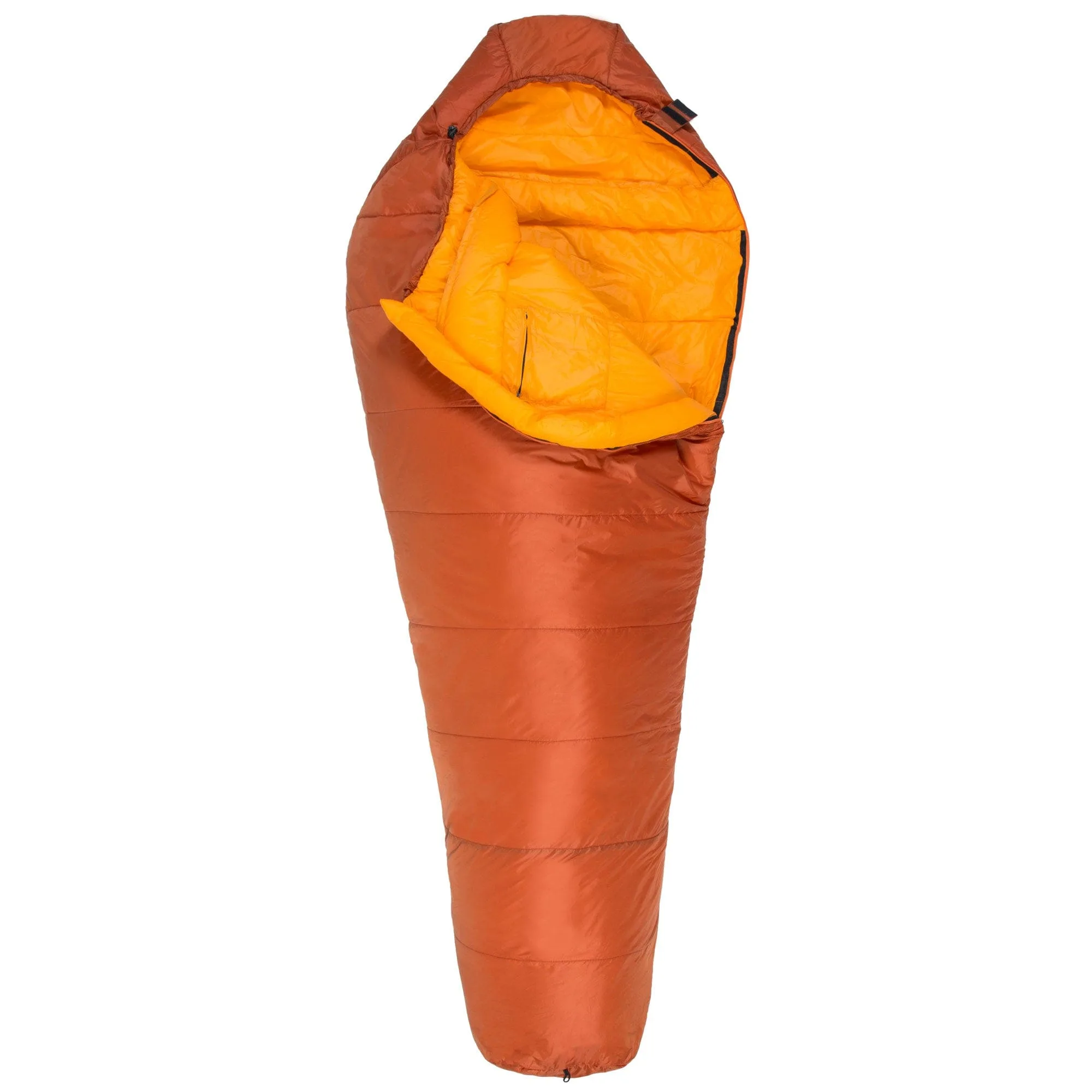
ALTOS-S 20°F Sleeping Bag
-
ALTOS-S 20°F Sleeping Bag: The ALTOS-S provides more room for shoulders, legs, and feet than a narrow mummy cut. That extra room means it may not compress as small as a tight mummy bag, so choose your stuff sack size accordingly.
-
ALTOS-S 20°F Sleeping Bag: The bag is described as compact and lofty when it’s time for bed. Compress it only for carry, then let it loft fully before sleeping to get the warmth the fill is designed to deliver.