Start with the set you actually have
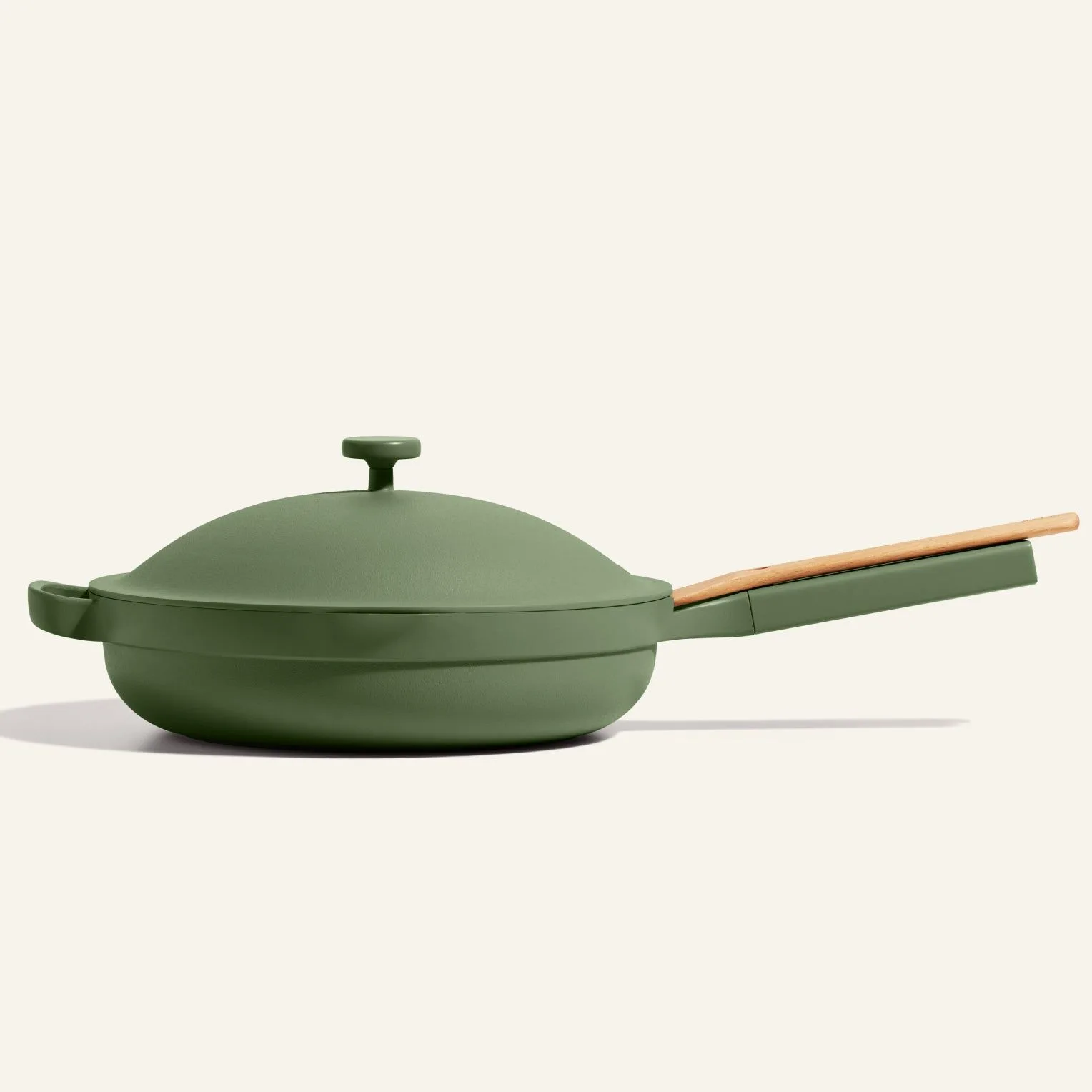
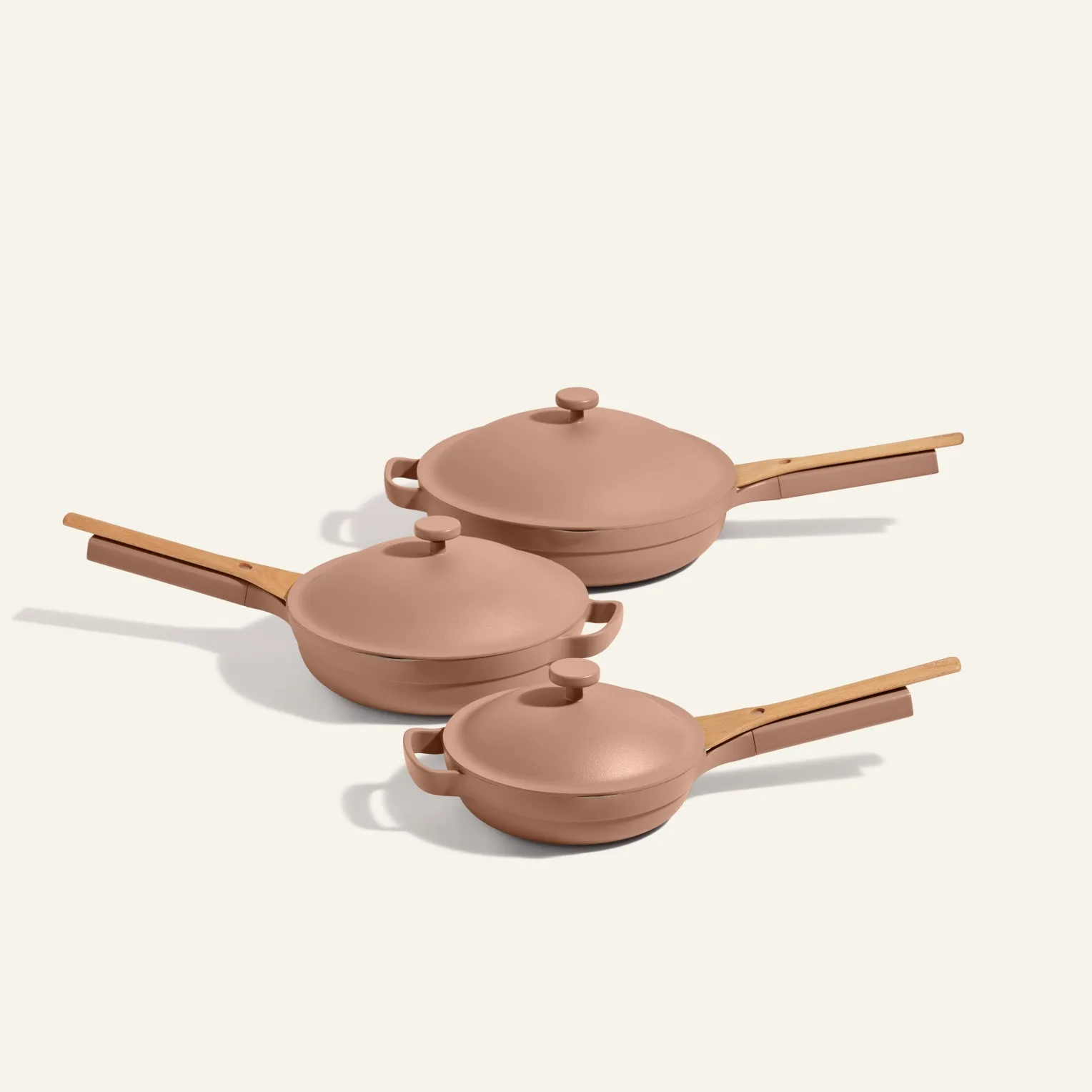
The Always Pan Trio brings together three Always Pans in different sizes. That is the core fact to build your cooking around: you are not choosing between three unrelated pans, but working with a set designed to cover everyday cooking needs. The set is part of the ceramic cookware collection and is available in Spice, Steam, Char, Blue Salt, and Sage.
The supplied information does not list the exact measurements of each pan. That means you should not assume a specific diameter or capacity before you buy. Instead, treat the three pans as a small, medium, and large working group and confirm the actual sizes from the product listing or the pans themselves. From there, the practical question is not “which pan is best?” but “which pan fits this task right now?”
What the Always Pan Trio includes
-
Always Pan Trio: Includes three Always Pans in different sizes for a range of cooking tasks. The different sizes are the reason the set can handle quick weekday meals and larger family dishes without reaching for a fourth pan.
Always Pan Trio
-
Always Pan Trio: Available in Spice, Steam, Char, Blue Salt, and Sage. Color is the main visible choice when you order, so pick a finish that works with your kitchen rather than treating color as an afterthought.
Match each pan to the job in front of you
Because the exact sizes are not confirmed in the supplied information, use the pans themselves to sort out which one is which. A simple way to do that is to assign roles by the amount of food you are cooking, not by a number on the base.
- Smallest pan: quick single portions and small sides: Use the smallest of the three for a single egg, a small sauté of vegetables, or a quick sauce. It heats a smaller amount of food with less empty surface, which is the practical reason to reach for it first when you are cooking for one.
- Middle pan: everyday meals for two: The middle pan is the natural choice for a weeknight dinner for two: a stir-fry, a batch of grains with vegetables, or a one-pan meal that needs a little room to move. It is the pan you will likely use most often.
- Largest pan: family dishes and batch cooking: Use the largest pan when the volume of food goes up: a family-sized sauté, a larger batch of sauce, or a dish you want to spread out rather than crowd. Spreading food out is a cooking technique, not a product claim, and it is easier when the pan has more room.
A simple routine for cooking with three pans
You do not need a special system to use the trio well. A repeatable routine keeps you from dirtying all three pans for a meal that only needed one.
- 1. Read the meal before you reach for a pan: Look at how many components the meal has and how much food each one makes. If one component is a single portion and another is a family-sized batch, you already know you need two different pans from the set.
- 2. Start with the largest pan if you are unsure: When a dish threatens to overflow a smaller pan, begin with the largest pan and move down only if the amount of food is clearly small. This avoids the common mistake of crowding food into the smallest pan because it is already on the stove.
- 3. Use the smaller pans for the quick jobs: While the largest pan holds the main dish, use the smallest or middle pan for a fast side or a sauce. This is where the trio earns its place: three pans let you cook components in parallel instead of one after another.
- 4. Wash and put away as you go: The supplied information does not include specific care instructions for the Always Pan Trio, so follow the care guidance that comes with your pans. What the set does give you is the ability to clean one pan while another is still in use, which keeps the three-pan approach from turning into a sink full of dishes.
Plan a week of meals around three pans
Pan trio meal planning works best when you think in components rather than complete recipes. A grain, a protein, and a vegetable can each take a different pan, and the leftovers become the next day’s meal. The set’s three sizes make that easier because you are not forcing every component into the same pan.
One practical pattern: cook a larger batch of a base in the largest pan early in the week, then use the middle and smallest pans to reheat portions and cook fresh additions. This is not a manufacturer instruction, just a way to use the set’s range of sizes. The supplied information does not include specific cooking times or temperatures, so rely on your own recipe and the pans in front of you.
Which pan to use for what: a quick reference
Use this table as a starting point, then adjust based on the actual size of each pan in your set.
- Smallest pan: Single eggs, small vegetable sides, quick sauces, reheating a portion.
- Middle pan: Everyday meals for two, stir-fries, grains with vegetables, one-pan dinners.
- Largest pan: Family dishes, batch cooking, larger sauces, any dish that needs room to spread out.
What the supplied information does not confirm
The Always Pan Trio listing does not include exact pan dimensions, capacity, oven-safe temperatures, or specific care and compatibility instructions. That absence is a limitation of the supplied information, not a statement that the pans lack those features. Before you buy or cook, check the product page and the care guide that comes with the set for the details that matter to you, especially if you plan to use the pans in the oven or on a particular stovetop.
The set is described as part of the ceramic cookware collection and suited for everyday kitchen use. Beyond that, the supplied facts focus on what the trio includes and the colors available. Treat those as the confirmed points and verify anything else directly with the product information.
The set at a glance
- Always Pan Trio: The Always Pan Trio brings together three versatile pan sizes to cover everyday cooking needs. This is the main reason to buy the set rather than a single pan: the three sizes are meant to cover different jobs in the same kitchen.
- Always Pan Trio: Designed as a cohesive set, it offers practical convenience for preparing everything from quick weekday meals to larger family dishes. It tells you the set is intended to work as a group, which is why assigning roles to each pan makes sense.