Quick Answer
Use the Amazing Insects Glow in the Dark Puzzle as a hands-on science activity by first assembling it in daylight, then turning off the lights to observe which insects glow, and discussing why some creatures produce light.
Why This Puzzle Works for Science Learning
Most puzzles end when the last piece snaps in. This one keeps going because the glow effect turns the completed image into a visual experiment. Kids naturally ask "why do they glow?" which opens a conversation about bioluminescence—a real biological phenomenon used by fireflies, some beetles, and deep-sea creatures.
The 100-piece count is ideal for ages 5+. It's challenging enough to feel rewarding but not so hard that frustration kills the curiosity. The insect theme gives you a built-in biology lesson without needing extra books or videos.
How to Turn Puzzle Time Into a Science Activity
- Assemble in Bright Light: Build the puzzle on a table under a lamp or near a window. Let your child study the insect illustrations—notice colors, leg counts, wing shapes. Common mistake: rushing assembly. Take time to observe the details. Use a magnifying glass to examine the printed insect features before glowing.
- Charge the Glow: Once assembled, expose the entire puzzle to a bright light source for 2–3 minutes. A desk lamp or flashlight works best. Common mistake: using a weak light or charging for only a few seconds, which produces a dim glow. The longer and brighter the charge, the longer and stronger the glow lasts.
- Turn Off the Lights and Observe: Switch off all room lights. Ask your child which parts of the puzzle glow and which stay dark. Compare the glowing shapes to the insect drawings seen in daylight. Common mistake: expecting all insects to glow equally—only certain printed elements are glow-in-the-dark. Have your child draw or describe what they see glowing versus not glowing.
- Discuss Why Some Insects Glow: Explain that real fireflies and certain beetles produce light through a chemical reaction called bioluminescence. Ask: "Why might a bug want to glow?" (to attract mates, warn predators, or lure prey). Common mistake: giving a lecture instead of letting the child guess first. Let your child come up with their own theory before you share the science facts.
- Repeat the Experiment: Recharge the puzzle and try different light sources (sunlight, LED, incandescent) to see if the glow intensity changes. Common mistake: assuming all light sources charge the glow equally. Use a timer to compare how long the glow lasts after each charging method.
Product Facts
-
Amazing Insects Glow in the Dark Puzzle: Turn out the lights to see the insects glow at night. This feature makes the puzzle a reusable science demo, not just a one-time assembly activity.
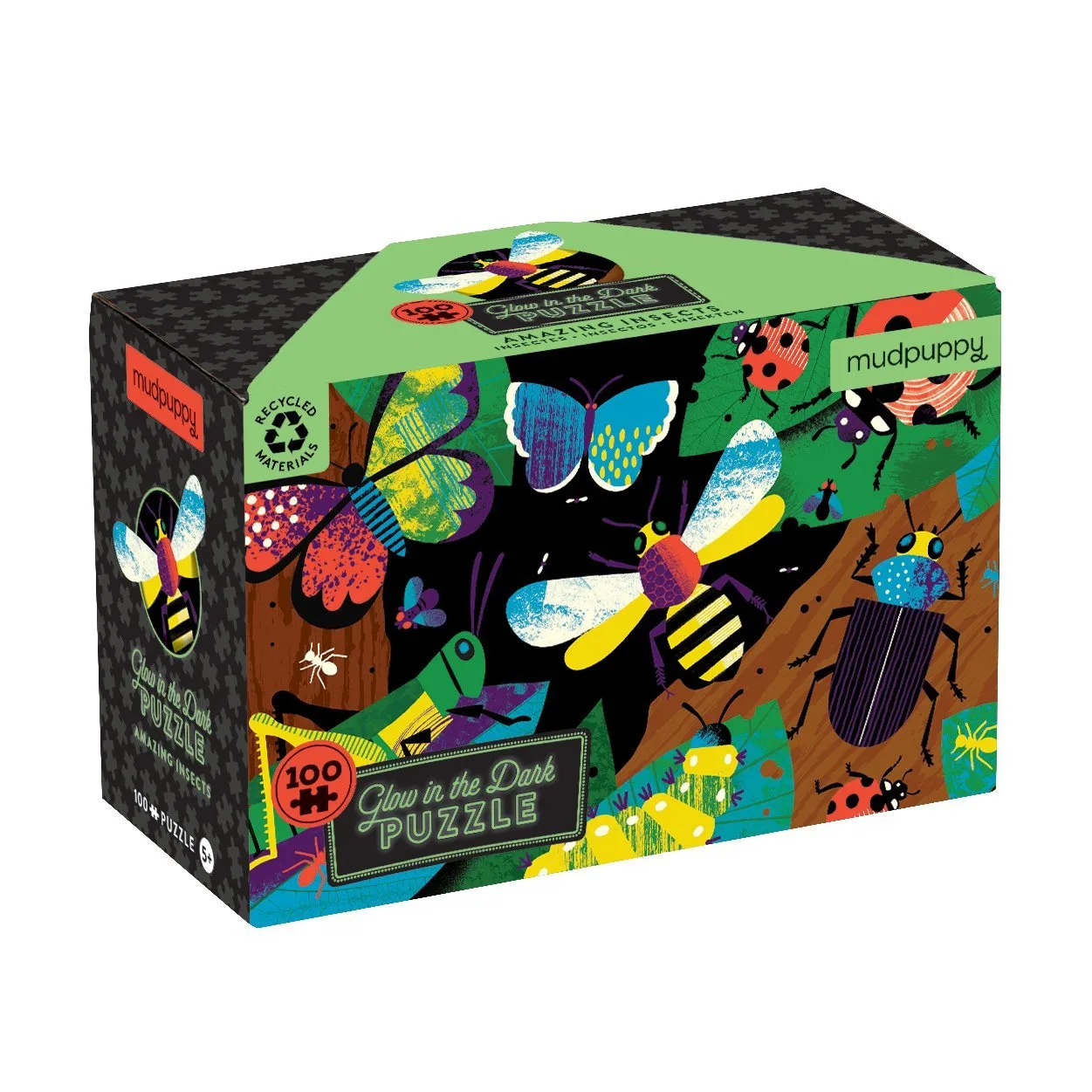
Amazing Insects Glow in the Dark Puzzle