Quick answer
Amber pill cases do help protect light-sensitive medications, but only from ultraviolet (UV) light—not from heat, moisture, or visible light. An amber 7 day pill box is a smart choice for short-term, light-sensitive pills, but it won't replace proper storage for all medications.
What amber actually blocks—and what it doesn't
The amber color in pill organizers is not just cosmetic. It filters out a significant portion of ultraviolet rays, which can degrade certain drugs. However, amber plastic does not block all light, and it offers no barrier against humidity or temperature swings. So while an amber pill case benefits light-sensitive pills, it is not a complete storage solution.
If your medication is sensitive to moisture or heat, you still need to keep it in a cool, dry place—amber or not. The organizer's job is to reduce UV exposure during the week you're using it, not to act as a pharmacy-grade container.
The myth of 'amber means airtight'
A common assumption is that amber cases are sealed against air and moisture. In reality, most weekly pill organizers, including amber ones, are not airtight. They are designed for convenience and UV reduction, not for long-term preservation. If you live in a humid climate or store your pills in a bathroom, moisture can still get in.
Use amber organizers for the week's doses, but keep the original pharmacy bottle for long-term storage. That bottle is typically designed to protect against moisture and light in ways a simple organizer cannot.
When amber matters most—and when it doesn't
Amber protection is most valuable for medications that are explicitly labeled as light-sensitive. Check your prescription insert or ask your pharmacist. If light sensitivity isn't mentioned, a clear organizer may be fine—but amber still offers a margin of safety with no downside.
For vitamins and supplements, amber is a nice bonus but rarely essential. The bigger factor is keeping them dry and away from direct sun. So don't overthink it: if you like the amber look and want extra UV defense, go for it; if not, focus on moisture control.
Myths vs. facts: amber pill organizer edition
- Myth: Amber pill cases protect against all light.: Verdict: Partly false. Amber blocks a minimum of 92% of UV rays, but it does not block all visible light. It's effective for UV-sensitive meds, not a blackout solution. Check if your medication is UV-sensitive; if yes, amber helps, but don't expect total light protection.
- Myth: Amber cases keep pills dry and airtight.: Verdict: False. Amber organizers are not airtight. They don't prevent moisture exposure, so you still need to avoid humid storage spots like bathrooms. Store your amber organizer in a dry place, and keep long-term supplies in original pharmacy bottles.
- Myth: You need amber for all medications.: Verdict: False. Only light-sensitive medications require UV protection. For others, amber is optional—but it doesn't hurt. Ask your pharmacist if your meds are light-sensitive; if not, choose an organizer based on size and convenience.
- Myth: Amber organizers are just a gimmick.: Verdict: False. The amber plastic genuinely filters UV rays, which can degrade certain drugs. It's a functional feature, not just marketing. If you take light-sensitive meds, an amber 7 day pill box is a practical upgrade over clear plastic.
Product facts
-
Amber 7 Day Pill Organizers: Blocks a minimum of 92% of the sun's ultraviolet rays. This means your light-sensitive pills get meaningful UV protection during daily use, reducing the risk of degradation.
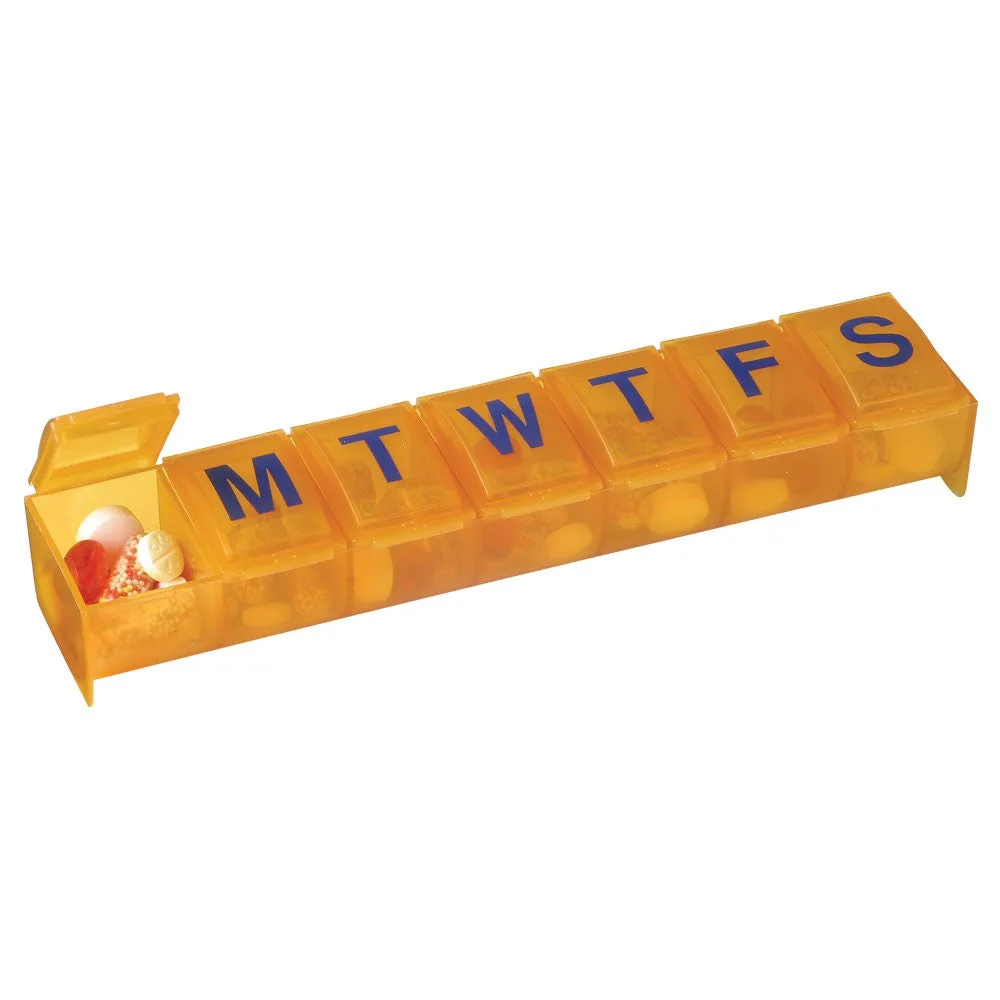
Amber 7 Day Pill Organizers
-
Amber 7 Day Pill Organizers: Each compartment holds 20 aspirin tablets. That capacity gives you a sense of how much medication each day's compartment can hold, so you can plan your weekly fill.