Why Your Ameda HygieniKit Bottles Might Leak
Leaks from breast milk storage bottles are frustrating and wasteful. With the Ameda HygieniKit bottles, the most common cause is an incomplete seal between the bottle and the Lock-Tight cap. The supplied information confirms these bottles are compatible with all Ameda HygieniKit Milk Collection Systems, so the cap and bottle are designed to work together—but only when assembled correctly.
Other potential causes include overfilling (which puts pressure on the seal), temperature changes during freezing (milk expands), or a worn cap that no longer grips tightly. The good news: most leaks are preventable with a few simple habits.
How to Get a Reliable Seal Every Time
The Lock-Tight cap is your first line of defense. Here’s how to ensure it seals properly:
- Align the threads: Place the cap squarely on the bottle rim. Cross-threading is a common cause of leaks, so start by turning the cap counterclockwise until you feel the threads drop into place, then tighten clockwise.
- Tighten firmly, not forcefully: The cap should feel snug with a slight resistance. Over-tightening can distort the cap or bottle threads, creating gaps.
- Check the cap condition: Inspect the cap’s inner seal for cracks, warping, or wear. If the cap no longer clicks or grips, it may need replacement.
What the Ameda HygieniKit Bottle Offers for Leak Prevention
-
Ameda HygieniKit® Breast Milk Storage Bottle with Lock-Tight Cap, 4 Count: Our Breast Milk Storage Bottles can be used to safely store expressed milk in the fridge or freezer. They are clearly marked to measure your milk, and have space for clear labeling. The measurement marks and labeling space help you avoid overfilling—a key step in preventing leaks during freezing.
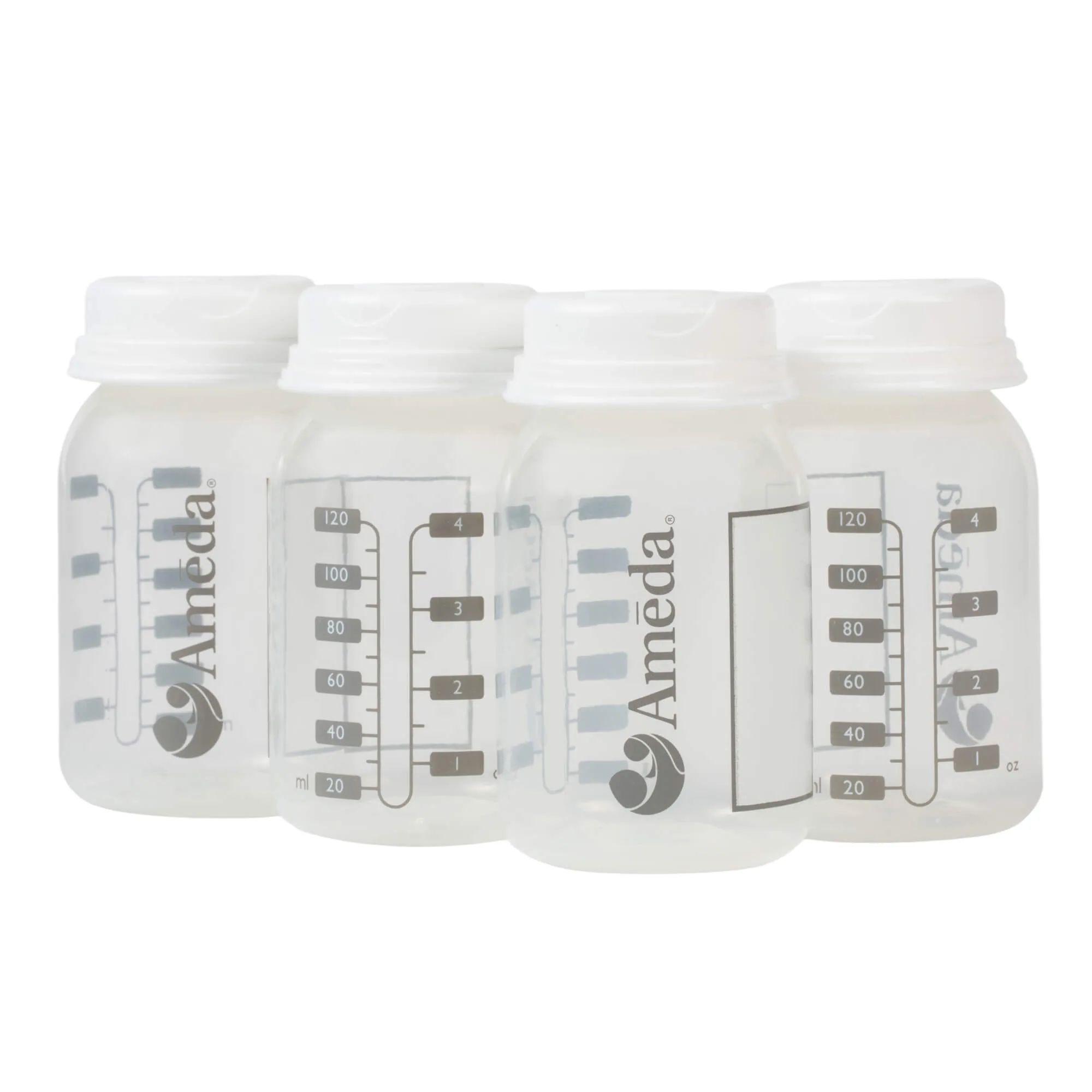
Ameda HygieniKit® Breast Milk Storage Bottle with Lock-Tight Cap, 4 Count
-
Ameda HygieniKit® Breast Milk Storage Bottle with Lock-Tight Cap, 4 Count: They are found in and are compatible with all Ameda HygieniKit® Milk Collection Systems. This compatibility means the bottle and cap are engineered as a system, so using the correct cap (Lock-Tight) is essential for a proper seal.
Storage Habits That Reduce Leak Risk
Even with a perfect cap seal, how you store the bottle affects leak potential.
- Leave headspace for freezing: Milk expands as it freezes. Fill bottles no more than 3/4 full (use the measurement marks) to avoid pressure on the cap.
- Store upright in the fridge or freezer: Lying bottles flat can put weight on the cap seal. If you must store horizontally, ensure the cap is facing upward.
- Avoid sudden temperature changes: Moving a bottle from a warm room directly to the freezer can cause condensation inside and pressure changes. Let it cool in the fridge first.
When Leaks Signal a Replacement Is Needed
If you’ve checked your cap seal and storage method but still experience leaks, the bottle or cap may be worn. The supplied information notes that these bottles are made of polypropylene, without BPA and DEHP, which is durable but not indestructible. Repeated freezing, thawing, and washing can eventually degrade the plastic threads or the cap’s sealing surface.
The Ameda HygieniKit bottles are designed to limit the amount of times you have to transfer milk, reducing mess. But if a bottle develops a crack or a cap no longer seals, replace it. The bottles are available in a 4-count pack, making it easy to rotate fresh ones into your routine.