Quick answer
For most street and race fuel systems, aluminum AN fittings offer the best balance of weight, cost, and adequate strength. Stainless steel is the choice when maximum durability and corrosion resistance are required, such as in off-road or marine environments. PTFE hose, often paired with stainless steel braid, is the premium option for high-pressure and chemical resistance, but it costs more and requires specific hose ends. Your decision should hinge on pressure, environment, and budget.
Choosing the right material for your AN fittings isn't just about bling—it affects weight, durability, and how well your fuel system handles pressure, heat, and corrosion. Aluminum, stainless steel, and PTFE each bring distinct trade-offs.
This comparison breaks down those differences using real product examples from DeatschWerks, so you can match the material to your application without overbuilding or cutting corners.
Aluminum AN Fittings: Lightweight and Affordable
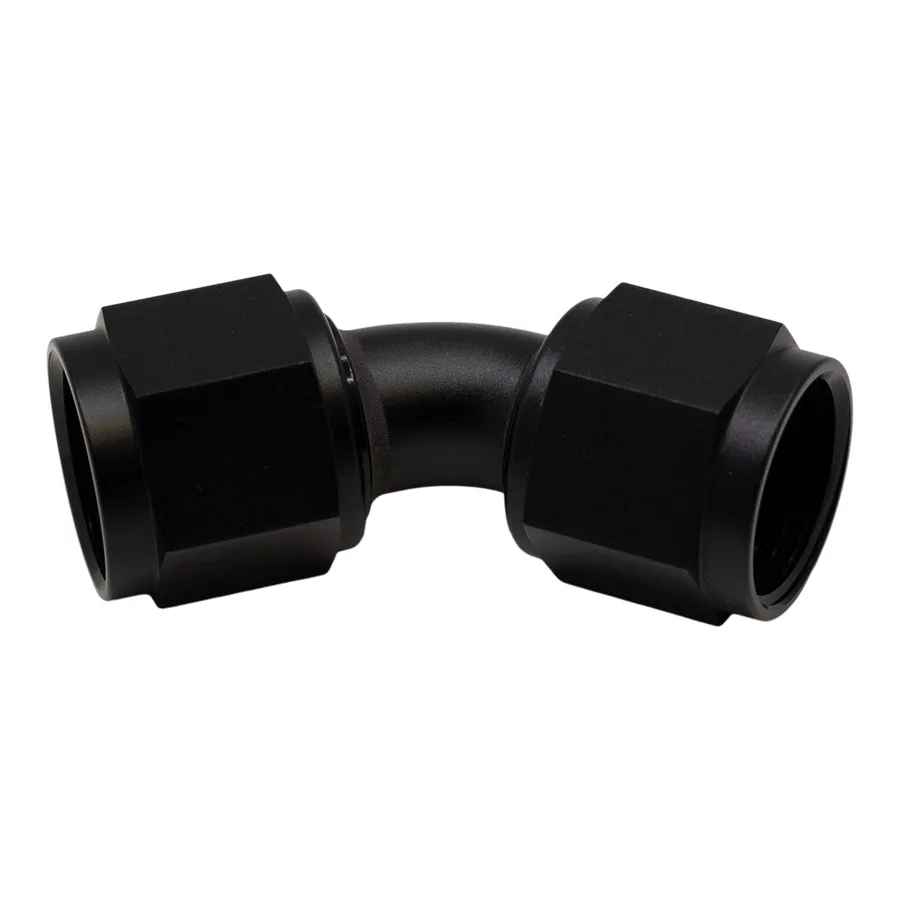
Aluminum AN fittings are the default for most gasoline fuel systems because they're light, relatively inexpensive, and strong enough for typical pressures up to about 100 psi. They're easy to machine into complex shapes, which is why you see so many angled couplers and swivel ends in aluminum. The DeatschWerks https://deatschwerksevz.com/products/6-02-0214-b-a6523b00ba5e8abfb1e55385-267834545-Deg. https://deatschwerksevz.com/products/6-02-0211-b-b5f72e78c7c9472bff0c72c5-267802610AN to 10AN Swivel Coupler is a good example: it connects two 10AN flare female swivel ends at a 45-degree angle and has an anodized matte black finish that resists mild corrosion.
The main trade-off is that aluminum is softer than steel. It can gall if threads are over-tightened or cross-threaded, and it's more susceptible to corrosion from road salt, saltwater, or certain fuels like methanol. For a dedicated race car that gets frequent inspection, that's usually fine. For a daily driver in a harsh climate, you'll want to keep an eye on them or step up to stainless.
- Use aluminum for weight-sensitive builds where every ounce counts.
- Always use a thread sealant or lubricant on aluminum threads to prevent galling.
- Inspect regularly if exposed to salt or alcohol fuels.
Stainless Steel AN Fittings: Maximum Durability
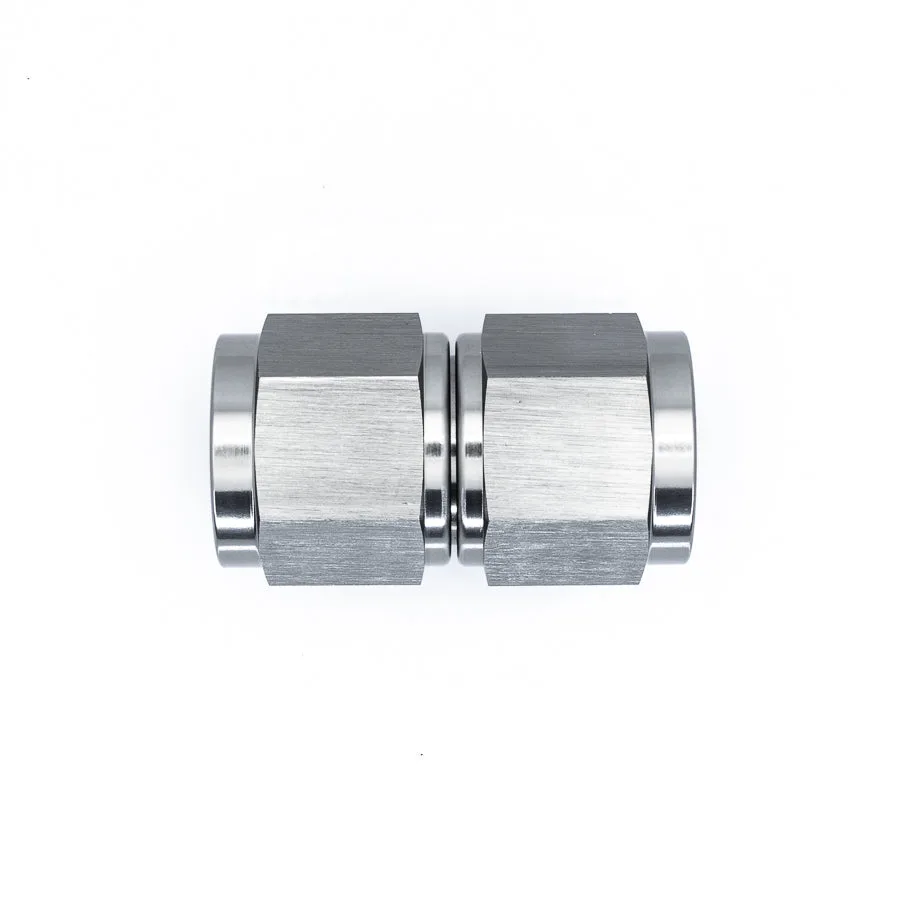
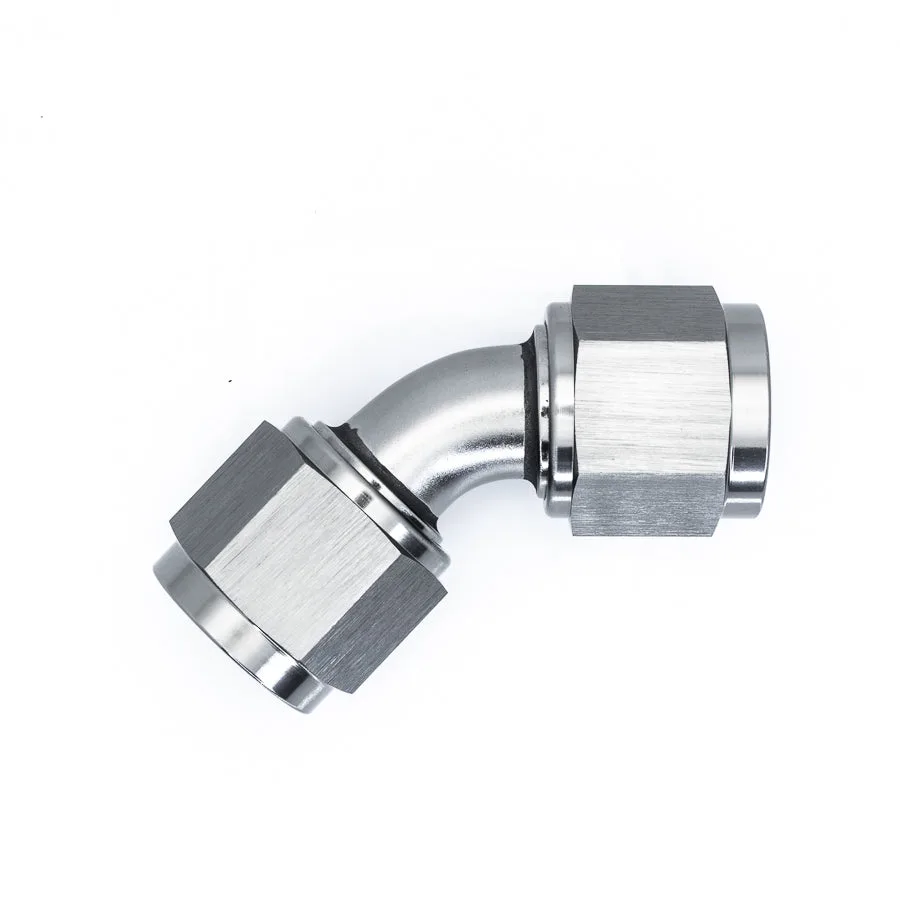
Stainless steel AN fittings are the go-to when you need brute strength and corrosion resistance. They handle higher pressures, resist galling better than aluminum (especially with anti-seize), and won't degrade from most chemicals. The downside is weight and cost: stainless is roughly three times heavier than aluminum and typically more expensive.
You'll often find stainless steel used in braided PTFE hose assemblies, where the hose itself is stainless. For example, the DeatschWerks 6 ft, 6AN SS Double Braided PTFE Hose uses a stainless steel double braid over a PTFE core. That combination is excellent for high-pressure fuel injection, E85, and even brake systems, but it requires specific hose ends like the 90-Deg. 10AN Swivel PTFE Hose End, which includes an olive insert for a secure seal.
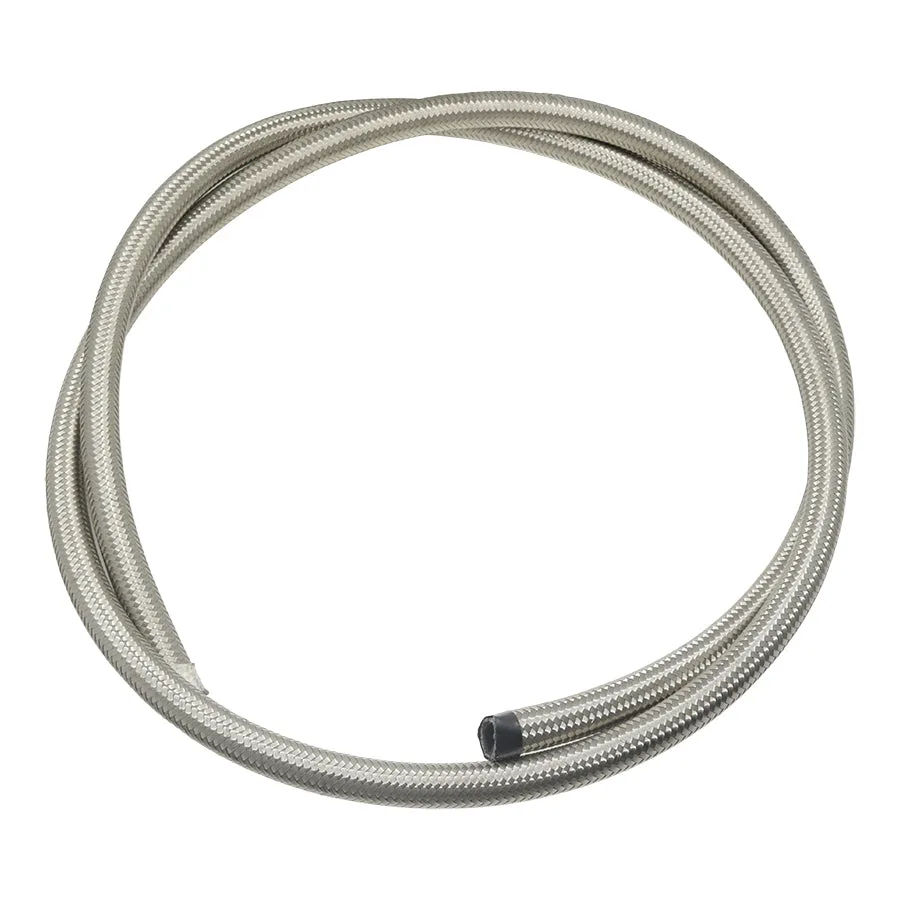
6 ft, 6AN SS Double Braided PTFE Hose
- Choose stainless for off-road, marine, or any application exposed to moisture and chemicals.
- Use anti-seize on stainless threads to prevent galling.
- Expect to pay more and add a few pounds compared to aluminum.
PTFE Hose: The Core Material for Extreme Conditions
PTFE (polytetrafluoroethylene) is not a fitting material per se, but the hose core that many high-end AN hose assemblies use. PTFE is chemically inert, handles extreme temperatures (-100°F to 450°F), and won't degrade with alcohol-based fuels like E85 or methanol. It's also smoother inside, which reduces flow resistance.
However, PTFE hose is stiffer than rubber and requires specific hose ends with olive inserts to seal properly. You can't just slap on any AN fitting. The DeatschWerks 6 ft, 6AN SS Double Braided PTFE Hose is a complete solution that pairs a PTFE core with a stainless braid for pressure resistance. For a 90-degree bend, the 90-Deg. 10AN Swivel PTFE Hose End is designed specifically for PTFE hose and includes the necessary olive insert.
- PTFE is ideal for E85, methanol, and high-temperature environments.
- Always match PTFE hose with PTFE-compatible hose ends.
- PTFE hose has a longer service life but higher upfront cost.
Corrosion Resistance Compared
Corrosion is a major factor in fitting longevity. Aluminum forms a protective oxide layer naturally, but that layer can be compromised by salt and certain chemicals. Anodizing improves resistance, but it's still not immune. Stainless steel, particularly 304 or 316, offers superior corrosion resistance and is often the choice for marine or winter-driven vehicles.
PTFE itself is immune to most corrosives, but the stainless braid over it can still corrode if exposed to salt. In that case, regular cleaning or a protective coating helps. For fuel system fitting materials, if you live near the ocean or drive on salted roads, stainless steel or PTFE-lined hose is worth the extra cost.
- Rinse aluminum fittings with fresh water after exposure to salt.
- Stainless steel is the most corrosion-resistant metallic option.
- PTFE hose is unaffected by fuel chemistry but protect the braid.
Weight and Cost Trade-offs
Weight matters in racing, and aluminum wins hands down. A typical aluminum AN fitting weighs about one-third of its stainless counterpart. That difference adds up quickly in a complex fuel system with dozens of fittings. Cost-wise, aluminum is generally the most affordable, stainless is mid-range, and PTFE hose assemblies are the most expensive due to the materials and specialized hose ends.
For a budget street build, aluminum fittings with rubber hose are perfectly adequate. For a high-end build where every gram and every psi counts, stainless and PTFE are justified. The DeatschWerks 45-Deg. 10AN to 10AN Swivel Coupler is a lightweight aluminum option at a low price point, while the 6 ft, 6AN SS Double Braided PTFE Hose represents the premium end.
- Calculate total weight savings if you're chasing lap times.
- Don't mix materials without considering galvanic corrosion.
- PTFE hose lasts longer but costs more upfront.
Trade-offs at a glance
- Aluminum fittings: Lightweight, low cost, adequate for most gasoline systems up to ~100 psi. Prone to galling and corrosion in harsh environments. Best for street and race cars in mild climates.
- Stainless steel fittings: Heavy, expensive, but extremely strong and corrosion-resistant. Ideal for high-pressure and harsh conditions. Choose for off-road, marine, or winter-driven vehicles.
- PTFE hose: Chemically inert, high-temperature, and high-pressure capable. Stiffer and requires specific hose ends with olive inserts. Essential for E85, methanol, and extreme environments.
Product facts
- 6 ft, 6AN SS Double Braided PTFE Hose: 6AN Stainless Steel Double Braided PTFE Hose, 6 Feet This hose combines a chemically inert PTFE core with a stainless steel braid for high pressure and temperature resistance, making it suitable for E85 and racing fuels.
- 90-Deg. 10AN Swivel PTFE Hose End: 10AN female swivel hose end, 90-degree angled design, PTFE hose end style, includes 1 olive insert, anodized matte black finish This hose end is specifically designed for PTFE hose and includes the necessary olive insert for a proper seal, ensuring a leak-free connection in tight spaces.
- 45-Deg. 10AN to 10AN Swivel Coupler: 10AN flare female swivel to 10AN flare female swivel, 45 degrees, anodized matte black finish This aluminum coupler provides a lightweight, affordable way to route fuel lines at a 45-degree angle without the weight and cost of stainless.
Which material should you choose?
Best for
- Street performance cars with gasoline fuel systems and moderate budgets
- Race cars where weight savings are critical and regular inspection is possible
- Vehicles in dry climates with minimal salt exposure
Not for
- Marine or off-road vehicles exposed to constant moisture and salt
- High-pressure systems above 100 psi or using E85/methanol without PTFE
- Builds where fittings will be installed once and never checked again
There's no single best AN fitting material—only the right one for your fuel system's pressure, environment, and budget. Aluminum keeps weight and cost down, stainless steel adds durability, and PTFE hose delivers chemical and thermal resistance. Match the material to your real-world conditions, and you'll get reliable performance without overspending.