Quick answer
If you want guided prompts to explore specific anxiety triggers, choose the How to Trust Yourself, An Anxiety Deck. If you prefer open-ended reflection without structure, a blank journal is the better self-trust tool.
Why structure matters for anxiety relief
When anxiety feels overwhelming, having a clear framework can prevent spiraling. The Anxiety Deck provides five focused sections—Death, Relationships, Climate, Past & Future, and Money—so you can address one source at a time. A journal offers no such guardrails, which can be freeing or daunting depending on your personality.
Key trade-offs at a glance
- Anxiety Deck: Guided structure: Prompts you through specific topics (Death, Relationships, Climate, Past & Future, Money). Best when you want to work through a known trigger but don't know where to start. Ideal for focused sessions of 10-20 minutes.
- Journal: Open-ended freedom: No prompts or categories—you write whatever comes to mind. Best when you need to vent or explore unexpected feelings without constraint. Works well for daily check-ins or when you want to follow a thread wherever it goes.
- Combined approach: Use the deck for structured exercises and a journal for free writing afterward. This gives you both direction and space. Consider keeping both on hand for different moods.
How the Anxiety Deck works
-
How to Trust Yourself, An Anxiety Deck: Created with Kathleen Wonacott, LCSW, the deck asks readers to dig deeper into the roots of their anxieties in five sections. You get professional guidance without needing a therapist in the room, making it a practical self-trust tool for common anxiety triggers.
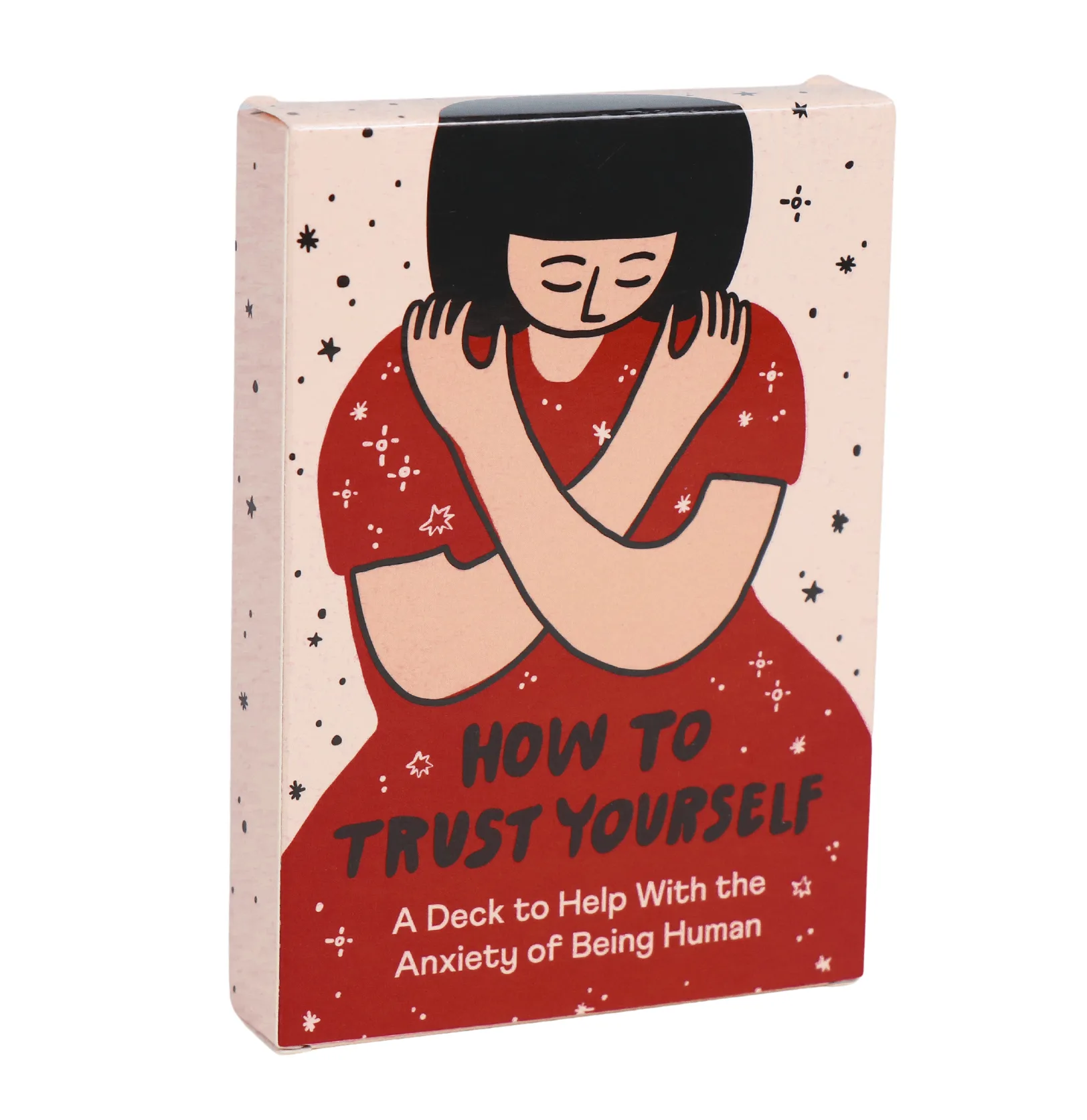
How to Trust Yourself, An Anxiety Deck
Which should you choose?
Best for
- Anyone who wants a therapist-designed framework for common anxiety triggers
- People who prefer guided, contained exercises over blank-page pressure
Not for
- Those who need complete freedom to write without any structure or categories
- Anyone looking for a long-form journaling experience with no prompts