Quick answer
Store Apple + Blueberry Fruit Bars in a cool, dry place away from direct sunlight, and keep them in their original wrapper until you eat them. No refrigeration is needed, and the bars stay shelf-stable for two years.
Why the wrapper and location matter more than the calendar
Fruit bars are shelf-stable, but that does not mean any spot in your kitchen works equally well. Heat, moisture, and light are the main threats to texture and flavor over time. A sealed wrapper protects the bar from air and humidity; once it is opened, the clock on freshness starts ticking much faster.
The two-year shelf life applies to unopened bars stored as directed. If you transfer bars to a different container, you lose the manufacturer’s packaging protection and the printed date reference. For everyday storage, leave them wrapped.
When travel changes the storage rules
On the road, temperature swings and pressure changes are bigger concerns than at home. A car trunk in summer or a backpack in direct sun can get hot enough to soften the bar and shorten its enjoyable texture. Carry bars in a insulated bag or inside your carry-on rather than leaving them in a parked vehicle.
Air travel is generally fine for unopened bars, but if you open one mid-flight, finish it rather than saving a partially eaten bar for later. TSA rules do not restrict solid fruit bars, but international customs may have rules about bringing fruit-based products, so check before you pack.
How to store Apple + Blueberry Fruit Bars step by step
- Keep bars in their original wrapper: Leave each bar sealed until you are ready to eat it. The wrapper is designed to protect the bar from air and moisture. Common mistake: opening a bar and then putting it back in the pantry, which exposes it to humidity and staleness. Check that wrappers are intact before storing; a torn wrapper means the bar should be eaten soon.
- Choose a cool, dry pantry spot: Store unopened bars in a cupboard away from the oven, dishwasher, or sunny windowsill. Aim for a consistent temperature rather than a spot that heats up during cooking. Common mistake: keeping bars on an open shelf above the stove where steam and heat reach them. A dark, interior cabinet is better than a decorative countertop jar.
- Avoid the refrigerator for everyday storage: The bars do not require refrigeration, and repeated trips in and out of the fridge can introduce condensation. Keep them at room temperature unless your kitchen regularly exceeds normal room temperatures. Common mistake: refrigerating bars to 'make them last longer' when the package already provides a two-year shelf life. If you do refrigerate, let the bar come to room temperature before eating for better texture.
- Pack for travel in a protective container: For day trips or commuting, place wrapped bars in a hard-sided container or a dedicated pocket so they do not get crushed. Avoid leaving them in a hot car or checked luggage. Common mistake: tossing loose bars into a bag where they get squashed and the wrapper punctured. A small rigid box prevents crushing and keeps the wrapper intact.
- Rotate your stock and watch the date: When you buy a new box, move older bars to the front so you eat them first. The two-year shelf life is from the production date, not the purchase date, so check the printed date if you plan long-term storage. Common mistake: assuming a bar is still good just because it is unopened, without checking the date. Write the purchase date on the box if the printed date is hard to read.
- Inspect before eating: Before eating a bar that has been stored for a while, check that the wrapper is intact and the bar looks and smells normal. If you see mold, discoloration, or an off smell, discard it. Common mistake: eating a bar with a damaged wrapper without checking, even if it is within the shelf life. When in doubt, throw it out; do not rely on the date alone.
Product facts
-
Apple + Blueberry Fruit Bars: Made with apples and blueberries and no added sugars; shelf-stable for two years and does not require refrigeration. You can keep a supply in the pantry or a bag without worrying about spoilage, but still protect the bars from heat and moisture.
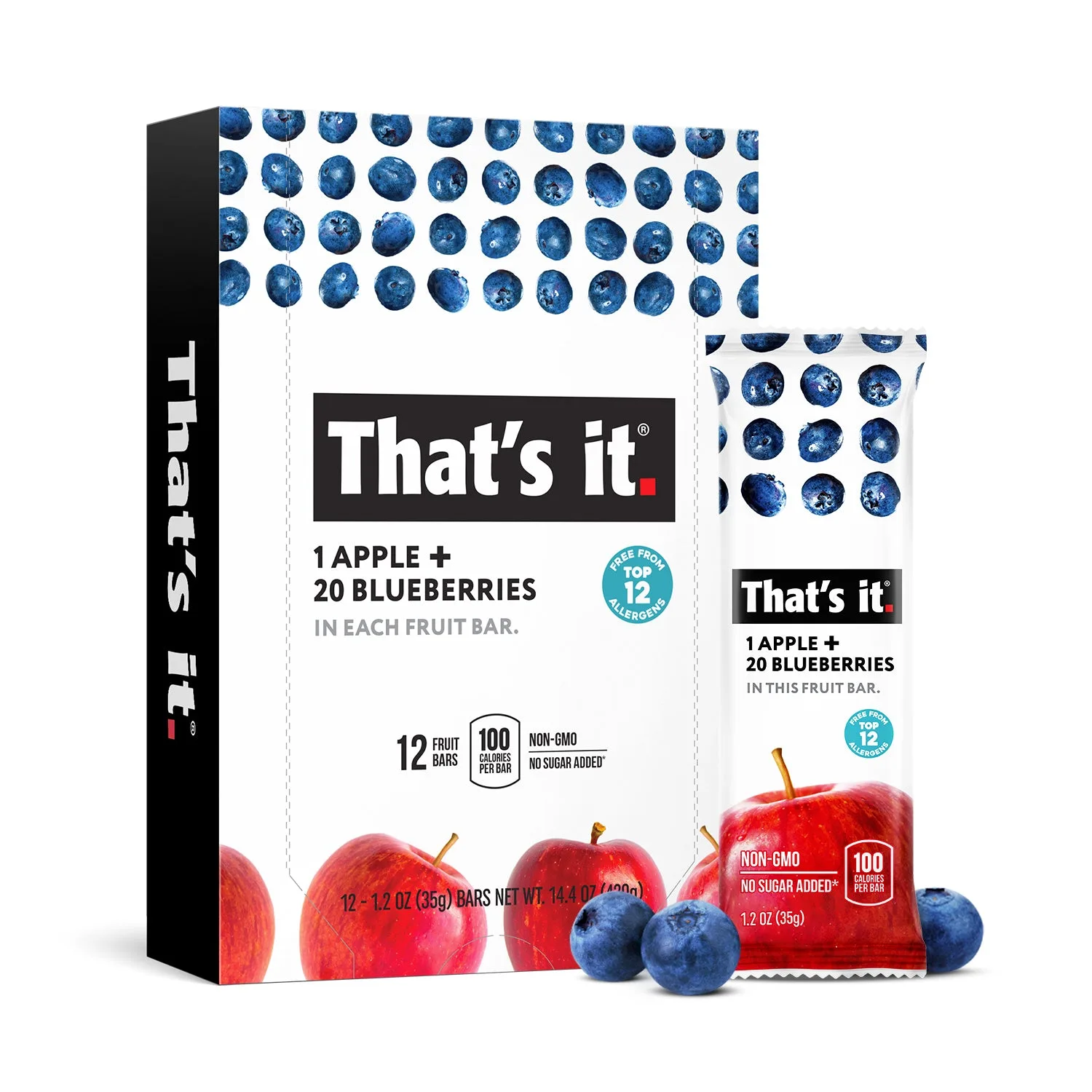
Apple + Blueberry Fruit Bars