AR3000D setup questions owners actually ask
What is the AR3000D, and what kind of system is it built for?
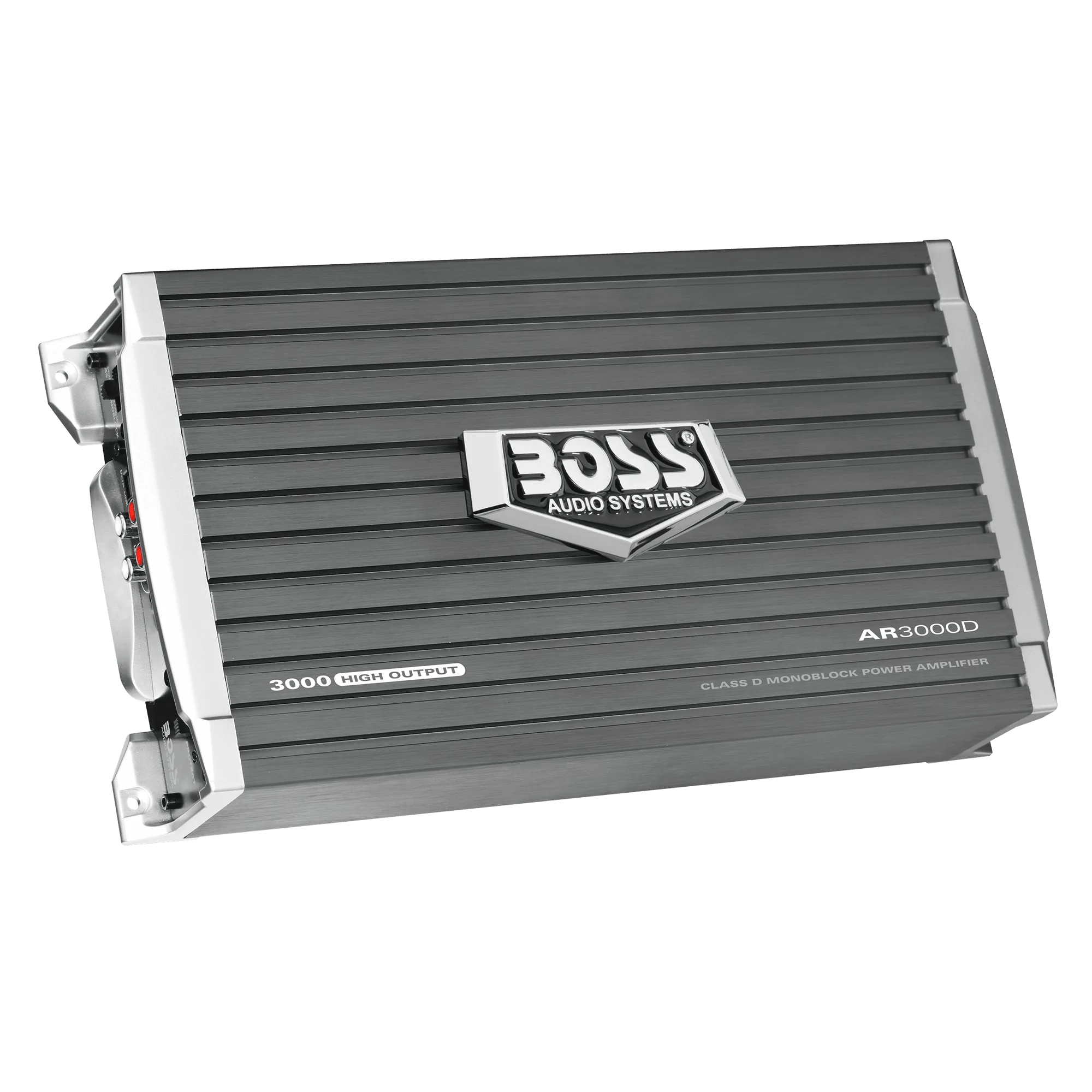
The AR3000D is a monoblock Class D amplifier. Monoblock means one channel, so it is intended for a subwoofer system rather than full-range speakers. Class D topology is a switching design, and the catalog lists a PWM MOSFET power supply. The amplifier is also listed as 1Ω stable, which tells you it is designed to handle a one-ohm load. That combination points to a subwoofer-focused amp, but the catalog does not specify power output figures, so you cannot use the model name alone to estimate wattage.
How should I set the gain on the AR3000D?
The AR3000D has an input sensitivity control, which is the gain adjustment. The catalog confirms the control exists but does not provide a setting procedure, voltage range, or recommended starting position. That means there is no manufacturer-supplied gain-setting method in the available information. A safe approach is to start with the gain low, set your head unit volume to a normal listening level, and increase gain gradually until output is adequate without audible distortion. Do not treat that as a BOSS instruction; it is a general precaution when no specific procedure is supplied.
What does the bass boost do, and how much should I use?
Bass boost is listed as a feature on the AR3000D, but the catalog does not state its frequency, range, or amount of boost. Because those details are not confirmed, you should not assume a specific boost frequency or a fixed number of decibels. Use it sparingly and listen for distortion or bottoming-out from the subwoofer. If the bass sounds bloated or the subwoofer makes mechanical noise, reduce boost rather than turning up gain to compensate.
Do I need the subsonic filter, and where should it be set?
The AR3000D includes a subsonic filter, which is a high-pass filter intended to reduce very low frequencies below the subwoofer's useful range. The catalog does not specify its frequency range or fixed frequency, so a precise setting cannot be quoted from the supplied information. As a practical matter, a subsonic filter is most useful with ported enclosures or when the subwoofer is not designed for very low frequencies. Check your subwoofer and enclosure documentation for a recommended high-pass frequency, and set the filter accordingly if the AR3000D's control allows it.
What does the low pass filter do on this amp?
The low pass filter lets low frequencies through and rolls off higher frequencies, which is appropriate for a subwoofer amplifier. The catalog lists the feature but does not give its adjustment range or slope. Without that, you cannot quote a specific crossover point from BOSS documentation. Set it to blend with your door or component speakers, typically by matching or slightly overlapping their high-pass crossover, and adjust by ear for a smooth transition rather than a boomy or thin sound.
What is phase control for, and how do I use it?
Phase control is listed among the AR3000D features. It lets you adjust the phase relationship between the subwoofer and the rest of the system, which can affect how bass blends at the listening position. The catalog does not specify the phase adjustment range or steps. Use it as a fine-tuning control: try the available positions while listening to a familiar track with steady bass, and keep the setting that gives the most natural, integrated low end.
Can I strap two AR3000D amplifiers together?
The AR3000D is listed as strapping capable, which means it is designed to be linked with another compatible amplifier for a combined output. The catalog confirms the capability but does not provide strapping instructions, required master/slave configuration, or load limits for strapped operation. Do not assume that any two AR3000D amps can be strapped without following a specific procedure. Because the supplied information does not include that procedure, treat strapping as a feature to confirm with BOSS support or the full manual before wiring two amps together.
What do the RCA in/out jacks let me do?
The AR3000D has RCA inputs and outputs. The inputs accept signal from a head unit or processor, and the outputs allow you to pass that signal to another amplifier. The catalog does not state whether the outputs are full-range or affected by the amp's filters, so do not assume the output signal is filtered or unfiltered. If you plan to daisy-chain to a second amp, check whether that amp needs its own crossover settings.
What power wiring does the AR3000D require?
The catalog does not list a recommended wire gauge, fuse rating, or power terminal size for the AR3000D. Those are installation details that depend on the amplifier's actual current draw, which is also not supplied. Do not guess a fuse or wire size from the model name. Use the owner's manual or BOSS support to confirm the correct fuse rating and minimum wire gauge, and size the power and ground cables to that specification. The amplifier does list thermal, short, and overload protection circuits, which are built-in safeguards, not a substitute for correct fusing and wiring.
What does the remote subwoofer control do?
A remote subwoofer control is included as a feature. It lets you adjust subwoofer level from the driver's seat, which is useful for matching bass to different tracks or listening situations. The catalog does not specify the cable length or mounting method for the remote. Plan its location before final installation so the cable reaches comfortably without being stretched or pinched.
What protection circuits does the AR3000D have?
The amplifier is listed with thermal, short, and overload protection circuits. These are designed to protect the amp from overheating, short circuits, and excessive load conditions. The catalog does not describe indicator behavior or reset procedures. If the amp shuts down, check for a shorted speaker wire, an impedance load below the amp's 1Ω stability rating, or restricted airflow around the amplifier before assuming a fault.
What information is missing from the catalog that I should confirm before installing?
The supplied information does not include power output ratings, fuse rating, wire gauge, gain-setting procedure, filter frequency ranges, strapping instructions, or dimensions. Those details matter for planning a safe install. Before you buy or wire the AR3000D, confirm them through the owner's manual or BOSS support. The catalog confirms the feature set, but feature names alone do not tell you how to set or connect the amplifier.
AR3000D catalog facts that shape your install
-
AR3000D: Monoblock Class D topology with a PWM MOSFET power supply A monoblock is a single-channel amp intended for subwoofers, and the Class D design is a switching topology. This tells you the amp is not a multi-channel full-range solution.
AR3000D
-
AR3000D: 1Ω stable The amplifier is rated to handle a one-ohm load. That sets a lower limit for subwoofer impedance, but the catalog does not state power output at that or any other impedance.
-
AR3000D: Input sensitivity, low pass filter, subsonic filter, bass boost, and phase control These are the tuning controls you will use during setup. The catalog confirms they exist but does not give their adjustment ranges or recommended settings.
-
AR3000D: RCA in/out and remote subwoofer control RCA inputs and outputs let you feed signal in and pass it to another amp, while the remote control lets you adjust subwoofer level from the front of the vehicle.
-
AR3000D: Strapping capable The amp can be linked with another compatible amplifier, but the catalog does not include the strapping procedure or load limits for that mode.
-
AR3000D: Thermal, short, and overload protection circuits These protections are built in, but they do not replace correct fusing, wire sizing, or impedance matching, which the catalog does not specify.