Quick answer
Architectural speakers are ordinary speakers built to disappear into a wall or ceiling, so the questions that matter most are depth, placement, and driver quality. Measure your cavity first, pick the model that fits with room to spare, and place speakers symmetrically around the listening position. If depth is tight, a shallow model such as the Ci160TR or Ci200TRB solves the problem without giving up Uni-Q driver technology.
Ci200TRB
Most people shopping for architectural audio are not choosing between brands so much as trying to figure out whether a speaker will physically fit and whether it will actually sound good once it is buried in drywall. Those are fair concerns, and they are answerable.
Below are the questions that come up again and again about in-wall and in-ceiling speakers, answered directly. Where a specification is not published, that is noted honestly rather than guessed at.
How much mounting depth do I need?
Mounting depth is the single most common reason an architectural speaker installation fails. You need the cavity behind the drywall to be deeper than the speaker's rear housing, plus a little clearance for the cable and connector. If you are retrofitting into a shallow ceiling, measure from the back of the drywall to whatever is behind it, whether that is a joist, ductwork, or the floor above.
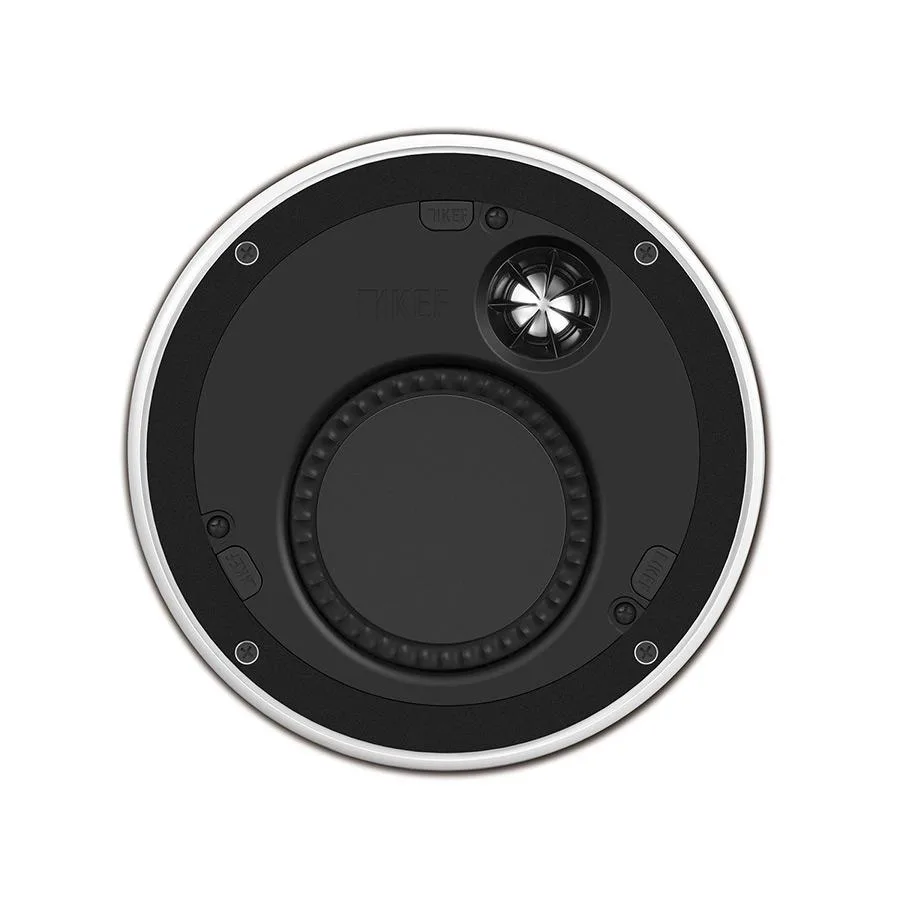
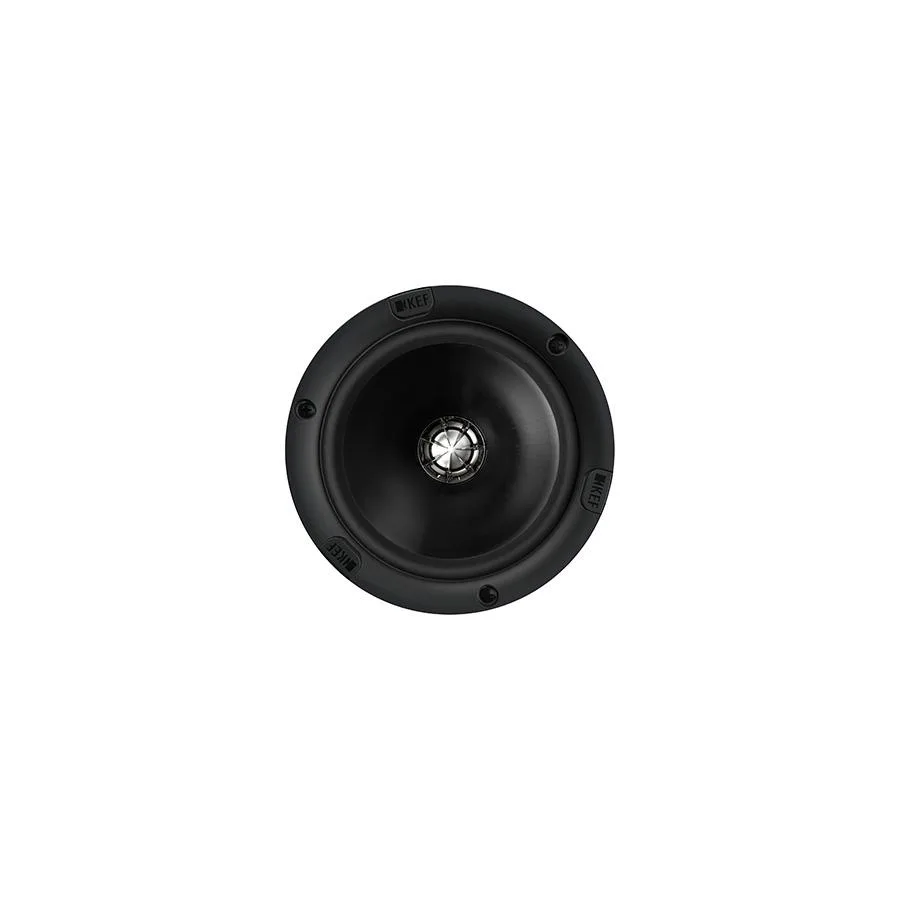
KEF's T Series is designed specifically for this constraint. The Ci160TR requires less than 36mm of mounting depth, which is why it gets specified for luxury high-rise apartments and other tight ceiling assemblies. If you have more room, a standard-depth model will generally give you more cabinet volume and stronger bass.
- Measure the cavity, not the room, before ordering anything.
- Leave a few millimetres for the cable bend behind the speaker.
In-wall or in-ceiling: which should I choose?
In-ceiling speakers are the default for surround and overhead channels because they fire downward and are easy to place symmetrically. In-wall speakers suit front left, centre, and right channels where you want the sound to arrive at ear height rather than from above. Many rooms use both.
The practical difference is less about the speaker and more about where you can run cable and cut holes. If your ceiling is accessible from above but your walls are not, in-ceiling wins. If you have a solid ceiling and open walls, in-wall is the easier path.
- Use in-wall for the front stage and in-ceiling for overhead or surround duties.
- Keep left and right speakers equidistant from the main listening seat.
Do I need a subwoofer with architectural speakers?
Usually, yes, unless you are using a dedicated in-wall subwoofer or a model with a larger woofer. Most in-ceiling speakers use a small mid-bass driver, and small drivers in a shallow cavity cannot move enough air for deep bass. A separate subwoofer handles the low end and lets the architectural speakers concentrate on the midrange and treble.
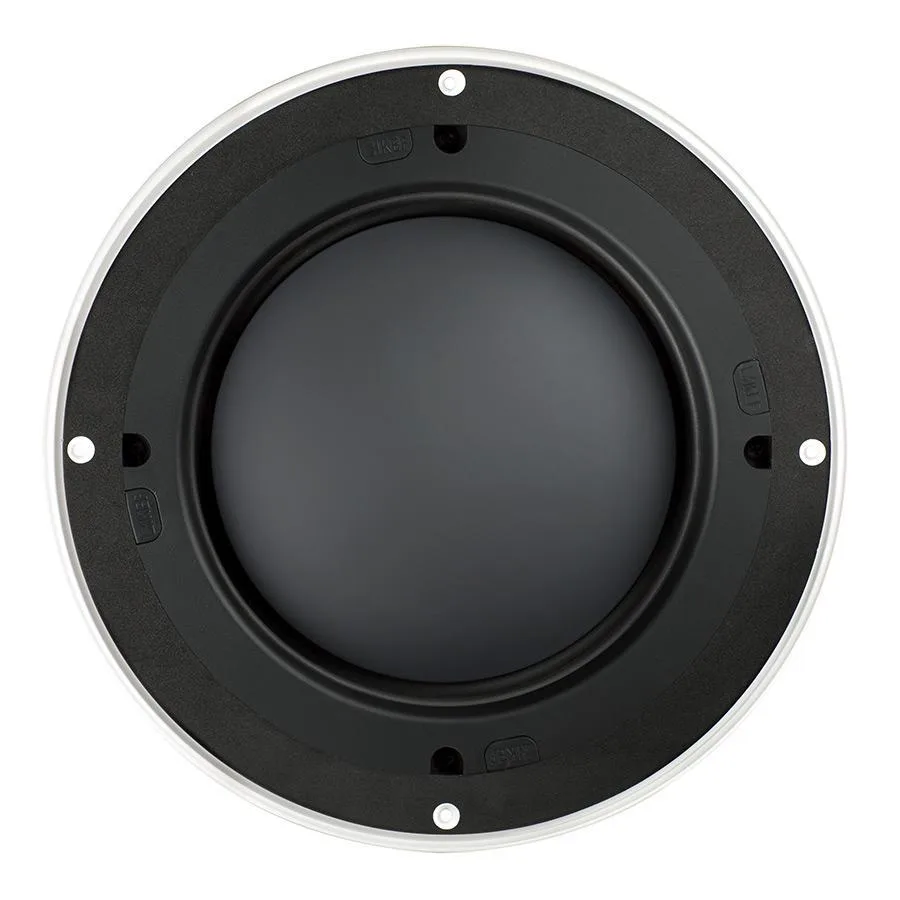
The exception is a model like the Ci200TRB, which is built around a 200mm (8in.) subwoofer incarnation of KEF's ultra-thin T Series woofer. That is a genuinely different proposition from a standard in-ceiling speaker and can carry more of the low end on its own.
- Plan for a subwoofer unless your architectural speaker is a dedicated low-frequency model.
- Place the subwoofer before you finalise speaker positions so cable runs stay short.
What is a Uni-Q driver and why does it matter?
Uni-Q is KEF's patented driver array, in which the tweeter sits at the acoustic centre of the midrange cone rather than beside it. The practical benefit is that the treble and midrange radiate from the same point, so the sound stays consistent as you move around the room. That matters more in architectural audio than in a conventional box speaker, because you cannot toe a ceiling speaker in toward the listener.
In practice, a Uni-Q model spreads sound over a wider area, which means you can use fewer speakers to cover a room while still optimising the soundstage. It is a real advantage in open-plan spaces where listeners are not all in one seat.
- Uni-Q helps most in rooms with multiple listening positions.
- It does not replace the need for sensible speaker placement.
Can I install architectural speakers in a rented property?
Only with the landlord's permission, and only if you are prepared to patch and repaint when you leave. Cutting holes in drywall is not reversible without work. If you cannot commit to that, surface-mounted speakers or a soundbar are the sensible alternatives.
For properties where you can install, frameless flush-mount models such as the Ci130QRfl are worth considering. They sit flush with the wall or ceiling, which suits clean-lined and minimalist interiors, and they are designed for both new builds and retrofitting.
- Get written permission before cutting into a rented wall or ceiling.
- Budget for patching and repainting at the end of the tenancy.
How many speakers do I need for a room?
For stereo music, two speakers are enough, placed left and right of the listening position. For film and TV, a five-channel setup with three front speakers and two surrounds is the common baseline. Overhead channels are added on top of that if you want height effects.
The temptation is to over-specify. A wide-dispersion driver like Uni-Q lets you cover a space with fewer units, so start with the channels you will actually use and add later if the room feels thin. More speakers in the wrong places sounds worse than fewer speakers in the right ones.
- Two for music, five for film, more only if you need overhead effects.
- Prioritise placement quality over speaker count.
Quick answers at a glance
What should I measure first?
The cavity depth behind the drywall, from the back of the board to the nearest obstruction. If it is under about 40mm, look at the Ci160TR.
In-wall or in-ceiling?
In-wall for front left, centre, and right at ear height; in-ceiling for surrounds and overhead channels. Most rooms end up using both.
Do I need a subwoofer?
Yes for most in-ceiling models, unless you are using a low-frequency model like the Ci200TRB. Plan the subwoofer position before finalising speaker placement.
Why does Uni-Q matter here?
It puts the tweeter at the acoustic centre of the midrange, so sound stays consistent off-axis. Useful in open-plan rooms where listeners move around.
Models worth knowing about
- Ci160TR: Requires less than 36mm of mounting depth and features KEF's patented Uni-Q driver array. The shallowest option here, so it is the one to look at when a ceiling cavity is genuinely tight, such as in a high-rise apartment.
- Ci200TRB: A 200mm (8in.) subwoofer incarnation of KEF's ultra-thin T Series woofer, with the patented Uni-Q driver array. Brings real low-frequency output to a shallow installation, which reduces how much you rely on a separate subwoofer.
- Ci130QRfl: A flush-mounted, frameless architectural speaker designed for both new builds and retrofitting, sitting flush with the wall or ceiling. The cleanest visual result if you want the speaker to disappear into a minimalist interior.
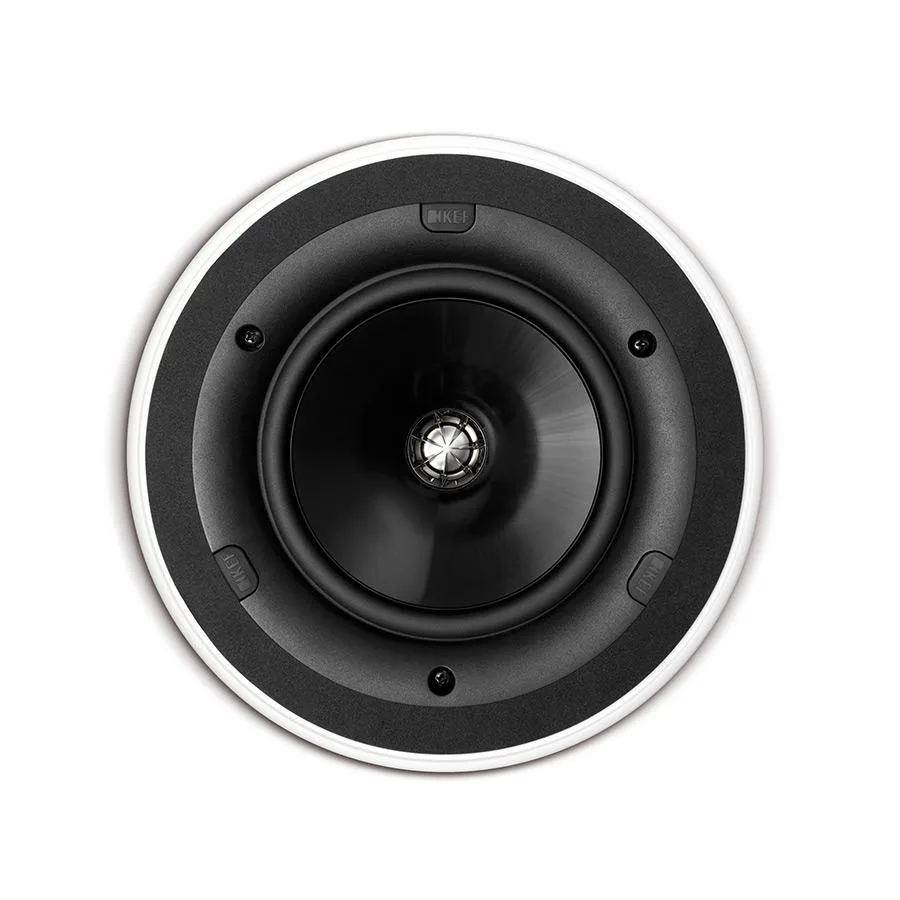
- Ci160QR: An in-ceiling speaker with a narrow rim and KEF's patented Uni-Q driver, which spreads sound over a wider area. The narrow bezel integrates neatly into a ceiling, and the wider dispersion lets you use fewer speakers to cover a room.
Get the depth measurement right, place the speakers symmetrically, and choose a driver that spreads sound widely enough for the room. Do those three things and architectural audio stops being a compromise and starts being the cleanest way to fill a space with sound.