Quick Answer
No. Beadlock wheels are not DOT approved for street use, and most states treat them as illegal on public roads because they lack the required safety certification. Some states don't explicitly ban them but still fail them at inspection. If your rig sees real highway miles, Bead Grip or standard wheels are the safer and legal choice; beadlocks belong on trailered or off-road-only builds.
Beadlock wheels solve a real off-road problem: they clamp the tire bead to the rim so you can air down to single-digit PSI without debeading. That mechanical grip is exactly why they're not street legal — the same bolted ring that holds the bead at 8 PSI isn't certified to hold highway pressure and speed.
This guide answers the questions we hear most from truck, Jeep, and UTV owners: what DOT approval actually means, whether beadlock wheels are DOT approved, what the laws look like state to state, and what to run instead if you still need to drive to the trailhead.
Why aren't beadlock wheels street legal?
Federal motor vehicle safety standards require wheels sold for highway use to meet specific strength, fatigue, and pressure-retention testing — that's what the DOT mark on a wheel represents. A beadlock's outer ring is bolted to the wheel with a series of fasteners, and that bolted joint isn't tested or certified to those standards. There's no DOT-approved beadlock on the market, because the design itself doesn't fit the certification path.
The practical risk is maintenance and torque, not just paperwork. Beadlock ring bolts need to be checked and re-torqued regularly; a loose or unevenly torqued ring can leak or, in a worst case, let the bead walk off at highway speed. That's a very different failure mode than a standard wheel losing air slowly.
- Beadlock ring hardware should be re-torqued per the manufacturer's spec — treat it as a maintenance item, not a one-time install step.
- If you're buying used beadlocks, inspect the ring, bolt holes, and wheel lip for cracks or stripped threads before anything else.
Are beadlock wheels DOT approved?
No. Beadlock wheels are not DOT approved. You'll sometimes see listings described loosely as "DOT" because the wheel casting or a related component carries a mark, but the beadlock assembly as a whole is not certified for highway use. Don't rely on a marketplace description to make that call — check the manufacturer's own statement about intended use.
This matters at inspection and after a crash. If an officer or insurance adjuster determines you were running non-certified wheels on a public road, you can be cited, failed at inspection, or have a claim contested. That's a lot of downside for a wheel designed for trail and race use.
- Ask the manufacturer directly whether the wheel is intended for highway use — get it in writing if you plan to argue the point.
- Keep your off-road-only build documented (trailer registration, non-op status) if you never intend to drive it on public roads.
What do beadlock wheel laws look like by state?
Beadlock wheel laws vary, and there's no single national answer beyond the DOT certification issue. Some states explicitly prohibit beadlock wheels on public roads. Others don't name beadlocks in statute but fail them during safety inspection because they lack DOT approval. A few are effectively silent, which means enforcement depends on the officer and the inspection station — not on a guarantee you can drive on them.
Because these rules change and are enforced unevenly, the only reliable move is to check your own state's vehicle code and your local inspection requirements before you register or drive the vehicle. A forum post from five years ago in another state tells you nothing about your situation.
- Search your state's vehicle code for wheel and tire equipment requirements, then call your DMV or inspection station to confirm.
- If you cross state lines to wheel, remember the rules of the state you're driving in apply — not your home state's.
Can you drive beadlocks on the street anyway?
People do it, and plenty get away with it — until an inspection, a traffic stop, or an insurance claim goes sideways. The honest tradeoff is this: you're accepting legal and safety risk in exchange for trail performance. If your rig is a dedicated trail or race vehicle that gets trailered, that risk is mostly off the table.
If you need one set of wheels to do both jobs, that's the wrong tool for the job. A beadlock is a specialized off-road part; using it as a daily-driven highway wheel means you're relying on luck and lax enforcement rather than a legal, certified setup.
- Trailered rig or off-road-only build: beadlocks are a legitimate choice.
- Daily driver or highway-traveled rig: skip beadlocks and run a certified wheel.
What should you run instead if you need street legality?
Bead Grip wheels are the middle path. They use an inner bead-retention feature instead of a bolted outer ring, so there's no ring hardware to torque and no beadlock assembly that fails certification. You get much of the low-pressure security of a beadlock without the street-legal problem. For UTVs, the same logic applies to Bead Grip UTV wheels and mounted wheel-and-tire packages.
If you want the beadlock look without the legality issue, an optional impact ring bolts to a compatible non-beadlock wheel for lip protection and styling. That gives you the visual and the protection without converting the wheel into something that isn't highway certified.
- Bead Grip: low-pressure trail security, no ring hardware, no beadlock certification problem.
- Impact ring: cosmetic and lip protection on a compatible non-beadlock wheel — check fitment for your specific wheel model.
Beadlock Legality FAQ
Are beadlock wheels street legal?
No. Beadlocks are not DOT approved for highway use, and most states treat them as illegal on public roads. Some states don't explicitly ban them but still fail them at inspection. Assume not street legal unless your state's code and inspection station say otherwise.
Are beadlock wheels DOT approved?
No beadlock assembly is DOT approved for highway use. Loose "DOT" wording in listings usually refers to a component, not the beadlock as a whole. Verify intended use with the manufacturer, not the marketplace listing.
Can you drive beadlocks on the street?
People do, but you're accepting citation, inspection-failure, and insurance-claim risk. Enforcement varies by state and by officer. If your rig is trailered or off-road only, the risk is largely moot.
What's the street-legal alternative?
Bead Grip wheels give you low-pressure bead retention without a bolted ring, and an impact ring adds lip protection and styling to a compatible non-beadlock wheel. Match the wheel to how the vehicle is actually used, not how it looks in the parking lot.
Relevant Method Race Wheels Products
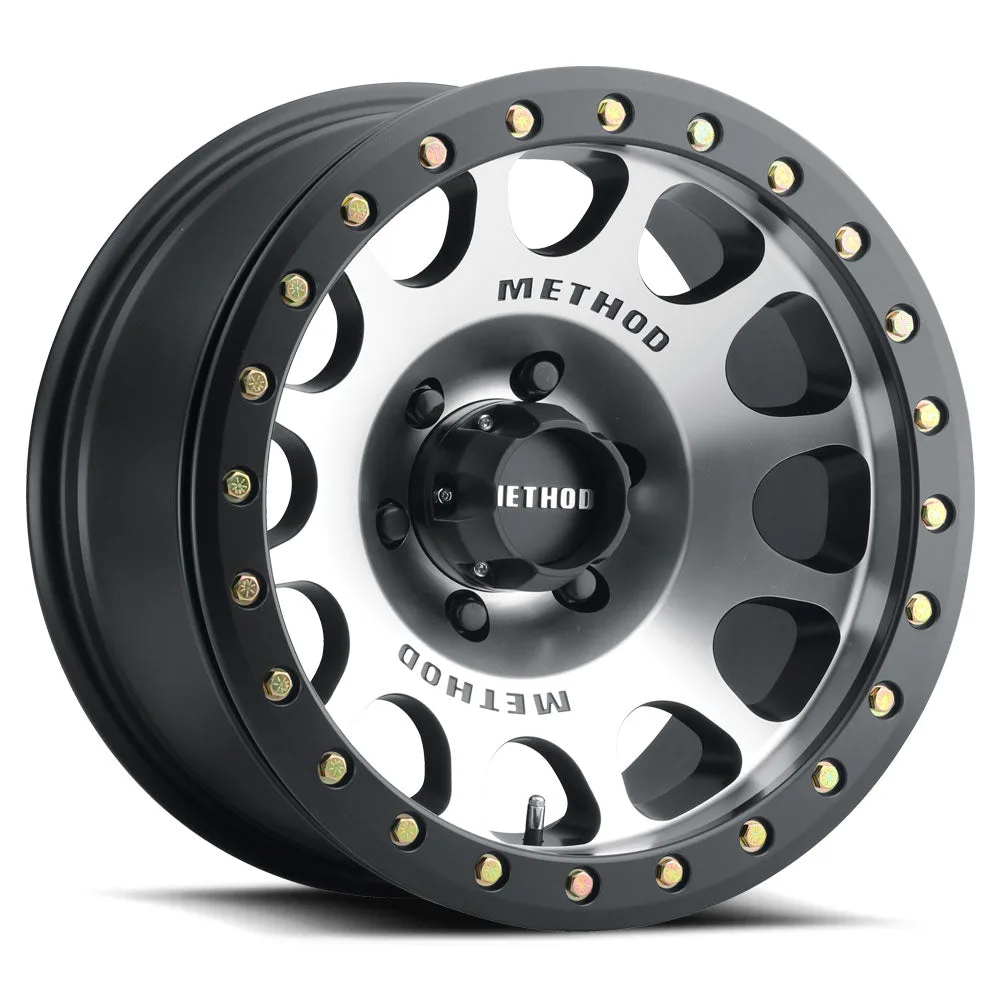
- 105 | Beadlock | Machined: Developed for the serious off-road enthusiast, this beadlock wheel is found on rigs from overland to extreme rock crawlers. It's built for trail and rock use where a bolted beadlock earns its keep — and it's the kind of wheel that should stay off public highways.
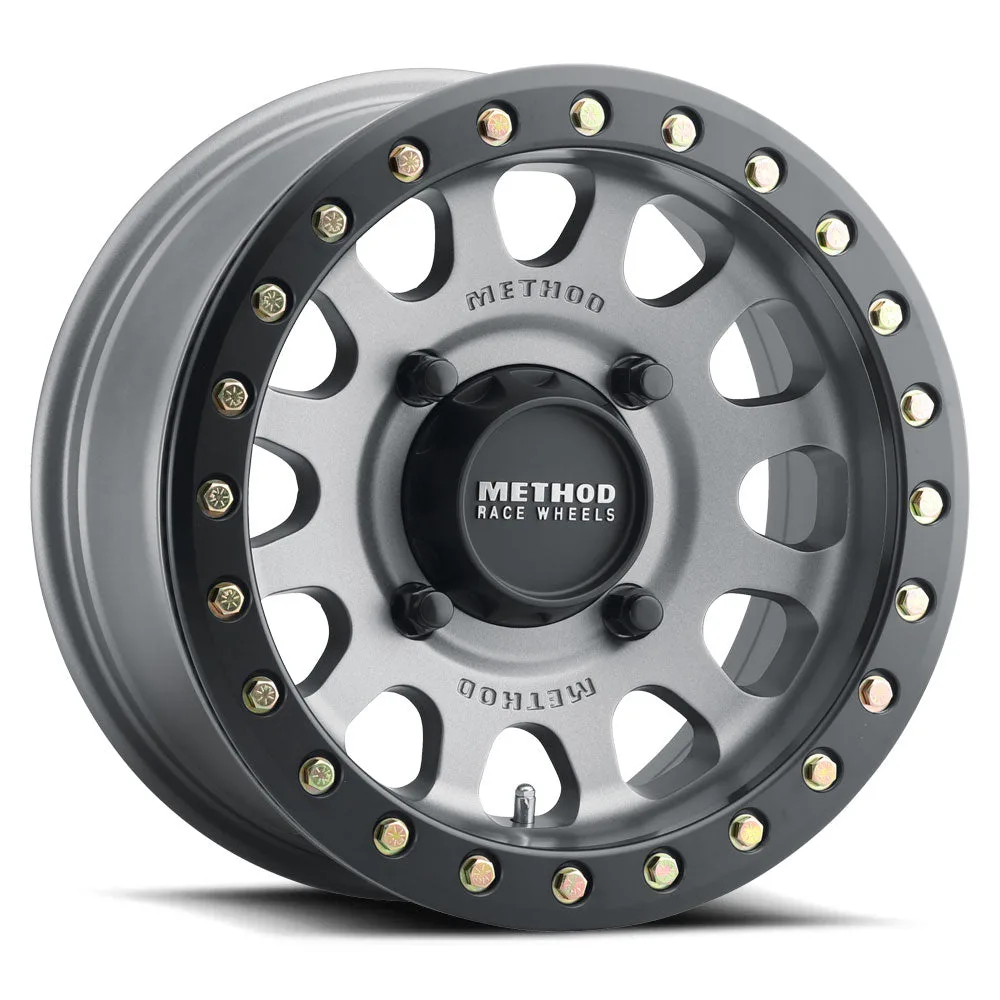
- 401 | UTV Beadlock | Titanium - Matte Black Ring: The 401 Beadlock UTV wheel features a 12-window design, a push-through center cap with embossed Method Race Wheels logo, and a Schrader valve placed between wheel spokes for protection in harsh riding environments. The valve placement protects a common failure point on the trail, but the beadlock design still means it's not a street-legal highway wheel.
- 409 Bead Grip® | Matte Black + Sand Stripper Rear 10 XL 30: This UTV wheel and tire package uses the Method 409 UTV Bead Grip® design paired with a GMZ Sand Stripper tire, arrives professionally mounted, and is available in 15x10 with 4x156 or 4x136 bolt patterns and 0mm offset. For UTV owners who want low-pressure capability without beadlock legality concerns, a Bead Grip package is the practical alternative.
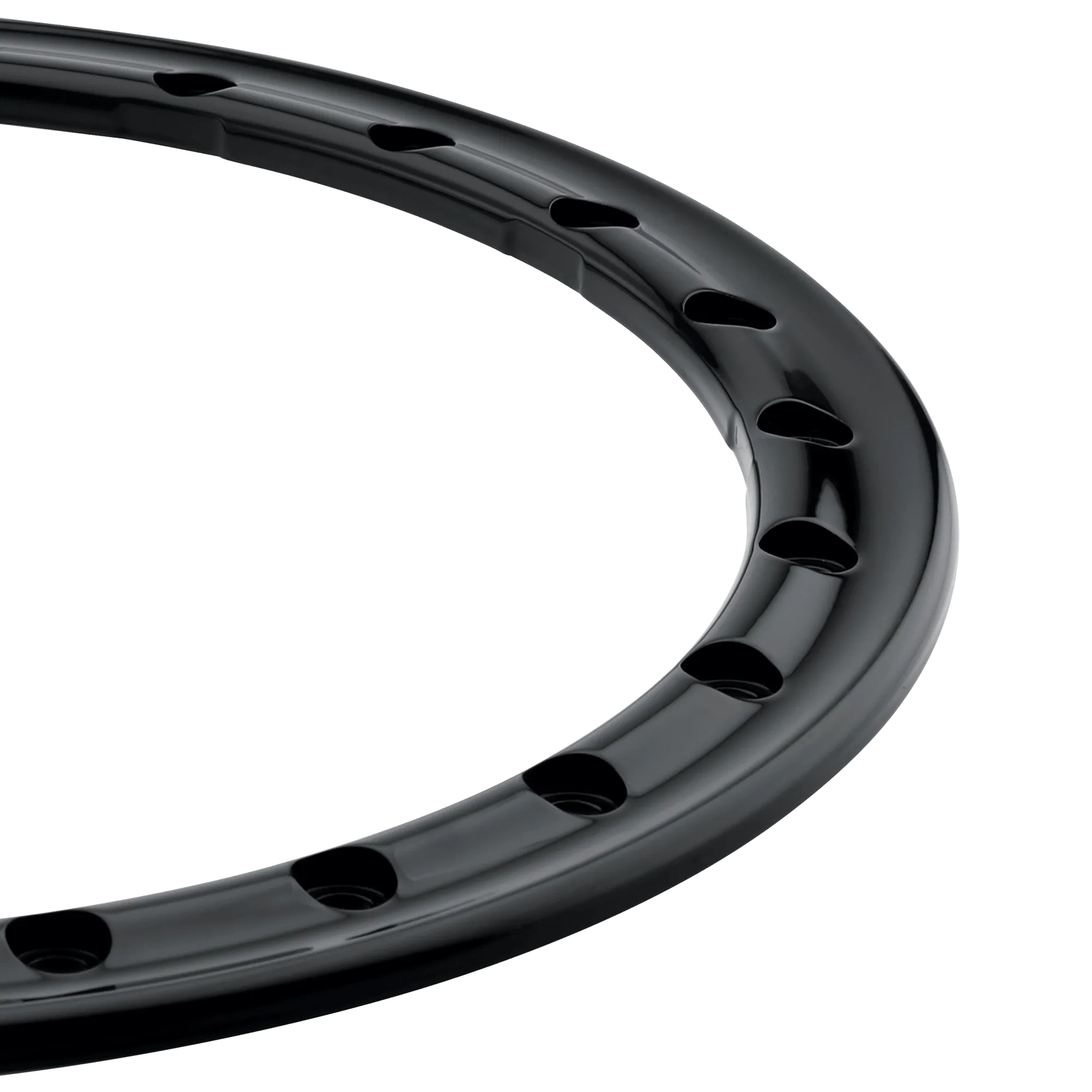
- Impact Ring v.1 | Gloss Black | Non-Beadlock: This optional forged impact ring for the 709-HD Bead Grip bolts on with the included 12-point hardware that comes on your 709-HD wheel, adding lip protection and a customized look. It gives you added lip protection and a beadlock-style appearance on a non-beadlock wheel — no certification issue.
Beadlock wheels are a purpose-built off-road part, not a highway wheel, and the law treats them that way in most states. If your rig gets trailered to the trail, run beadlocks with confidence. If it has to pass inspection and share the road with traffic, go with Bead Grip or a standard wheel and put the beadlock money toward tires instead.