Quick Answer
No. Price is a signal, not a guarantee. The dice that feel and play best for you usually share a few concrete traits: sharp-edged construction, coherent materials, and a design you actually enjoy handling. Spend more when a set's specific features match how you play, and skip the markup when they don't.
Walk into any game store or scroll any dice shop and you'll see sets from a few dollars to well over a hundred. It's tempting to assume the expensive ones roll better, last longer, or make you a better player. They don't automatically do any of those things.
The real question isn't whether expensive dice are better. It's whether the specific features you're paying for matter to you. Below we bust the most common dice price myths and show you what to actually look at before you spend.
Myth: Higher Price Means More Random Rolls
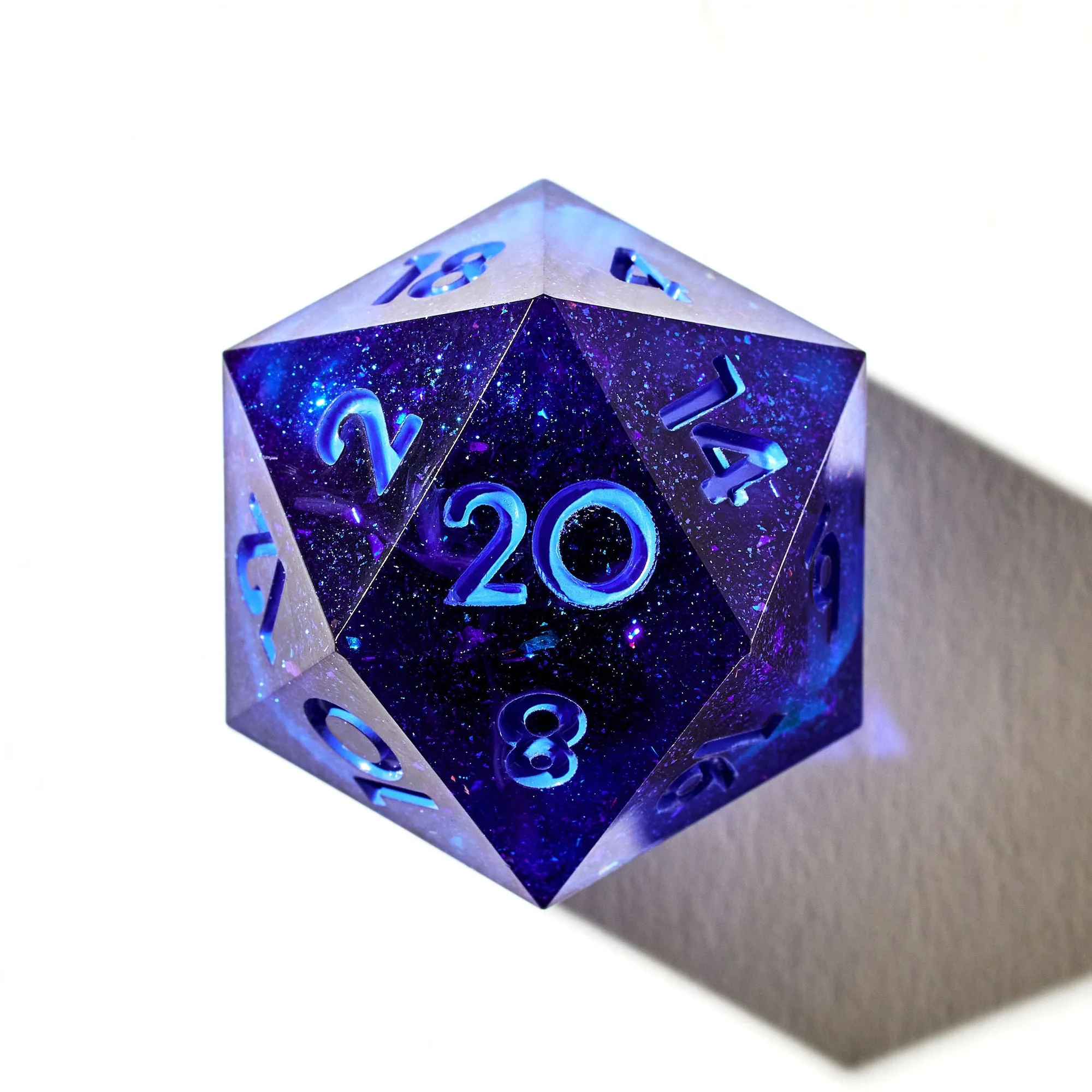
Randomness comes from construction and shape, not from a price tag. Sharp-edged dice, like those in the Deep Blue Sea 7-Piece Polyhedral Set, allow for more randomized rolls when compared to traditional rounded-edge RPG dice. That's a design difference you can see and feel, and it's not exclusive to premium sets.
Deep Blue Sea 7-Piece Polyhedral Set
A rounded-edge set at a low price can still roll fairly for casual play. A sharp-edged set at any price tends to suit players who care about that construction detail. Judge the shape and edge style, not the number on the receipt.
- Check the edge style: sharp-edged vs rounded-edge changes how the die tumbles.
- If fairness matters most, prioritize construction over branding.
Myth: Expensive Dice Are Always Higher Quality
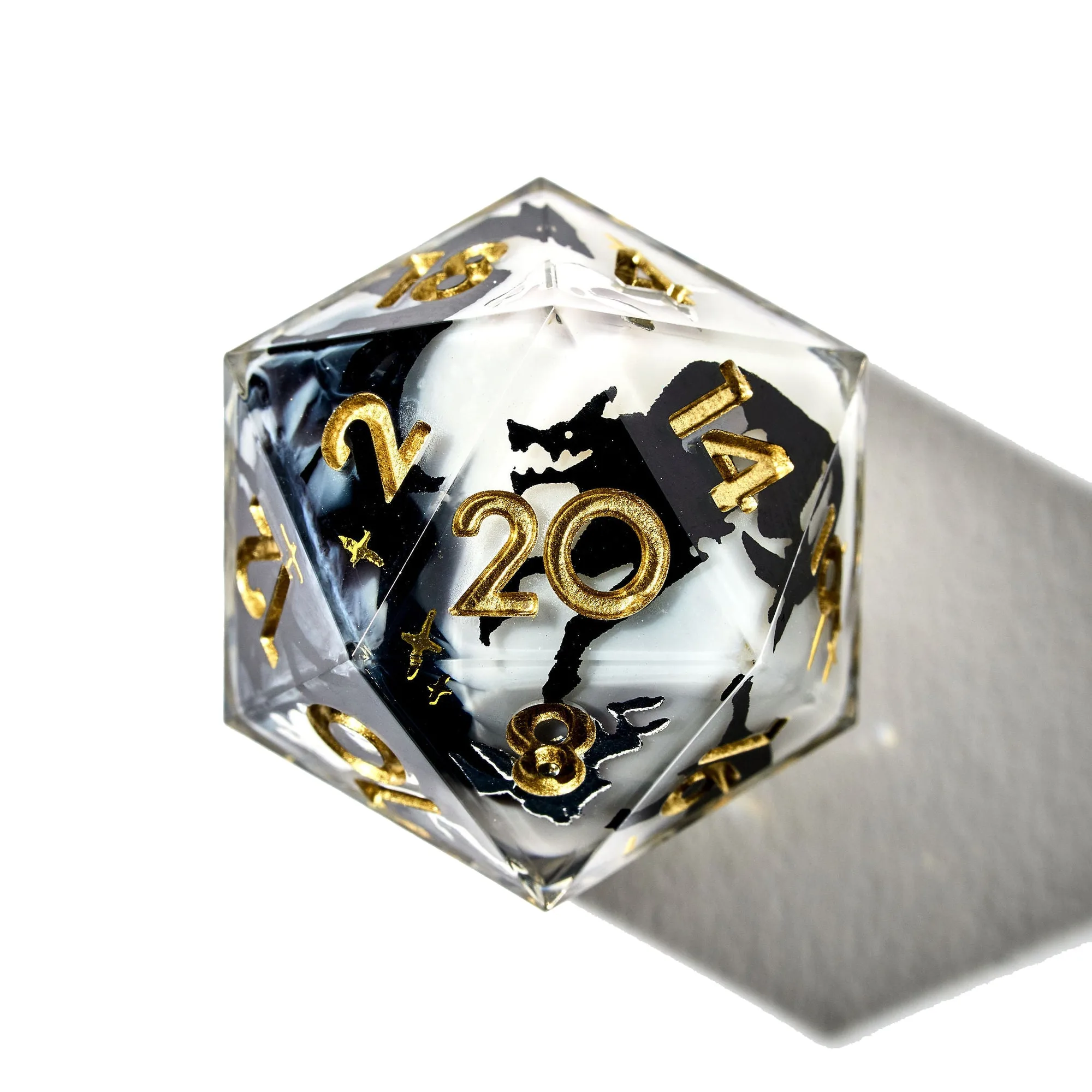
Quality is a bundle of traits: materials, inking, weight, and finish. Some premium sets justify their price with genuinely distinctive design work. The Devour 7-Piece Iconic Dice Set, for example, uses a swirl of black, transparent gray, and white resin to build a wolf-and-hare motif into the dice themselves. That's craft you're paying for.
Devour 7-Piece Iconic Dice Set
But a set can also be expensive simply because it's scarce, licensed, or hand-finished. None of those things guarantee better inking or a longer lifespan. Ask what specifically you're paying for, and if the answer is 'it looks cool,' that's fine — just call it what it is.
- List the traits you care about: material, inking, weight, design.
- If a set's price doesn't map to any of those, the markup is aesthetic.
Myth: Cheap Dice Are Always a Bad Deal
A lower price often just means simpler production, not worse play. The Dispel Dice x Cantrip Candles "Rainbow Trout" Soy Candle (12oz) shows how a lower-priced accessory can still carry real design intent — it's a double-wick soy candle with notes of water, cucumber, and soil, and artwork by Coeykuhn. Value isn't only about dice.
The same logic applies to dice. If you only need a reliable set for a weekly game, a modest polyhedral set does the job. Save the premium spend for sets whose design or construction you'll actually notice at the table.
- Match spend to use: casual play rarely needs a collector-grade set.
- Accessories like candles or trays can add table atmosphere for less than a premium dice set.
Myth: You Need Premium Dice to Play Well
No set rolls your character for you. A well-made set at any price gives you the same seven dice you need: one D4, D6, D8, D10, D%, D12, and D20. That's the standard polyhedral spread, and it's what most games expect.
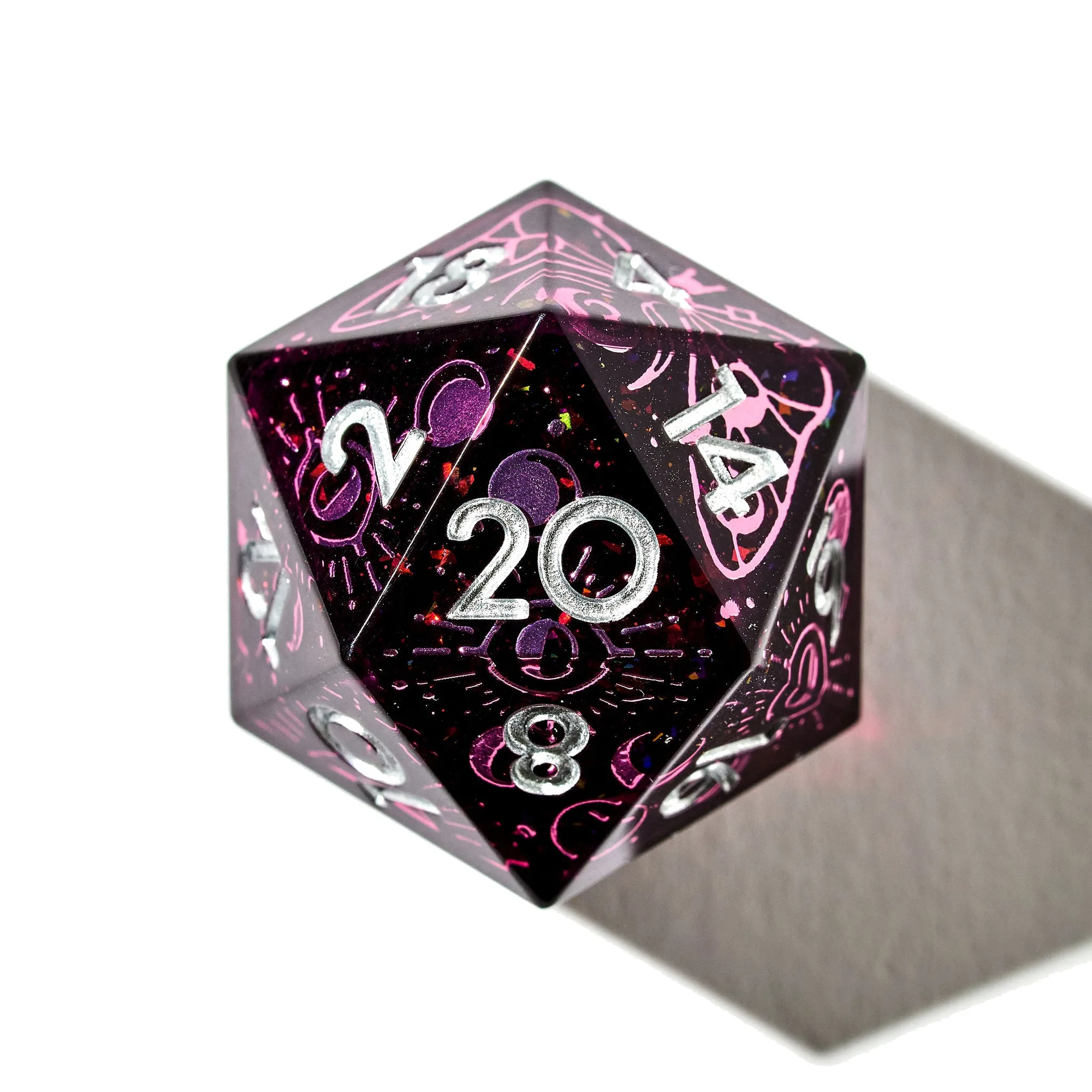
What premium sets add is usually flavor, feel, and finish. The Divination 7-Piece Iconic Dice Set leans into tarot-inspired divination motifs with a transparent burgundy core and silver numbers. That's a mood choice, not a mechanical advantage. Buy it because you love looking at it, not because it promises better rolls.
- Confirm the set includes all seven standard dice before buying.
- Choose a theme that fits your character or table vibe.
Myth: All Expensive Dice Are Overpriced
Some premium prices are earned. Handcrafted items with specialty materials cost more to make. The Dispel Dice x Laserox "Be Not Afraid" Dice Tray in Zircote Wood is a good example: it's made of Ziricote wood with ash embellishments, inlaid with opalescent and gold effect resin, lined with leather, and etched with biblically accurate angel designs. That's a lot of distinct craft in one object.
The mistake is assuming every expensive dice product carries that same level of work. Compare what's actually in the product — materials, construction, finish — rather than trusting the price alone.
- For handmade or specialty-material items, read the materials list carefully.
- If the description is vague about materials, be skeptical of a high price.
Myth: Price Is the Only Signal of Dice Quality
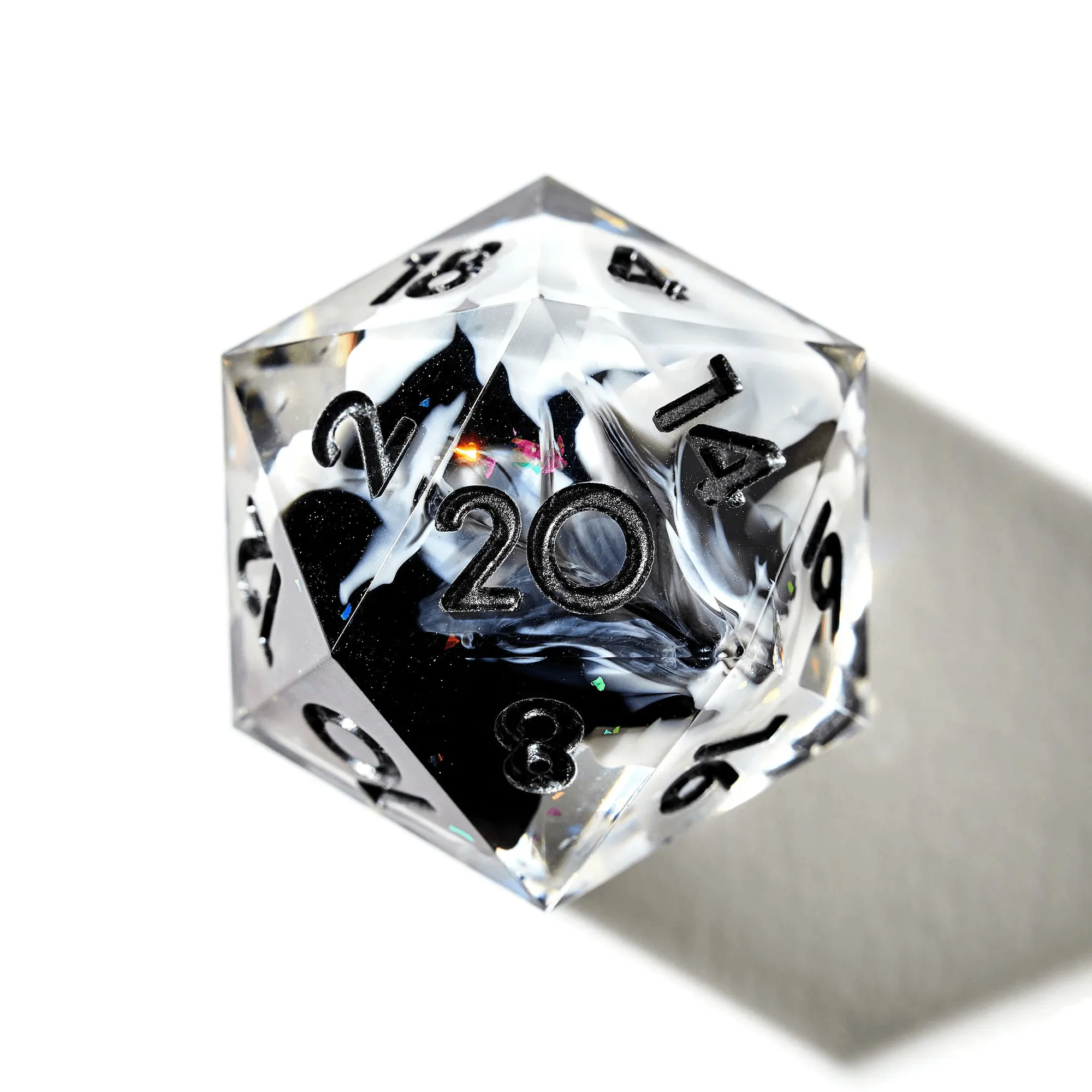
Price is one signal among many. Construction style, material, inking clarity, and design coherence all tell you more about how a set will feel in play. The Alien Worlds 7-Piece Terraform Dice Set, for instance, uses a clear resin shell encasing a white landscape with black resin accents and black-inked numbers. That's a specific construction choice you can evaluate on its own terms.
When you're comparing two sets, line up their features side by side. If the cheaper one matches your needs, the more expensive one has to earn the difference with something you actually want.
- Compare feature lists, not just prices.
- Write down your top two priorities before you shop to avoid impulse upgrades.
Myth Verdicts at a Glance
- Higher price means more random rolls: Randomness comes from shape and construction, such as sharp-edged versus rounded-edge design, not from cost. Verdict: Myth. Judge the construction, not the price tag.
- Expensive dice are always higher quality: Quality depends on materials, inking, weight, and finish. Price can reflect scarcity or licensing instead. Verdict: Partly true. Ask what specifically you're paying for.
- Cheap dice are always a bad deal: Simpler production lowers cost without ruining play. A standard seven-dice set covers most games. Verdict: Myth. Match spend to how you actually play.
- You need premium dice to play well: Premium sets add flavor, feel, and finish. They don't change the dice you need or how they roll. Verdict: Myth. Buy premium for enjoyment, not advantage.
- All expensive dice are overpriced: Handcrafted items with specialty materials genuinely cost more to make, like the Ziricote wood tray. Verdict: Myth. Compare materials and construction, not just price.
- Price is the only signal of quality: Construction, material, inking clarity, and design coherence tell you more about how a set will feel in play. Verdict: Myth. Use price as one signal among several.
What You're Actually Paying For
- Devour 7-Piece Iconic Dice Set: A 7-piece iconic set with a core swirl of black, transparent gray, and white, inspired by the relationship between predator and prey. You're paying for a specific, designed look and a full seven-dice spread — not a hidden mechanical edge.
- Deep Blue Sea 7-Piece Polyhedral Set: Sharp-edged construction allows for more randomized rolls when compared to traditional rounded-edge RPG dice. This is a concrete construction difference you can evaluate, and it shows why price alone isn't the right measure.
- Dispel Dice x Laserox "Be Not Afraid" Dice Tray in Zircote Wood: Handcrafted in Ziricote wood with ash embellishments, opalescent and gold effect resin inlay, and a leather lining. Premium pricing can be justified by materials and handcraft — but that logic applies to accessories, not automatically to every dice set.
Expensive dice aren't automatically better dice — but they're not a scam either. Decide what you value, check whether a set's materials and construction actually deliver it, and let the features justify the price rather than the other way around.