Quick answer
Plush toys can be safe for babies once you match them to your child's age and stage. For newborns and infants under 12 months, keep plush out of the crib and use them only during supervised play. For toddlers who no longer mouth everything, an 8" or 11" plush with securely attached parts is a reasonable everyday choice.
Plush toys are soft, comforting, and nearly impossible to resist, which is why so many parents ask whether they are actually safe for babies. The honest answer is that safety depends less on the toy itself and more on your baby's age, how the toy is made, and where it is used.
This guide breaks down the real risks, the age milestones that change what is appropriate, and the construction details worth checking before you buy. It also points to specific Popples plush that fit different stages so you can make a confident choice instead of guessing.
The real safety risks with plush toys for babies
The main concern with plush toys for babies is suffocation risk, not the fabric or filling. Soft objects in a crib can block a newborn's airway, which is why safe-sleep guidance says to keep cribs clear of plush, pillows, and loose bedding for at least the first year. Used during supervised play, a plush toy poses far less risk.
The second concern is small parts. Loose eyes, pom-poms, ribbons, or tags can detach and become a choking hazard for a baby who mouths everything. Before handing any plush to a baby, tug firmly on every attached piece. If anything shifts or feels loose, it is not a safe plush toy for that stage.
- Keep all plush out of the crib and sleep space for the first 12 months.
- Tug-test eyes, tails, pom-poms, and tags before every supervised play session.
- Check for sharp edges on any plastic parts, such as tags or clips.
Age guide: what works at each stage
Under 6 months, babies have limited grip and put everything in their mouths. Plush is best used as a supervised tummy-time prop or a familiar scent object, never as a sleep companion. At this stage, smaller is not better; anything small enough to fit entirely in the mouth is a choking risk.
From 6 to 12 months, babies sit, reach, and grab with purpose. A soft 8" plush is easy for small hands to hold and light enough to lift. It is still a supervised-play toy, not a crib toy. From 12 to 24 months, toddlers begin to use plush for comfort and pretend play, and larger 11" plush becomes practical because it is harder to lose and easier to hug.
After age 2, most children have stopped mouthing toys constantly, and plush becomes a genuine everyday companion. This is when larger plush and limited-edition characters make sense as gifts, though you should still inspect seams and attached parts periodically.
- 0-6 months: supervised only, no crib use, avoid small plush.
- 6-12 months: 8" plush for play, still no crib use.
- 12-24 months: 11" plush for comfort and pretend play.
- 2 years and up: everyday plush, with regular seam checks.
Construction details that separate safe plush from risky plush
Embroidered or tightly secured features are safer than glued-on or loosely stitched ones. When you shop, look for plush where the eyes and mouth are stitched rather than plastic, and where the tail or pom-pom is sewn into a reinforced seam. These details matter more than brand or price.
Size also plays a role. A plush that is 8" or larger is generally too big to be swallowed whole, which is the key threshold for babies. Very small plush, under about 4", belongs in the hands of older children or on a display shelf, not in a crib or playpen with an infant.
Finally, check the filling. Well-stuffed plush holds its shape and does not develop lumps that can come loose through a seam. If a plush feels under-stuffed or you can feel hard pellets shifting inside, treat it as a display item rather than a baby toy.
- Choose stitched or embroidered features over glued-on plastic.
- Reinforced seams around tails and pom-poms reduce detachment risk.
- Avoid plush small enough to fit entirely inside a baby's mouth.
How to clean plush safely for a baby
Babies put plush in their mouths, so cleaning matters as much as construction. Most plush can be surface-washed with a mild detergent and a damp cloth, then air-dried completely. If the care label allows machine washing, use a gentle cycle and a mesh bag to protect seams and attached parts.
Skip harsh chemicals, bleach, and fabric softeners, which can leave residue that irritates a baby's skin or mouth. After washing, check every seam and attached part again before giving the toy back. Heat can loosen glue and thread, so a plush that was safe before washing should be re-tested afterward.
- Surface-wash with mild detergent and air-dry fully.
- Use a mesh bag if machine washing is allowed.
- Re-check seams and attached parts after every wash.
When a plush is better as a collectible than a baby toy
Some plush is designed for display and collecting, not for babies. Limited-edition releases, convention exclusives, and plush with delicate textured details fall into this category. They may be perfectly safe as decor on a shelf, but they are not the right choice for a baby who will chew, drag, and wash them.
If you are buying for a baby, prioritize simple construction, secure stitching, and a size that is easy to hold but too large to swallow. If you are buying for yourself or an older child, limited-edition plush can be a rewarding collectible as long as you keep it out of reach of infants.
- Limited-edition plush is for display, not for teething babies.
- For babies, choose simple, well-stitched plush with no small parts.
- Keep collectible plush on a high shelf away from infants and toddlers.
Decision rules for buying plush for a baby
- If your baby is under 12 months: Choose plush only for supervised play, never for the crib. Pick a size of 8" or larger with stitched features and no detachable small parts. Safe choice: an 8" plush used during waking hours with adult supervision.
- If your child is 12 to 24 months: An 11" plush is easier to hug and harder to lose, making it a practical comfort object. Continue to avoid crib use and check seams monthly. Safe choice: an 11" plush for play and comfort, stored outside the crib.
- If the plush has a pom-pom tail or textured details: Tug-test the pom-pom and any textured parts before every play session. If anything loosens, remove the toy from baby access and repair or retire it. Checkpoint: any movement in an attached part means the plush is not baby-safe.
- If you are buying a limited-edition or convention plush: Treat it as a collectible for display, not as a baby toy. Keep it on a high shelf and buy a simpler, sturdier plush for the baby to actually use. Next step: buy one display piece and one everyday plush instead of combining the two.
Popples plush that fit different stages
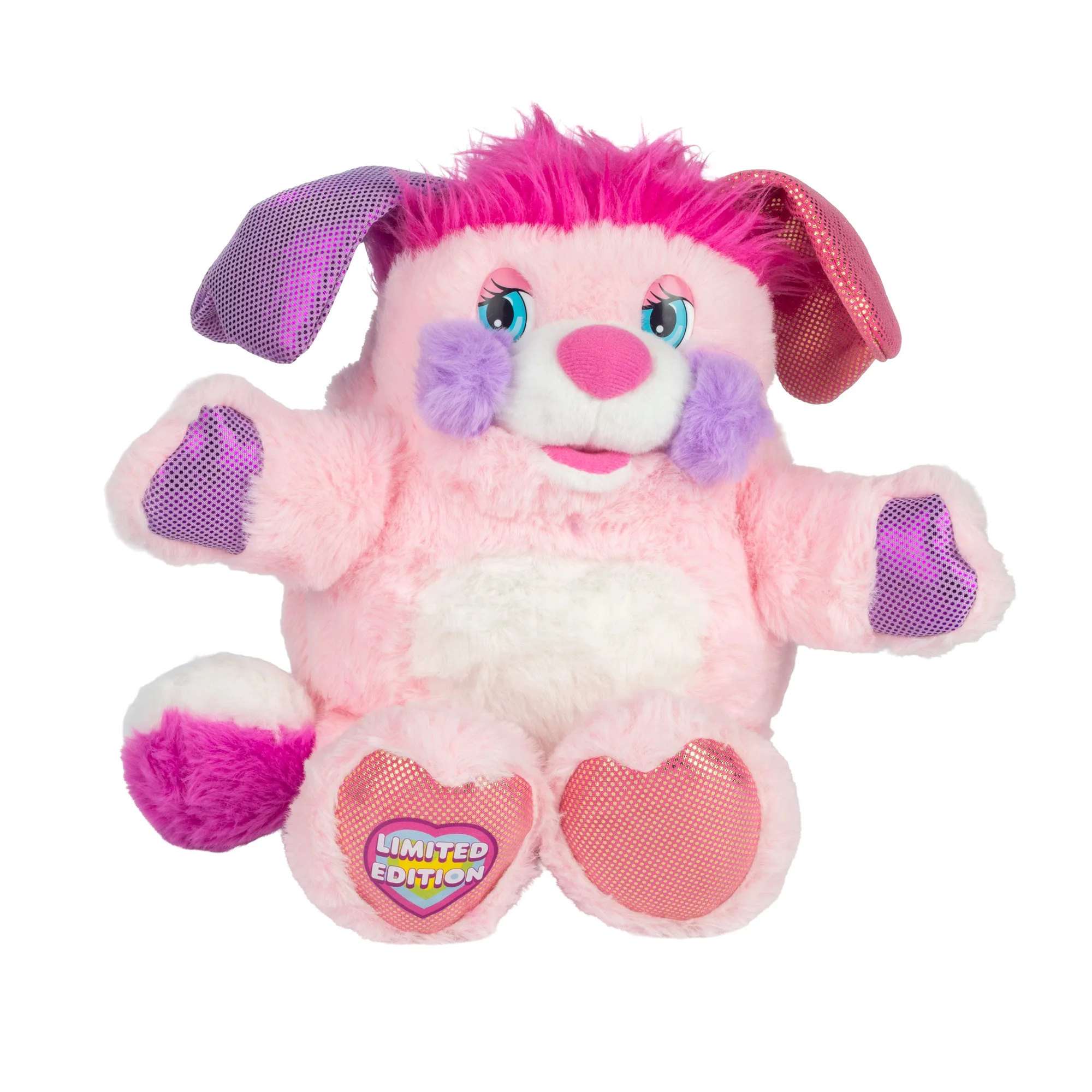
- P.C. Popple 8" Small Plush: This 8" plush is a compact, furry Popple with a long pom-pom tail, designed as a nostalgic small plush for cuddling. At 8", it is large enough that a baby cannot swallow it whole, and the size is easy for small hands to hold during supervised play. Tug-test the pom-pom tail before handing it to a baby.
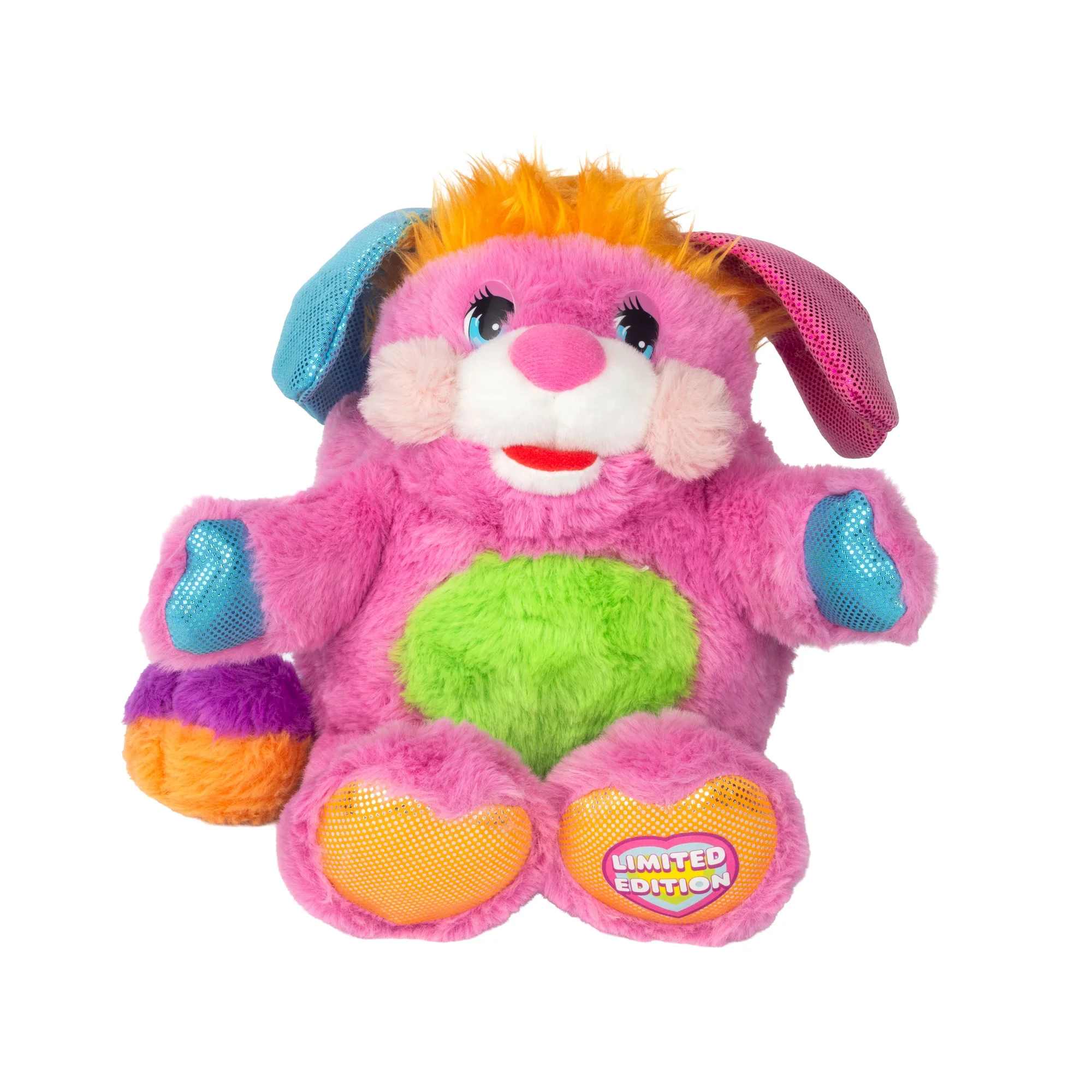
- Potato Chip Popple 8" Small Plush: Potato Chip Popple is an 8" small plush with a long, pom-pom tail, described as bright, peppy, and ready for action. Like P.C. Popple, this 8" size works well for toddlers who want a light, huggable plush. The pom-pom tail is the part to inspect most closely for secure attachment.
- Pancake Popple 11" Large Plush: Pancake Popple is an 11" large plush described as built for big hugs, with a long, pom-pom tail. The 11" size is a better fit for toddlers and older children who want a comfort object for naps and pretend play. It is too large for a crib and should stay out of sleep spaces for babies under 12 months.
- PARTY Popple – Large Plush (Limited Edition): This limited-edition 11" PARTY Popple features bright colors, sparkling textured hearts on the feet, and the signature ability to pop inside out. The textured hearts and inside-out feature make this a display or collector piece rather than a first baby toy. Keep it on a shelf until children are old enough to handle it gently.
Who should buy plush for a baby, and who should not
Best for
- Parents of babies 6 months and older who want a supervised-play plush
- Toddlers 12 to 24 months who need a huggable comfort object
- Gift-givers looking for a first plush with secure stitching and a safe size
Not for
- Newborns under 12 months who need a clear crib for safe sleep
- Babies who still mouth everything and cannot be supervised during play
- Collectors who want a limited-edition plush kept in mint condition
Plush toys can be safe for babies when you match size, construction, and age to your child's stage. Keep plush out of the crib for the first year, tug-test attached parts, and choose a simple 8" or 11" Popple for supervised play. Save the limited-edition pieces for the shelf, and you get the best of both worlds.