What the story actually gives you
In 'Are You Okay Yang?', Wei sees his friend fall at the playground and thinks quickly to find several ways to comfort her. The story is part of Lovevery's reading collection, designed for early learning, and its simple narrative supports social-emotional development through a relatable scenario about emotions and friendship.
That setup is why the book works as a read-aloud for toddler empathy questions: the action stays concrete (a fall, a friend who needs help) and the comfort strategies are part of the plot rather than a lesson tacked on at the end.
Parent questions about reading it aloud
What age is 'Are You Okay Yang?' for?
The supplied product information does not list a specific age range. Use your knowledge of your child's attention span and talk about the playground scenario as you read; the simple narrative and shared-reading format suit young children, but the manufacturer's recommended age is not confirmed in the available details.
How do I read the fall scene without scaring my toddler?
Keep your voice calm and matter-of-fact. The story focuses on Wei's quick thinking and the ways he comforts his friend, so you can move through the fall and spend your reading time on what Wei does next. If your child looks worried, name the feeling briefly and point to the helping part.
What empathy questions can I ask while we read?
Stick to questions the story can answer. Try: 'How do you think Wei's friend feels after the fall?' 'What did Wei do to help?' 'Which of Wei's ideas would you try?' These keep the conversation tied to the page instead of turning it into a quiz.
My child has been the one who falls. Will this book upset them?
It can go either way. Some children like seeing a character get comforted; others need to talk about their own fall first. You can pause before the comforting part and ask, 'What would help you feel better?' The book gives you a shared example, not a script you have to follow.
Can I use this book to talk about hitting or grabbing?
The supplied story is about a playground fall and comforting a friend, not about aggression. If you want to talk about hitting, use the book's empathy frame—'How did Wei's friend feel?'—and then connect it to your own family rules separately.
How long does a read-aloud usually take?
The supplied information does not include a page count or reading time. With a toddler, expect the reading to take as long as their attention allows; you can read the whole story in one sitting or stop after the fall and come back later.
Is this a board book or a paperback?
The format is not confirmed in the supplied product details. If page durability matters for your child, check the product listing or packaging before buying.
Product details that shape read-aloud use
-
'Are You Okay Yang?' Book: In 'Are You Okay Yang?', young readers follow Wei as he thinks quickly and finds several ways to comfort his friend after a fall at the playground. This is the core scenario you will be talking through with your child, so knowing it helps you prepare for the fall and the comforting that follows.
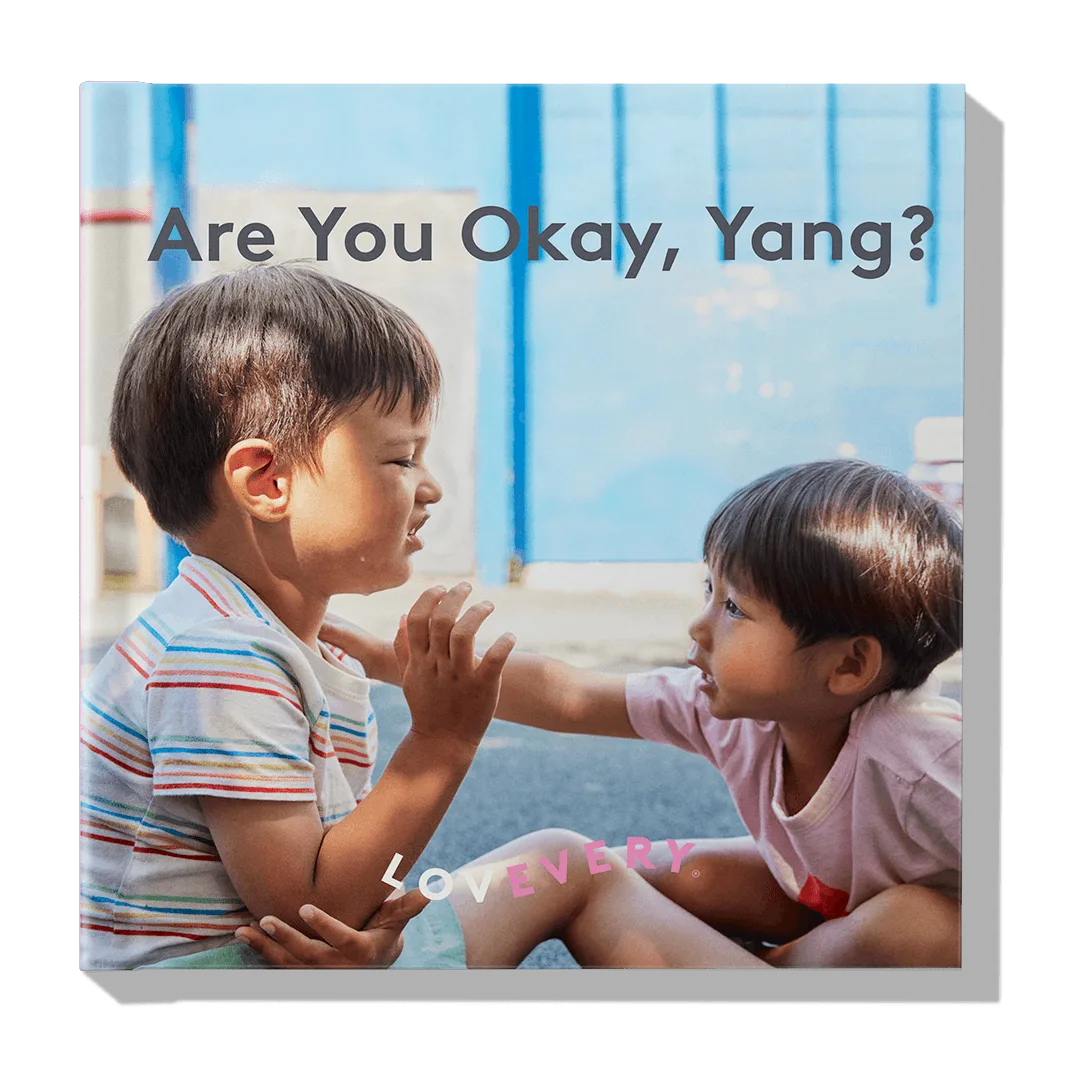
'Are You Okay Yang?' Book
-
'Are You Okay Yang?' Book: The story encourages empathy and problem-solving in everyday situations. That combination is what makes the book useful for toddler empathy questions: you can ask both about feelings and about what Wei chose to do.
-
'Are You Okay Yang?' Book: Part of Lovevery's reading collection, designed for early learning. If you already use other Lovevery reading titles, this book fits the same shared-reading approach.
-
'Are You Okay Yang?' Book: Features a relatable scenario that helps children understand emotions and friendship. A playground fall is familiar ground for many toddlers, which gives you a concrete starting point for conversation.
-
'Are You Okay Yang?' Book: Simple narrative supports social-emotional development. The simple text keeps the focus on the interaction between the characters rather than on extra details.
-
'Are You Okay Yang?' Book: Engaging story for shared reading time. It is built to be read together, which is exactly the format empathy questions work best in.
What the supplied information does not cover
The available product record does not list an age range, page count, book format, or a full list of the comfort strategies Wei tries. It also does not include care instructions or safety warnings. Those details may appear on the product listing or packaging, but they are not confirmed here, so check before you buy if any of them matter to your family.