For collectors and reenactors, US jump wings are iconic badges that distinguish airborne-qualified personnel. The standard Army Parachute Jump Wing is the most recognized, but variations exist across branches and eras. Understanding the differences between Army, Navy, Marine, and Glider wings helps you authenticate pieces and build a focused collection.
This guide compares the classic Army parachute jump wing with other US jump wings, focusing on WWII-era badges. We’ll cover design nuances, manufacturing details, and common pitfalls so you can confidently identify and choose the right wing for your impression or collection.
The Standard Army Parachute Jump Wing: Design and Variants
The basic Army parachute jump wing features a silver-colored metal wing with a central parachute and a distinctive shield. Most WWII examples are die-struck, often with a pin-back or clutch-back fastening. The wing spans about 1.75 inches and is usually marked with the manufacturer’s name or hallmark on the reverse.
Collectors should note that early war wings often have a brighter silver finish, while later examples may show a darker patina. The shield’s shape can vary slightly between makers. Common manufacturers include Robbins Co., Luxenberg, and Meyer. For reenactors, a standard metal jump wing like those from AttheFront offers a period-correct look without the premium of an original.
- Look for die-struck details and crisp edges on the parachute lines to spot quality reproductions.
Navy and Marine Corps Jump Wings: Key Differences
Navy jump wings, also known as Naval Parachutist Insignia, feature an anchor superimposed on the parachute instead of the Army’s shield. The anchor is usually gold or silver-toned, and the wing design is slightly more elongated. Marine Corps jump wings are similar to the Navy but often incorporate the Marine Corps emblem or a globe-and-anchor motif.
During WWII, Navy and Marine jump wings were less common than Army wings, making originals rarer. The finishes vary widely: some are bright gilt, others are oxidized. For collectors, the anchor’s orientation and the wing’s metal thickness are key identifiers. Navy wings also tend to be larger, measuring about 2 inches across.
- Navy wings often have a clutch-back fastening, while Army wings from the same period may use pin-backs.
Glider Wings: A Distinctive Non-Parachute Badge
US Glider wings were awarded to troops who flew into combat aboard gliders, not parachutes. The design features a stylized glider in the center instead of a parachute, with wings spread similarly to jump wings. Glider wings are typically silver or silver-toned, and the glider’s fuselage and wings are clearly defined.
Glider wings are often confused with parachute wings by new collectors. The most reliable way to distinguish them is the central motif: a glider has a distinct fuselage and tail, while a parachute has a canopy and suspension lines. Glider wings are also slightly smaller, around 1.5 inches wide. For reenactors portraying glider infantry, a Glider wing badge is essential.
- Check the reverse for maker marks: many Glider wings were made by the same manufacturers as parachute wings.
How to Identify and Authenticate WWII Jump Wings
Authenticating a WWII jump wing starts with examining the metal and finish. Original wings are usually sterling silver or silver-plated brass, with a weight and feel that reproductions often miss. Look for hand-finished edges and subtle die marks. The clasp type is also a clue: early war wings often use a simple pin-back, while later ones use a clutch or screw-back.
Another tip is to compare the wing’s dimensions to known standards. Army parachute jump wings are approximately 1.75 inches wide, while Navy wings are closer to 2 inches. The number of feathers on the wings can also vary—originals typically have 7 to 9 feathers per side. For reenactors, a high-quality reproduction like the https://wildernessworks.shop/products/standard-m1942-paratrooper-jacket-99166Standard M1942 Paratrooper Jacket paired with a period-correct jump wing creates an authentic impression without the cost of a genuine badge.
- Use a magnifying glass to check for crisp details on the parachute lines and wing feathers—blurry details often indicate a modern cast reproduction.
Whether you collect Army, Navy, Marine, or Glider wings, understanding the design differences and manufacturing nuances is key to building an accurate collection. For reenactors, pairing the right wing with your uniform—like the 509th PIR Pocket Patch on a paratrooper jacket—completes the impression. Start by identifying the branch and era, then inspect the metal and markings to ensure authenticity.
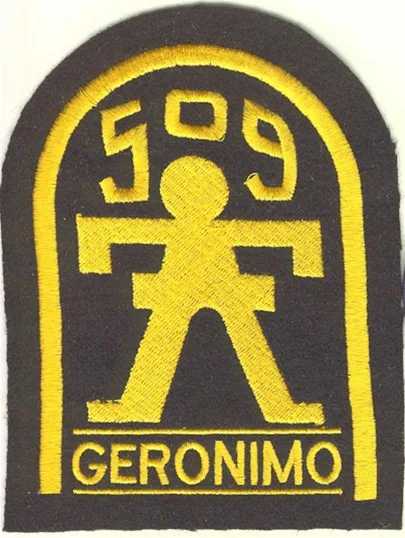
509th PIR Pocket Patch