Quick answer
An art print is a small-batch reproduction of an original artwork, usually printed on thick, textured fine art paper and sold by the artist or a small studio. A poster is a mass-produced, thin paper print made in large runs for broad distribution. If you want a piece that feels substantial and personal, buy an art print. If you need cheap, temporary wall filler, buy a poster.
You have probably seen both terms used for the same thing online. A poster and an art print can look identical in a product photo, but they are made differently, feel different in your hand, and serve different purposes on your wall. Knowing which one you are buying saves you from the disappointment of a flimsy print that curls the moment you unroll it.
This comparison breaks down the real differences using examples from MangoIllustrated's catalog, so you can decide based on paper, size, price, and intent rather than marketing language.
Paper and printing: the biggest practical difference
The clearest difference between an art print and a poster is the paper. Art prints are typically printed on matte museum-quality art paper, which is thicker and has a slight texture that holds ink well and resists fading. Posters are printed on thin gloss or bond paper designed to be cheap enough to produce in large quantities. That is why a poster often arrives rolled tight in a tube and stays curled, while an art print lies flat or flattens quickly.
For example, the You're on Your Own Kid art print is printed on matte museum-quality art paper and ships flat in protective packaging. That flat shipping matters: it means the print arrives ready to frame without days of pressing under books. A mass-produced poster usually ships rolled, and the curl can be stubborn.
- Run your thumb across the edge: art paper feels like cardstock, poster paper feels like thin copy paper.
- Check the shipping method: flat = art print care, rolled tube = typical poster handling.
Size and framing: what fits your space
Posters come in standard movie-poster sizes like 24 x 36 inches, which are easy to find cheap frames for. Art prints often come in smaller, more curated sizes like 8 x 10 inches, which fit standard photo frames and gallery walls without custom matting. Neither is better, but the size should match your wall and your budget for framing.
An 8 x 10 inch art print is small enough to group three or four together on a narrow wall, while a single large poster works as a standalone statement in a dorm room or garage. If you are building a gallery wall, smaller art prints give you more flexibility to rearrange.
- Measure your wall space before buying; a 24 x 36 poster can overwhelm a small bathroom.
- Art prints in 8 x 10 fit off-the-shelf frames, so you save on custom framing.
Price and value: what you are actually paying for
Posters win on upfront cost. You can buy a poster for a few dollars, and that is fine for a temporary decoration. Art prints cost more because they are produced in smaller batches, often by independent artists, and use better materials. The trade-off is longevity: a poster may fade or crease within a year, while a well-framed art print can last for years.
In MangoIllustrated's catalog, art prints are currently listed at USD 10.00, reduced from a comparison price of USD 20.00. That is a mid-range price that reflects the paper and the small-batch production. If you are used to paying USD 5 for a poster, the jump to USD 10 is the cost of better paper and a design you will not see in every big-box store.
- Set a budget per piece: posters for under USD 10, art prints for USD 10–30.
- Remember framing costs; a cheap poster in a custom frame can cost more than an art print in a standard frame.
Artist involvement and uniqueness
Posters are often licensed reproductions of movies, bands, or brands, printed in large runs and sold everywhere. Art prints are usually created or approved by the artist, and many are made to order or in limited batches. That means the design is less likely to appear in every dorm room on your floor.
The Long Live Eras Tour Piano art print is illustrated by Katie Valentine, the artist and founder of MangoIllustrated. That direct artist credit is a marker of an art print: you know who made it and why. A poster rarely comes with that context, which is fine if you just want the image, but it matters if you care about supporting independent work.
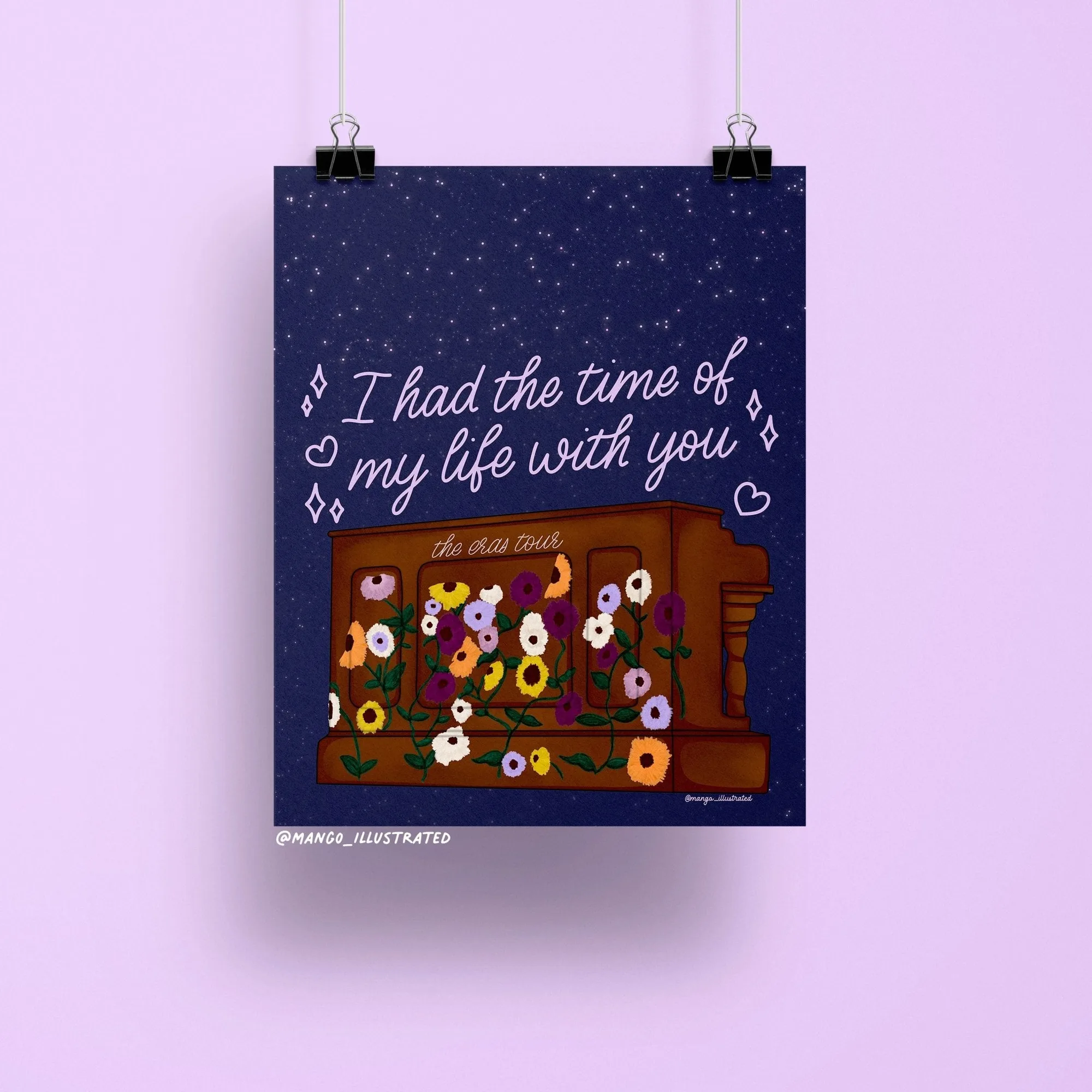
Long Live Eras Tour Piano art print
- Look for an artist name or studio credit on the product page.
- Limited or made-to-order runs mean slower shipping but a more unique piece.
Trade-offs to weigh before you buy
- Paper quality vs price: Art prints use thicker, matte museum-quality paper that resists fading and feels substantial. Posters use thin paper and cost less, but they crease and fade faster. Choose art prints for pieces you plan to keep; choose posters for temporary decor.
- Size flexibility vs statement impact: Art prints often come in smaller sizes like 8 x 10, which are easy to frame and group. Posters come in large standard sizes that make a bold single statement but can overwhelm small rooms. Match the size to your wall: small art prints for gallery walls, large posters for open spaces.
- Artist-made vs mass-produced: Art prints are often created or approved by the artist and produced in small batches, so they feel more personal. Posters are mass-produced and widely available, so they are less unique. If supporting independent artists matters to you, look for a named artist credit like Katie Valentine.
Catalog examples that show the difference
- You're on Your Own Kid art print: Size: 8 x 10 in; Paper: matte museum-quality art paper; Unframed (frame not included); Ships flat in protective packaging. The 8 x 10 size fits standard frames, and the matte art paper plus flat shipping means it arrives ready to frame without curling.
- Long Live Eras Tour Piano art print: 8 x 10 in; Matte museum-quality art paper; Unframed (a frame is not included); Ships flat in protective packaging; Illustrated by Katie Valentine, the artist and founder of MangoIllustrated. The artist credit confirms it is an art print, not a mass-produced poster, and the flat packaging protects the paper in transit.
Which should you buy?
Best for art prints
- You want a piece that lasts and looks good in a standard frame.
- You are building a gallery wall or giving a thoughtful gift.
- You care about supporting independent artists and unique designs.
Not for art prints
- You need cheap, temporary decoration for a party or dorm room.
- You want a large movie or band poster in a standard 24 x 36 size.
- You are not ready to frame or care for a print properly.
Art prints and posters both have a place on your wall, but they are not interchangeable. If you want a piece that feels substantial, fits a standard frame, and supports an artist, an art print like the You're on Your Own Kid or Long Live Eras Tour Piano print is the better buy. If you just need cheap, temporary coverage, a poster will do the job. Decide based on how long you want to keep it and how much you care about the paper in your hand.