Two pads, two approaches to comfort
The Nemo Astro Non-Insulated Lightweight Sleeping Pad and the Flyer Self-Inflating Sleeping Pad both aim for a good night's sleep in the backcountry, but they take very different paths to get there. The Astro is a lightweight air pad built for packability and sustainability, while the Flyer is a hybrid self-inflator that blends foam comfort with air-pad thickness. Your choice depends on how you prioritize weight, setup effort, and the feel of the surface beneath you.
What each pad offers at a glance
-
Astro™ Non-Insulated Lightweight Sleeping Pad: Astro features a 100% bluesign APPROVED, 75D recycled polyester fabric shell and 100% post-consumer recycled Primaloft insulation. It uses lateral baffles to prevent curling and includes a Pillow Baffle to keep your pillow in place. The Astro is designed for campers who want a lightweight, sustainable pad that packs small and stays comfortable without shifting or curling.
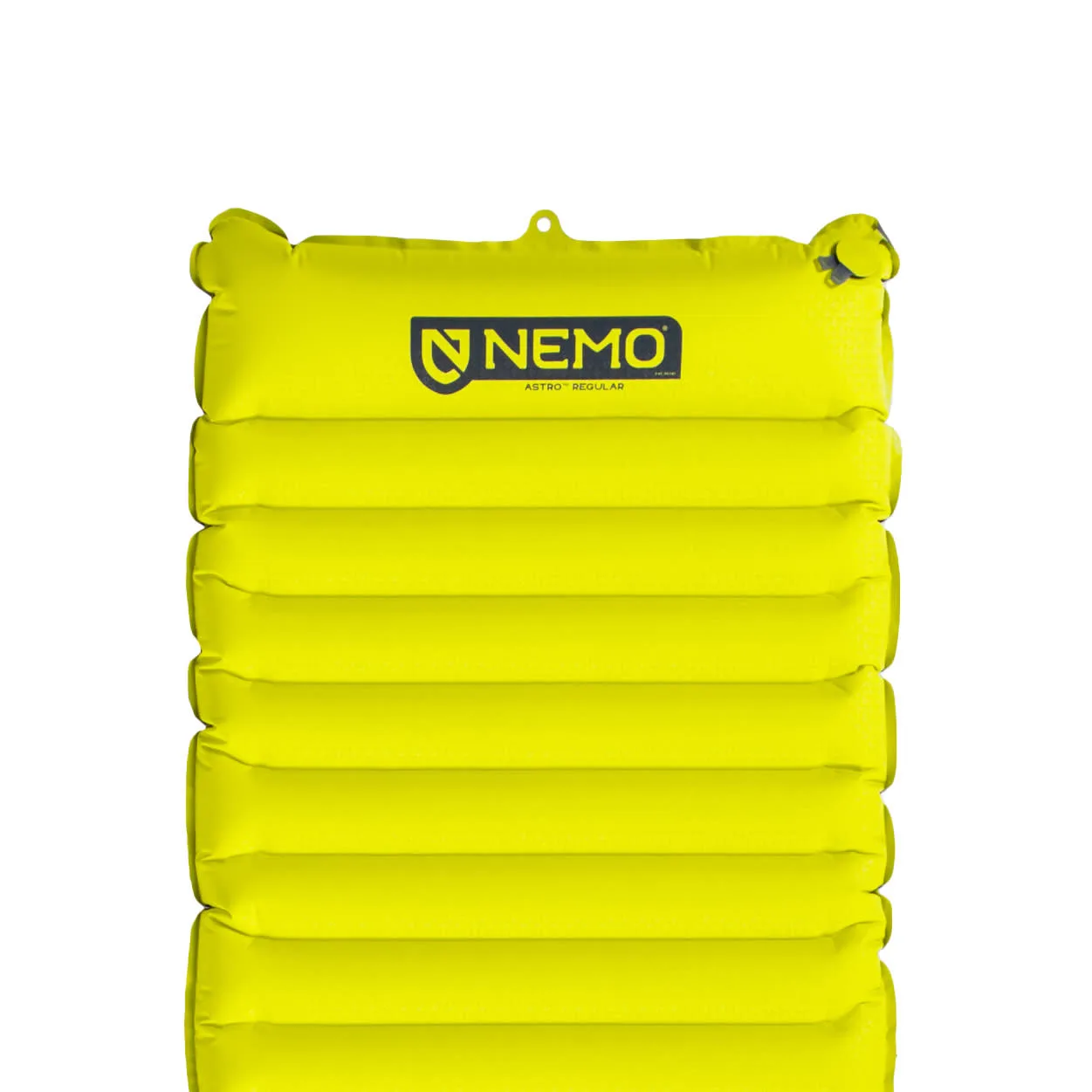
Astro™ Non-Insulated Lightweight Sleeping Pad
-
Flyer™ Self-Inflating Sleeping Pad: Flyer is a self-inflating pad that removes nearly 60% of the foam to reduce weight while maintaining thickness. It uses horizontal foam channels with solid foam links to prevent bottoming out, and includes an air baffle around the perimeter. The Flyer offers the plush durability of a foam pad with the thickness of an air pad, making it a good choice for campers who want a self-inflating setup and a supportive, cushioned feel.
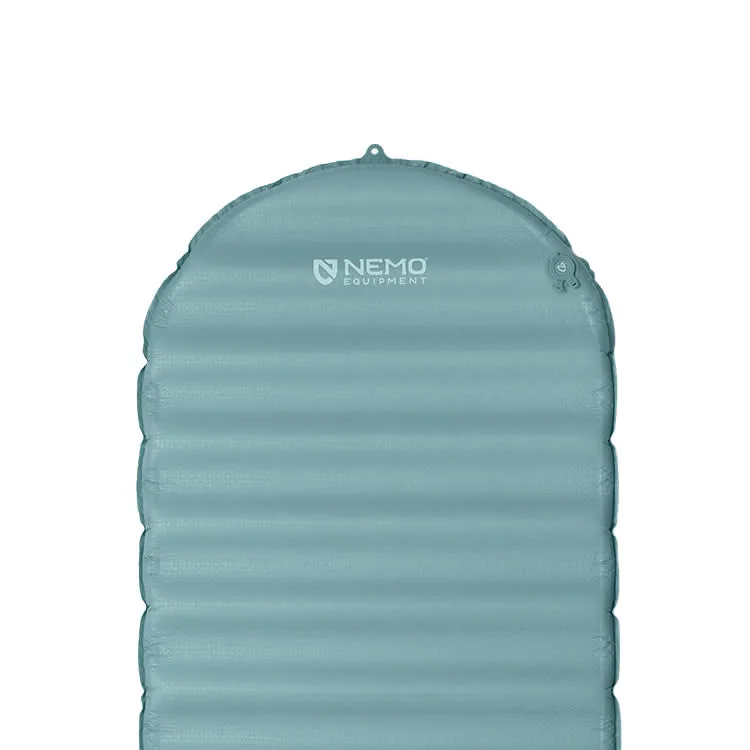
Flyer™ Self-Inflating Sleeping Pad
Key differences between Astro and Flyer
- Inflation method: The Astro is a non-insulated air pad that requires manual inflation (a Vortex pump sack is included). The Flyer self-inflates on its own; its stuff sack doubles as a pump sack to firm up the surface or speed inflation.
- Weight and packability: The Astro is designed as a lightweight pad for adventures where every ounce matters. The Flyer, while impressively packable for a foam hybrid, carries more weight due to its foam core.
- Surface feel and support: The Astro uses lateral baffles that keep the pad flat and prevent curling. The Flyer uses hollowed foam channels that let you sink in slightly, with solid foam links for even support and no bottoming out.
- Sustainability materials: Both pads use recycled materials. The Astro has a 100% bluesign APPROVED 75D recycled polyester shell and post-consumer recycled insulation. The Flyer is a certified bluesign product with a 20D 100% recycled fabric set.
- Available sizes: The Astro comes in Regular and Long Wide. The Flyer comes in Regular Mummy, Regular Wide Mummy, and Long Wide Mummy shapes.
Which pad fits your trip?
If you're a weight-conscious backpacker who values a small pack size and doesn't mind a few minutes of inflation, the Astro is a strong choice. Its lateral baffles and Pillow Baffle add comfort features that make it feel more like a sleeping pad than an air mattress. The sustainable materials also appeal to campers looking to reduce their footprint.
If you prefer a pad that inflates itself and provides a plush, supportive surface, the Flyer is the better pick. Its hybrid design gives you the thickness of an air pad with the durability and cushioning of foam. The self-inflating feature is especially handy after a long day on the trail when you just want to set up camp quickly.
Neither pad is insulated, so both are best suited for three-season use in mild to warm conditions. The supplied records do not confirm R-values or temperature ratings, so if you camp in cold weather, consider an insulated model.