Why a Squat Pad Helps with Form
A barbell resting on your shoulders, neck, or hips can cause enough discomfort to break your concentration. When you're focused on the pain rather than the movement, your form can suffer. The Asuna Ultimate Ergo Squat Pad is designed to address this problem directly. Its extra-thick high-density foam absorbs pressure and protects against barbell strain, so you can focus on your technique instead of the discomfort.
The pad is lightweight and contoured to fit most standard and Olympic bars, and a non-slip surface keeps it securely in place during your lifts. This makes it a practical addition for anyone who wants to train harder and longer without the distraction of barbell pressure.
Positioning the Squat Pad for Different Exercises
The way you place the pad depends on the exercise you're doing. These steps cover the common uses described for the Asuna Ultimate Ergo Squat Pad: squats, lunges, and hip thrusts.
- For barbell back squats: Center the pad on the barbell so it sits across your upper back, not directly on your neck. The extra-thick foam cushions the contact point on your trapezius and shoulders, reducing pressure so you can maintain an upright torso.
- For barbell front squats and lunges: Slide the pad toward the center of the bar, then position it across the front of your shoulders. The contoured shape and non-slip surface help keep the bar stable as you lunge or squat forward.
- For hip thrusts: Place the pad on the barbell where it will rest against your hip crease. The high-density foam absorbs the pressure of the bar against your pelvis, making hip thrusts more comfortable so you can focus on glute activation.
Form Checkpoints While Using the Pad
Even with a comfortable pad, your squat or hip thrust form still matters. Use the pad to reduce discomfort, but keep these form principles in mind:
- Keep your chest up and core braced during squats and lunges. The pad helps with shoulder comfort, but your torso position still controls the bar path.
- For hip thrusts, drive through your heels and avoid letting the bar roll toward your ribs. The non-slip surface helps, but you still need to control the descent.
- Start with a lighter load when you first use the pad. The extra thickness changes the bar's contact feel, so give yourself a session to adjust before adding your working weight.
What the Asuna Ultimate Ergo Squat Pad Provides
-
Asuna Ultimate Ergo Squat Pad: The Asuna Ultimate Ergo Squat Pad features extra-thick high-density foam that absorbs pressure and protects against barbell strain. This is the key feature that makes the pad effective for comfort. The high-density foam distributes the load over a larger area, reducing the sharp pressure points that can cause you to shift or lose form during a lift.
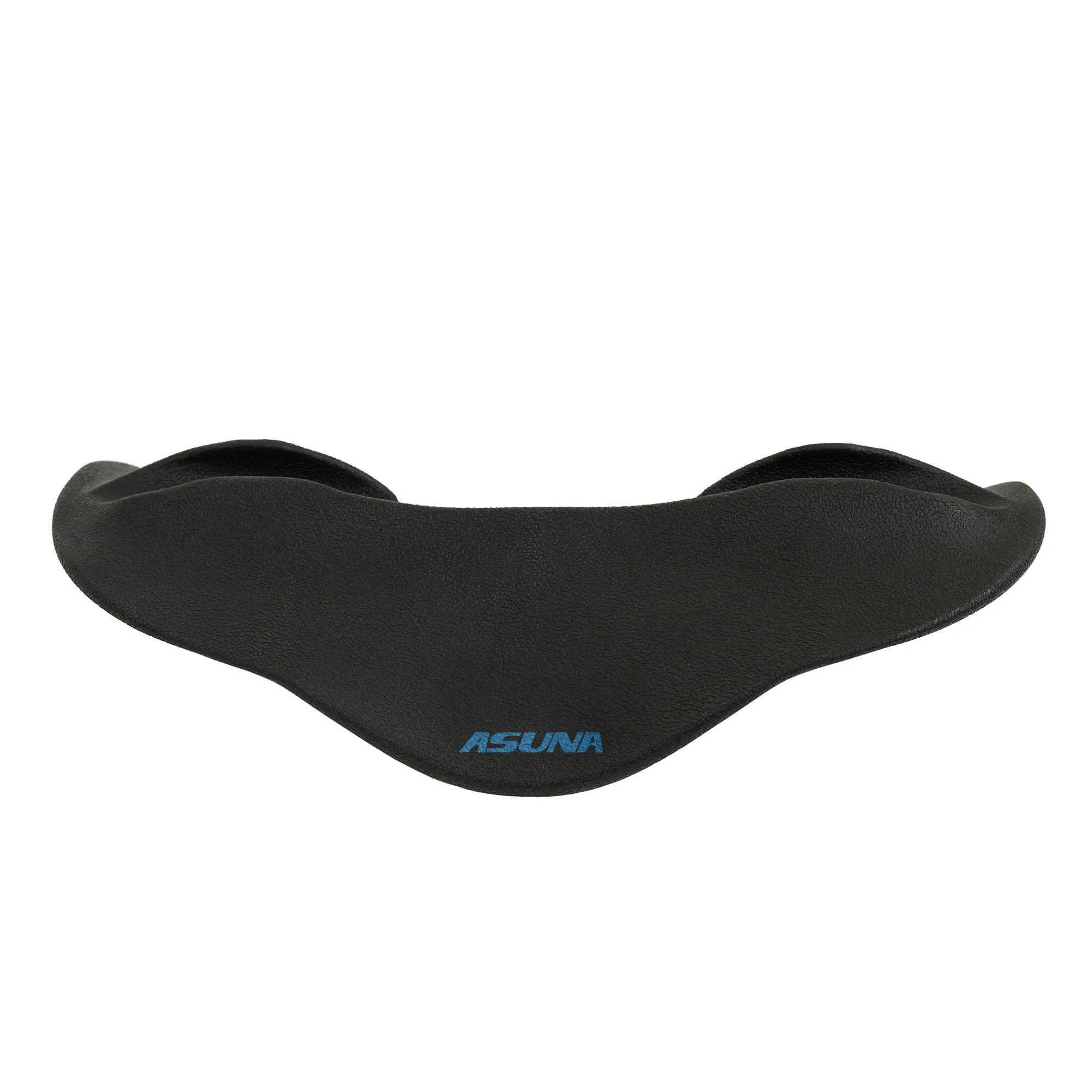
Asuna Ultimate Ergo Squat Pad
-
Asuna Ultimate Ergo Squat Pad: The pad has a non-slip surface and fits most standard and Olympic bars. A pad that slips during a lift is worse than no pad at all. The non-slip surface ensures the pad stays where you place it, and the compatibility with standard and Olympic bars means it works with the barbells most home gyms use.
When the Pad Is Most Useful
The Asuna Ultimate Ergo Squat Pad is ideal for anyone who finds barbell contact uncomfortable, especially during high-rep sets or when using a bar with aggressive knurling. It's also a practical tool if you're recovering from shoulder or hip sensitivity and want to keep training without aggravating the area.
That said, the pad adds a small amount of thickness between you and the bar. If you compete in powerlifting or Olympic lifting, you may prefer to train without it to maintain the direct bar feel required in competition. For general strength training and hypertrophy work, the comfort gain usually outweighs the slight change in bar sensation.