Two Warm Synthetic Jackets for Wet Conditions
When you need reliable insulation that still performs when wet, synthetic puffy jackets are the go-to choice. The Arc'teryx Atom SV Hoody and the Proton Hoody F25 are two of the warmest options in the Atom and Proton lines, but they serve different roles in your layering system. Both use synthetic insulation that retains the majority of its insulation value when wet, making them solid picks for damp Pacific Northwest outings or alpine missions where weather can turn quickly.
This comparison focuses on how each jacket handles warmth, breathability, fit, and intended use, so you can decide which one belongs in your pack.
Warmth and Insulation at a Glance
The Atom SV Hoody is the warmest option in the Atom series. It uses Coreloft 120 synthetic insulation (80% recycled) throughout the body, and weighs 17.3 oz (490 g). The Proton Hoody F25 uses PrimaLoft Gold Active Vent insulation—80 gsm in the body and 60 gsm in the hood—and weighs 14.6 oz (415 g). While the Proton is warmer than the Atom LT, the Atom SV is designed for colder, more static conditions or as a lightweight belay parka.
- Atom SV Hoody: Warmest Atom model. Coreloft 120 insulation. 17.3 oz (490 g). Can be worn as a midlayer under a shell or as an outer layer.
- Proton Hoody F25: Warmer than Atom LT, lighter than Atom SV. PrimaLoft Gold Active Vent 80/60 gsm. 14.6 oz (415 g). Designed for active use in moderate temperatures.
Breathability and Activity Level
The Proton Hoody F25 is described as an air-permeable mid-layer “active” insulation piece. Its Fortius Air 20 face fabric is more durable than similar Arc'teryx pieces, and the Dope Permeair 20 lining is built for temperature control and moisture management. This makes it a strong choice for high-output activities like ski touring or cold-weather climbing where you generate a lot of heat.
The Atom SV Hoody, on the other hand, uses a Tyono 30 denier mechanical stretch mini-ripstop outer fabric with a PU coating for wind and moisture resistance. Its side panels use a 20d nylon plain weave with weft stretch for added breathability, but the overall construction is more weather-resistant than air-permeable. It’s better suited for lower-output days or as a belay layer when you need maximum warmth.
Key Specifications
-
Atom SV Hoody Men's: Tyono 30 Denier Mechanical Stretch 100% Nylon Mini-Ripstop 55gsm Outer Fabric with PU Coating. Coreloft 120 insulation. 17.3 oz (490 g). Regular fit. The PU coating adds wind and moisture resistance, making this jacket a good outer layer in wet, windy conditions. The regular fit allows layering underneath.
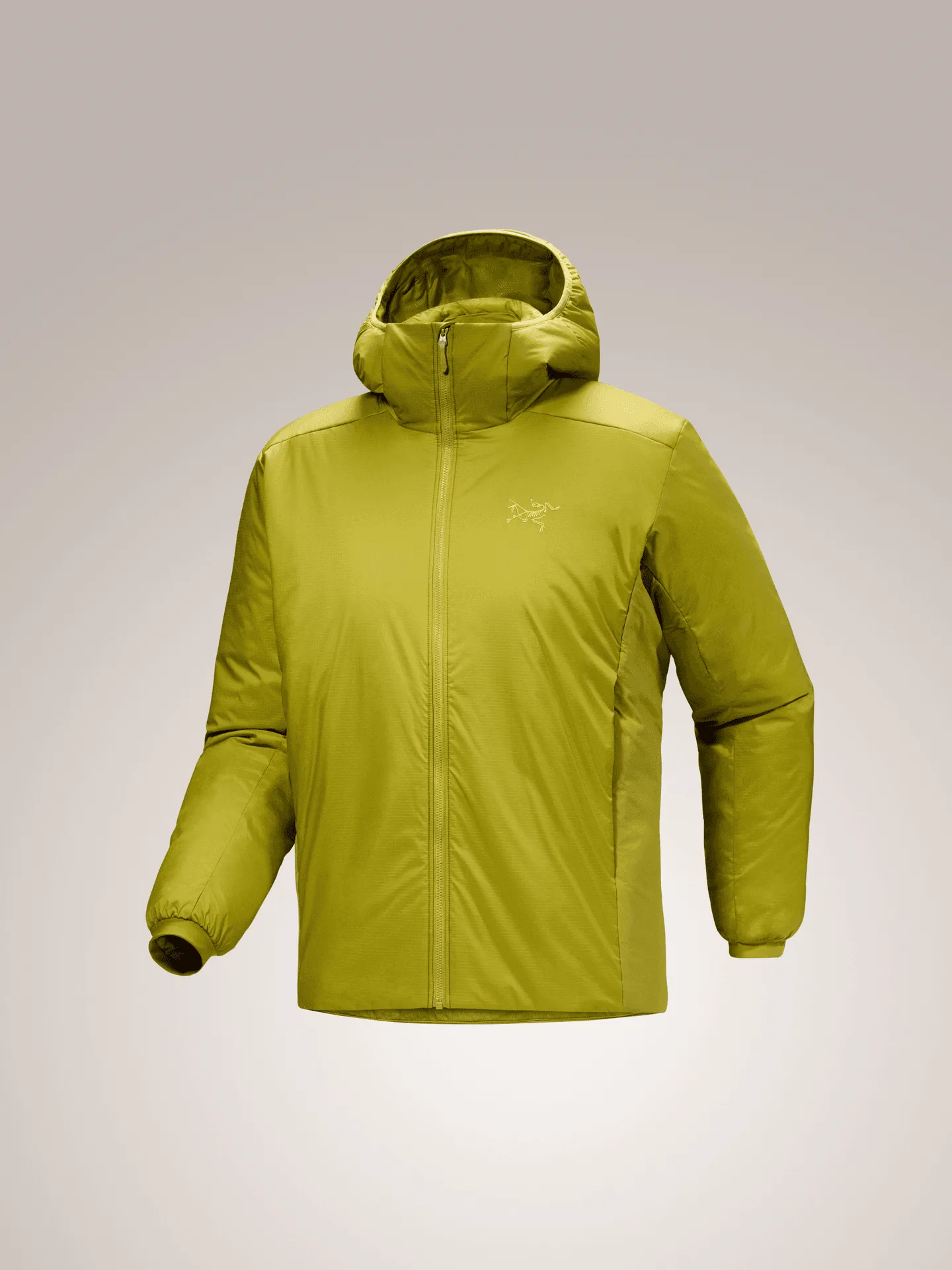
Atom SV Hoody Men's
-
Proton Hoody Men's F25: Fortius Air 20 Face Fabric (84% nylon, 16% elastane, 42% recycled). PrimaLoft Gold Active Vent 80gsm body / 60gsm hood. 14.6 oz (415 g). Fitted fit. The air-permeable fabric and active insulation make this jacket ideal for high-output activities where breathability is critical. The fitted cut reduces bulk under a shell.
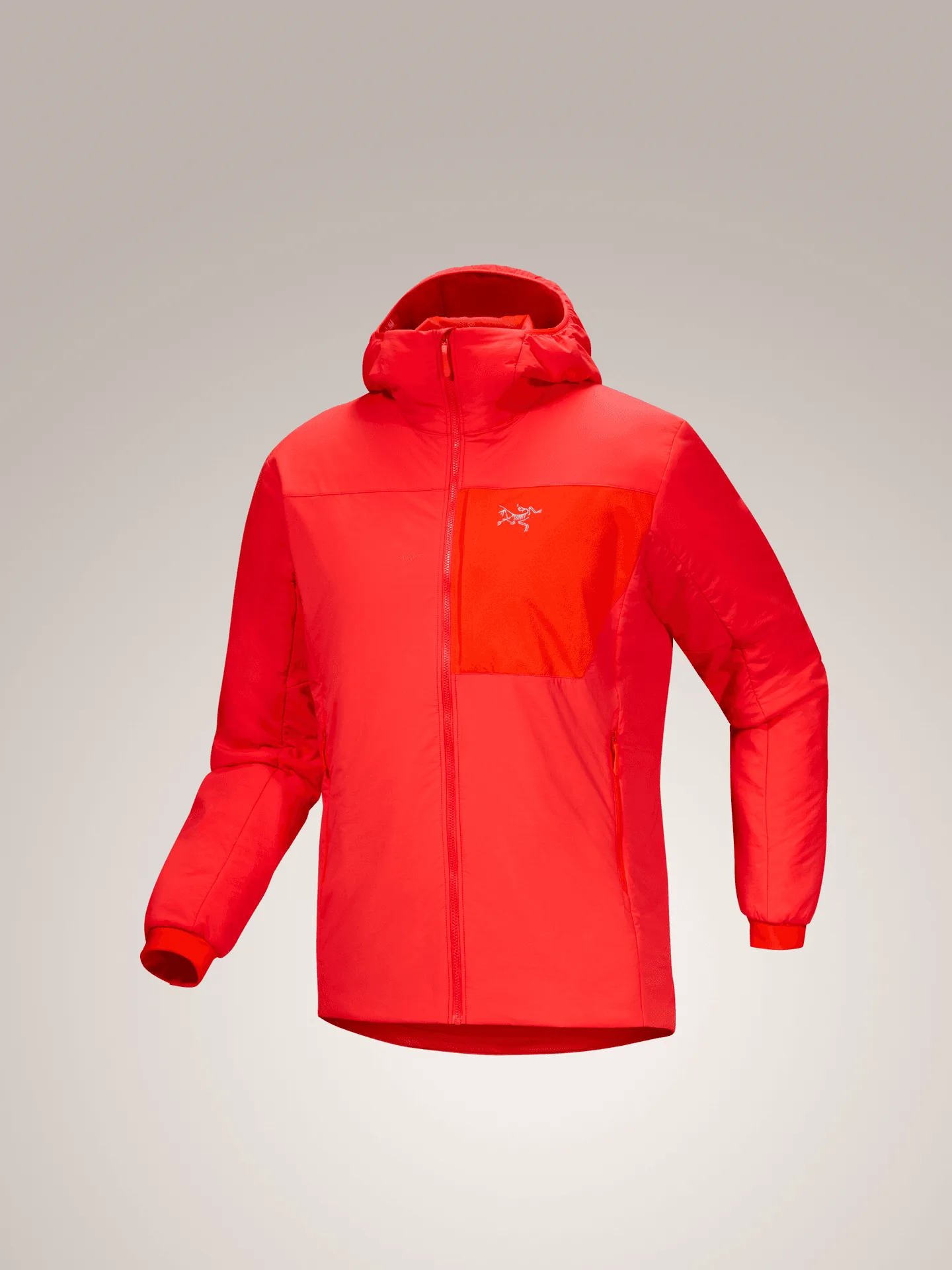
Proton Hoody Men's F25
Fit and Layering Considerations
The Atom SV Hoody has a Regular fit, which gives you room to layer a base layer and midweight fleece underneath without feeling restrictive. The Proton Hoody F25 is described as Fitted, meaning it’s more streamlined and designed to be worn close to the body or under a hardshell. Both hoods are helmet-compatible and feature adjustable drawcords, so they work well for climbing or skiing.
If you plan to use your jacket primarily as an outer layer in cold, wet weather, the Atom SV’s regular fit and weather-resistant face fabric are advantages. If you need a breathable midlayer for active use in moderate temperatures, the Proton’s fitted cut and air-permeable construction will serve you better.
What the Supplied Information Doesn’t Cover
Neither jacket has supplied operating instructions or care intervals, so we can’t offer specific washing or drying guidance beyond general synthetic jacket care. Both use No Slip Zip full-length front zippers, but the Proton adds dual back flaps that prevent wind penetration—a detail worth noting for windy conditions. The Atom SV’s zipper does not have that feature according to the supplied records.
For specific warmth ratings, waterproofness, or breathability numbers, you’ll need to refer to Arc'teryx’s official documentation. The supplied evidence confirms only that both retain insulation value when wet and are designed for wet-weather use.