Quick Answer
Choose the Atomos Shogun Classic if you need a bright HDR monitor with multi-cam SDI inputs; pick the Blackmagic HyperDeck Shuttle 4K Pro when reliable broadcast recording and long-duration capture matter more.
Monitoring vs. Recording Focus
The Shogun Classic is built around its 7-inch HDR screen with 3000 nits brightness, making it a production monitor that also records. The HyperDeck Shuttle 4K Pro, on the other hand, is a dedicated broadcast recorder with a 7-inch touchscreen that prioritizes capture reliability over monitoring features.
If you frequently need to check focus, exposure, or HDR preview on set, the Shogun's bright display is a clear advantage. But if your main concern is dependable recording without extra monitoring bells and whistles, the HyperDeck's design is more straightforward.
Recording Formats and Storage
The Shogun Classic records in ProRes and DNx, which are editing-friendly formats widely used in post-production. The HyperDeck Shuttle 4K Pro supports H.264, H.265, and Apple ProRes, giving you flexibility between efficient delivery codecs and high-quality intermediates.
Storage differs too: the Shogun relies on external media (typically SSD), while the HyperDeck includes a 2TB NVMe cache, which simplifies long recordings and reduces the need to carry extra drives. This makes the HyperDeck a stronger option for long events or continuous capture.
If you already have a supply of SSDs and prefer ProRes/DNx workflows, the Shogun fits well. For extended recording sessions with minimal media management, the HyperDeck's internal storage is a major convenience.
Connectivity and Multi-Camera Use
The Shogun Classic features 4 SDI inputs, enabling multi-camera switching and recording directly from several sources. The HyperDeck Shuttle 4K Pro offers 12G-SDI and HDMI 2.0, which supports high-bandwidth signals but is more oriented to a single-camera or broadcast chain.
For live productions or multi-cam shoots, the Shogun's multiple inputs are a key advantage. If your work is mostly single-camera or you route through a separate switcher, the HyperDeck's connectivity is sufficient and possibly simpler.
Trade-Offs to Consider
- Monitoring quality vs. recording reliability: The Shogun Classic gives you a 3000-nit HDR screen for accurate on-set monitoring, while the HyperDeck Shuttle 4K Pro focuses on dependable broadcast recording with a touchscreen interface. Assess whether you spend more time framing shots or capturing long takes.
- Multi-cam inputs vs. single-channel simplicity: The Shogun's 4 SDI inputs let you record from multiple cameras, whereas the HyperDeck's 12G-SDI and HDMI 2.0 suit a single-camera or switched feed. Count your camera inputs before choosing.
- External media vs. internal storage: The Shogun records to external SSDs, giving you flexible media management, while the HyperDeck's 2TB NVMe cache eliminates the need for extra drives during long shoots. Consider your typical recording length and media workflow.
Product Facts
-
Atomos Shogun Classic – Moniteur/Enregistreur 4K: The Atomos Shogun Classic is a 7-inch HDR monitor-recorder with 4 SDI inputs and records in ProRes and DNx. Its bright HDR screen and multi-cam inputs make it ideal for on-set monitoring and live multi-camera productions.
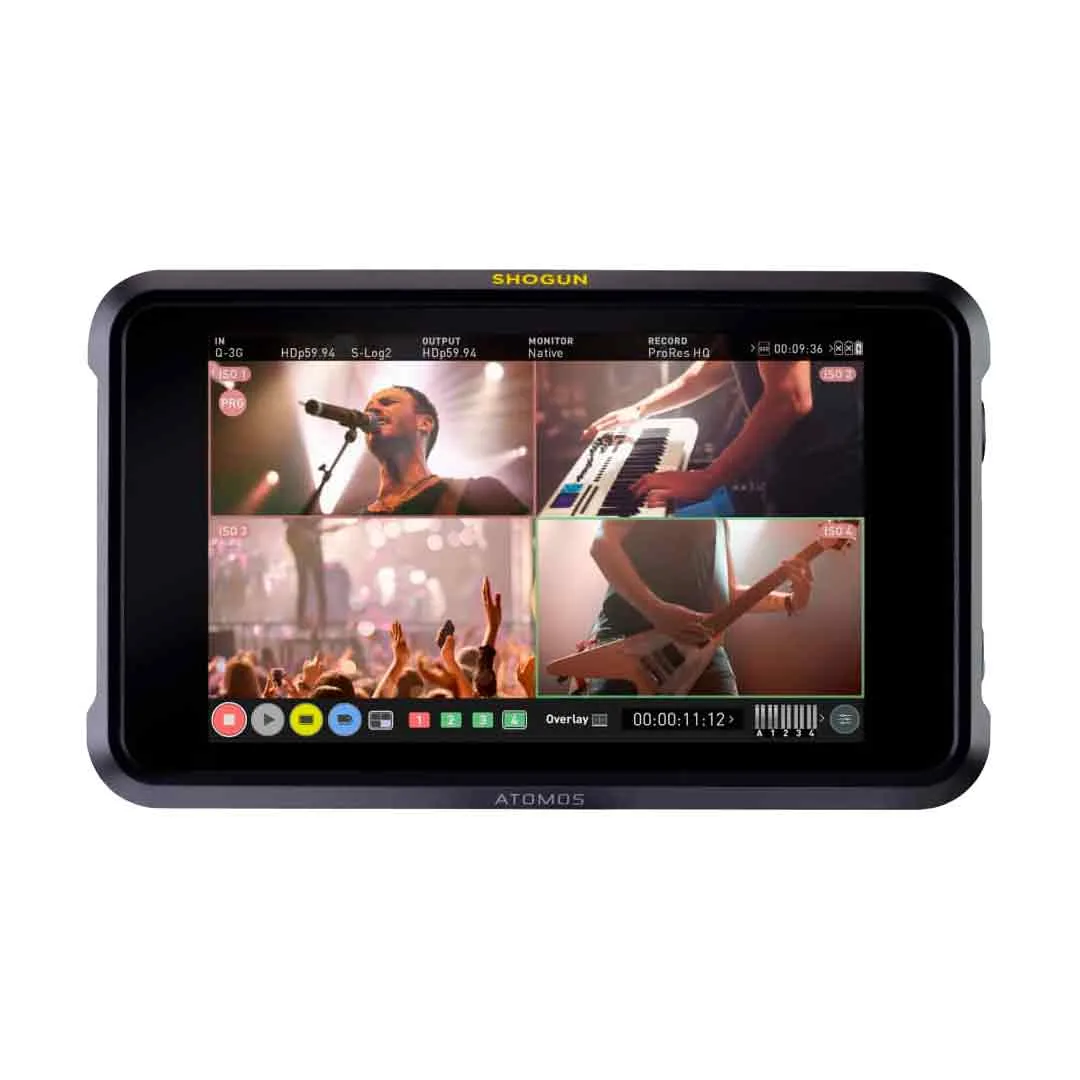
Atomos Shogun Classic – Moniteur/Enregistreur 4K
-
Blackmagic Hyperdeck Shuttle 4K Pro 2TB – Enregistreur Vidéo: The Blackmagic HyperDeck Shuttle 4K Pro includes 2TB NVMe cache storage and supports H.264, H.265, and Apple ProRes recording. The large internal storage and versatile codecs enable long, reliable recording sessions without external drives.
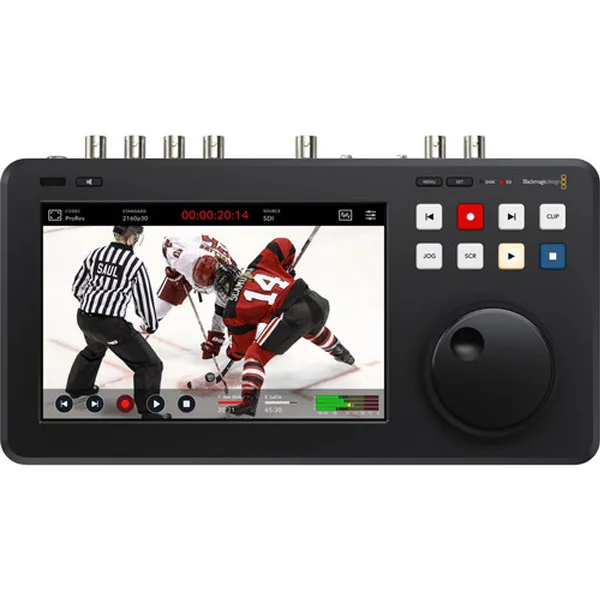
Blackmagic Hyperdeck Shuttle 4K Pro 2TB – Enregistreur Vidéo
Which One Fits You?
Best for
- Directors of photography and camera operators who need a bright HDR monitor for focus and exposure checks.
- Live event and multi-cam production teams that require multiple SDI inputs for simultaneous recording.
Not for
- Broadcast engineers or event recorders who need long, unattended recording sessions with minimal media handling.
- Users who prefer a single-camera, codec-flexible recorder with large internal storage.