Quick answer
Treat Attack on Titan: The Last Stand as a cooperative defense game: set up the depot and Titan threats first, assign team roles, then work through each round by coordinating attacks and resources until the Titans are felled or the depot falls.
Why the supply depot changes every decision
The game frames the session around one hard fact: Titans have broken through Wall Maria and are heading for the supply depot in Trost. If the depot falls, the resources needed to keep fighting are gone. That makes the depot more than scenery—it is the clock your team is racing against. Every round, ask whether your actions protect the depot or leave it exposed.
Because the fight is cooperative, players share the consequences of a weak round. A player who chases a Titan away from the group can still lose the session if the depot is left undefended. Use the depot as your common reference point when deciding who does what.
What the cooperative structure asks of your group
In a cooperative anime board game like this, the challenge is not outsmarting other players but managing a shared threat with limited actions. That means talking through each round before committing. New groups often treat their turns as private decisions; here, a short planning phase before anyone acts prevents most wasted moves.
The game also rewards accepting that you cannot save everything. Some Titan advances will cost you. The skill is choosing which losses you can absorb while keeping the depot intact and your team in the fight.
How a session plays, step by step
- Set up the depot and Titan threats: Place the supply depot and the Titan forces as the rules direct, then read the scenario aloud so everyone understands the starting pressure. Common mistake: rushing setup and forgetting which Titans are already closest to the depot. Before anyone draws a card or rolls a die, confirm the depot's position and the nearest Titan.
- Assign team roles and review abilities: Have each player choose or confirm their character and read their abilities aloud. Checkpoint: every player should be able to state one thing their character does well and one limitation before the first round begins.
- Plan the round together before acting: Spend a minute as a group deciding which Titans to engage and who guards the depot. Common mistake: players acting in turn order without a shared plan, which leaves gaps in defense. If two players plan to attack the same Titan, confirm the order so neither wastes an action.
- Resolve player actions and Titan advances: Work through each player's action, then advance the Titans as the rules require. Checkpoint: after the Titan phase, pause and ask whether the depot is still safe for the next round.
- Fell Titans and manage resources: When a Titan is defeated, remove it and update any shared resources immediately so the table sees the change. Common mistake: forgetting to adjust resources after a kill, which makes later rounds harder than they should be. Keep a visible tally of remaining Titans and depot health so no one has to guess.
- Repeat rounds until the last stand resolves: Continue the plan-act-advance cycle until the Titans are felled or the depot falls. Checkpoint: if the depot is close to falling, switch the group's priority to defense before chasing another Titan.
The game at a glance
-
Attack on Titan: The Last Stand: The game is set after Titans break through Wall Maria and advance on the supply depot in Trost. Knowing the depot is the target helps your group prioritize defense from the first round rather than reacting late.
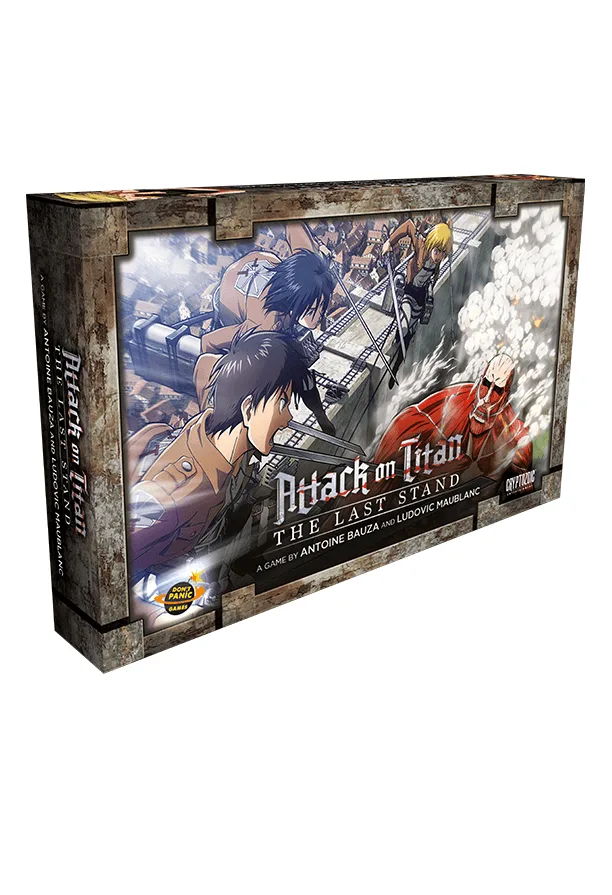
Attack on Titan: The Last Stand