What the AUDIO RADAR can and cannot do for your mix
The AUDIO RADAR BY AIRDROP GAMING is a camera and lighting accessory designed for gaming setups, finished in black to match your gear. It belongs to the AUDIO RADAR series and is intended for cameras and lighting applications. That description matters: the supplied record does not include microphone inputs, audio processing controls, or measured performance claims, so treat it as a visual companion to your existing audio chain rather than a replacement for a mixer or interface.
The practical value is visual audio feedback. If you already have a microphone and game audio running through a mixer, interface, or software, the AUDIO RADAR gives you a physical reference point in your camera-and-lighting setup. Use it to keep your eyes on the room while you adjust levels, not as a calibrated meter.
A grounded setup sequence for balancing mic and game audio
These steps use only what the catalog confirms about the AUDIO RADAR and standard audio-monitoring practice. The accessory is not confirmed to measure loudness, so every checkpoint relies on your own listening and your existing software meters.
- Mount the AUDIO RADAR where your camera and lighting already live: Because the product is described as a camera and lighting accessory, place it within the same rig or area as your webcam and key light. Keep the black finish oriented consistently so it reads as part of the setup rather than a loose object in frame.
- Set your microphone level before touching game audio: Speak at your normal streaming volume and adjust the mic gain in your existing interface or software until your voice sits comfortably in your headphones. The AUDIO RADAR does not confirm mic input or level metering, so use your software meter for this step.
- Bring game audio in at a lower starting point: Start game volume below your voice level, then raise it until you can hear cues without masking speech. Use the AUDIO RADAR as a visual anchor while you switch between listening to yourself and listening to the game.
- Check the balance from the viewer's perspective: Record a short test clip or monitor your stream output. Compare how your voice and game audio sit together. Adjust one source at a time so you can hear what changed.
- Lock the settings and note them: Once the balance feels right, record your mic gain, game volume, and any software mixer positions. The AUDIO RADAR has no confirmed memory or preset function, so your notes are the reliable reference for next time.
Catalog evidence for the AUDIO RADAR BY AIRDROP GAMING
-
AUDIO RADAR BY AIRDROP GAMING - Black: Camera and lighting accessory designed for gaming setups, in Black. Confirms the product's role in your camera-and-lighting rig, not as an audio processor or mixer.
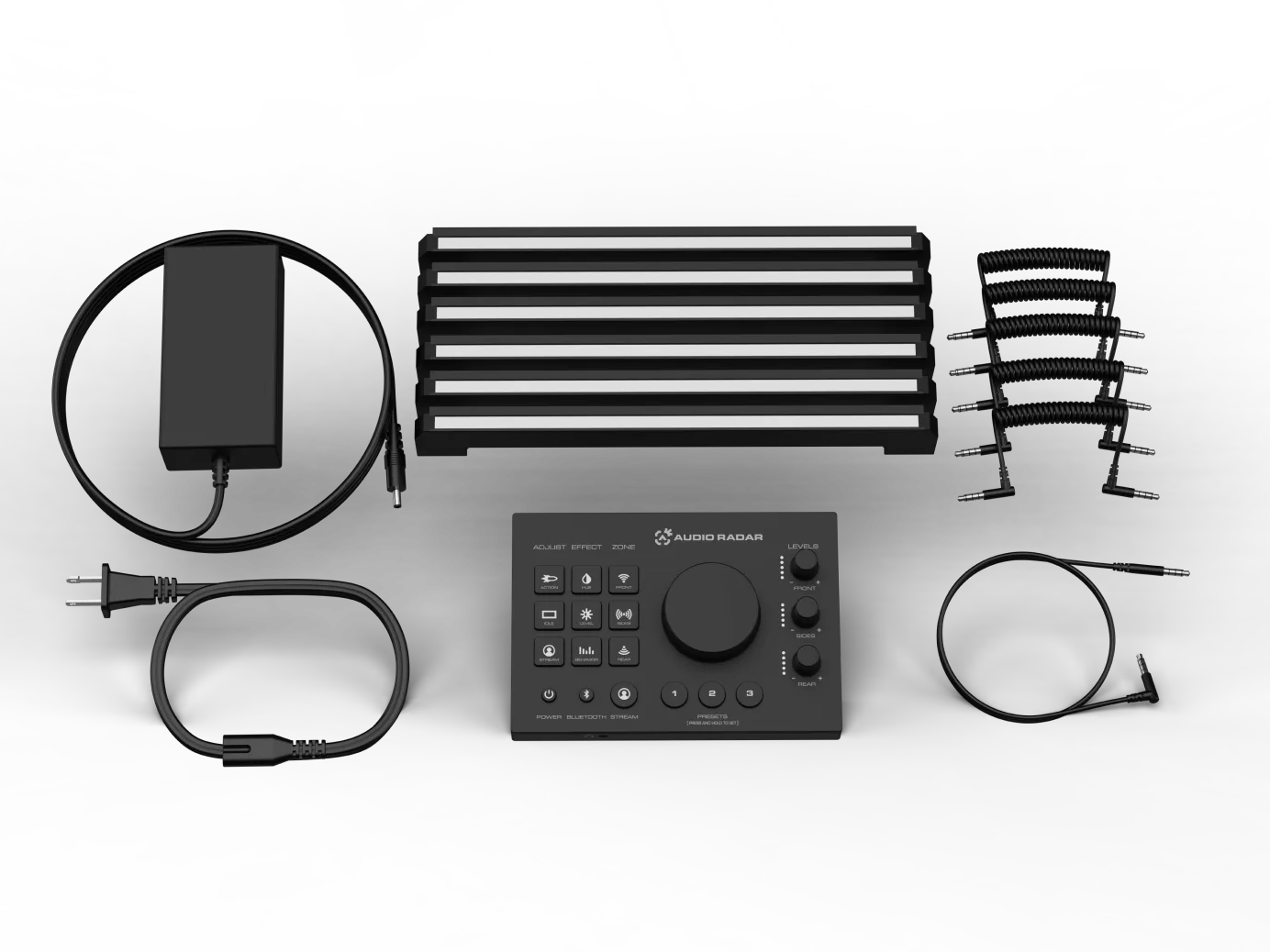
AUDIO RADAR BY AIRDROP GAMING - Black
-
AUDIO RADAR BY AIRDROP GAMING - Black: Part of the AUDIO RADAR BY AIRDROP GAMING series. Identifies the product family if you are matching other gear or checking series compatibility.
-
AUDIO RADAR BY AIRDROP GAMING - Black: Black color option available for a cohesive look with your gaming gear. The only confirmed specification is cosmetic, so visual consistency is the documented benefit rather than measurable audio performance.
Streaming audio monitoring tips that work alongside a visual accessory
The AUDIO RADAR is not confirmed to provide metering, alerts, or audio processing. These tips keep your monitoring honest while you use it as a visual reference.
- Monitor with headphones, not speakers: Headphones prevent game audio from bleeding into your mic and give you a consistent reference for balancing voice against game sound.
- Use your software meter as the source of truth: Rely on the level meter in your streaming or recording software for mic levels. The AUDIO RADAR's supplied record does not include metering specifications.
- Change one level at a time: Adjust mic gain, then game volume, then any music or chat source separately. This makes it clear which change improved or hurt the balance.
- Recheck after changing games: Different games have different default loudness. Rebalance game audio after switching titles rather than assuming your previous setting still fits.
What the supplied information does not confirm
The catalog record for the AUDIO RADAR BY AIRDROP GAMING lists only the black color option and its role as a camera and lighting accessory for gaming setups. It does not confirm microphone inputs, audio pass-through, level metering, lighting modes, software integration, or any measured audio performance. That absence is a decision limitation, not a negative product claim: the information supplied simply does not establish those capabilities.
If your balancing workflow depends on precise loudness targets or automatic gain control, plan to rely on your existing audio interface or streaming software. Treat the AUDIO RADAR as a visual part of the camera-and-lighting setup that helps you keep your attention in the right place while you listen and adjust.