What an Automatic Door Opener Does for Your Routine
An automatic chicken coop door opener removes the need to be home at dawn and dusk to let your flock out and lock them in. Instead of rushing outside before work or worrying about forgetting to close the door at night, a timer or light sensor handles it for you. The ChickenGuard Automatic Chicken Coop Door Opener, for example, uses an integrated timer and full manual control, so you can set exactly when the door opens and closes—or override it when needed.
The Real Costs and Savings
The upfront price of the ChickenGuard Standard opener is around $125.99 (catalog comparison price $209.99), which is a significant investment compared to a simple manual latch. However, it runs on just 4 AA batteries, and the manufacturer estimates you won't need to change them for at least a year under normal use. That means no wiring costs, no electrician call-out, and no ongoing electricity bill. Over a few years, the convenience can easily outweigh the initial spend if you currently drive home every evening just to close the coop door.
The trade-off is that battery-operated openers require you to remember an annual battery change and to check the low-battery warning light on the LCD screen. If you often forget routine maintenance, a hardwired model might be a better fit, though the ChickenGuard's simple design and clear warning system make it easy to stay on top of.
What the ChickenGuard Standard Opener Offers
-
ChickenGuard Automatic Chicken Coop Door Opener: Runs on 4 AA batteries with ultra-low consumption; batteries last at least a year under normal use. No wiring or ongoing electricity costs, and the low battery warning light helps you avoid unexpected failures.
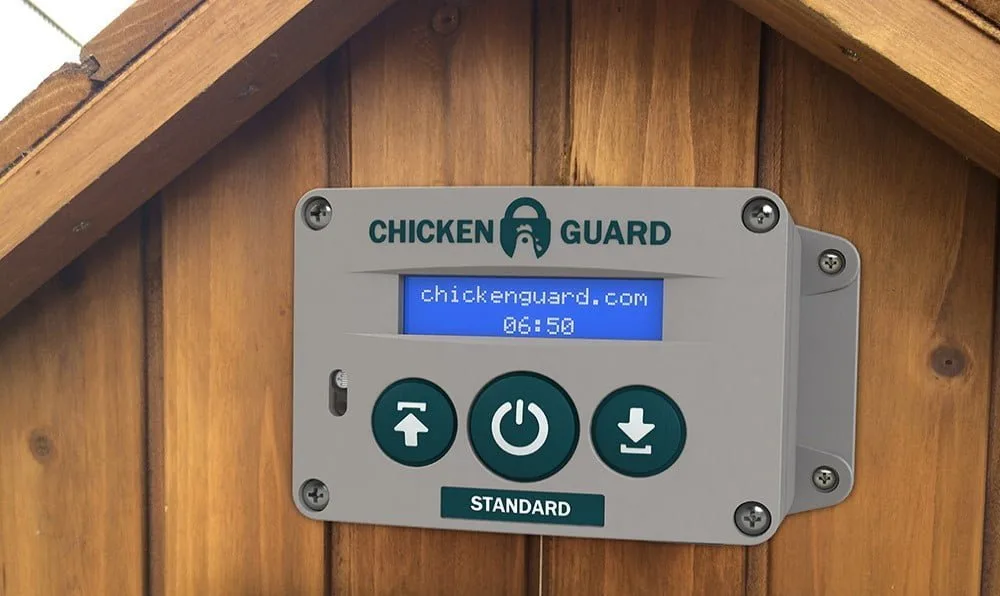
ChickenGuard Automatic Chicken Coop Door Opener
-
ChickenGuard Automatic Chicken Coop Door Opener: Integrated timer allows you to set the door to open and close at specific times, or use manual control for one or both actions. You can customize the schedule to match your flock's habits—for example, automatic open in the morning and manual close at night.
-
ChickenGuard Automatic Chicken Coop Door Opener: No minimum or maximum door heights, and installation only requires a screwdriver. It works with virtually any coop, and you don't need advanced DIY skills to set it up.
Convenience vs. Control: What You Gain and Lose
The biggest advantage of an automatic opener is peace of mind. You can go away for a weekend or work late without worrying about your flock. The ChickenGuard also includes a failsafe mode, which adds extra security if something goes wrong. The large buttons are designed to be pressed with gloves on in winter, and manual override means you can open or close the door at any time without affecting the next day's cycle.
On the downside, you are relying on batteries and electronics. If the batteries die and you miss the warning, the door may not operate. The opener's lifting capacity is 2kg (with a 4kg option), so it won't work with very heavy or custom doors. Also, the unit attaches to the outside of the coop with screws, which means you'll need to drill into your coop—something to consider if you have a rental or a coop you plan to move.
Is It Right for Your Flock?
The ChickenGuard opener is suitable for chickens, ducks, and other poultry. A useful feature is the option to set the door NOT to open or close automatically—handy for ducks that don't follow a strict routine. If you have a small backyard flock and a regular schedule, the convenience is hard to beat. For larger operations or coops with unusually heavy doors, you may need a more powerful model, but for most standard coops, this opener is a solid choice.
Installation and Maintenance Realities
Installation is straightforward: secure the control box to the front of your coop with screws, set your preferences on the LCD screen, and you're done. The only DIY skill required is using a screwdriver. The manufacturer provides an instruction manual and video guides for setup and adjusting settings.
Maintenance is minimal: change the batteries once a year using high-quality alkaline batteries, and check the low battery indicator periodically. The unit comes with a 1-year manufacturer warranty (some listings mention a full 2-year warranty, so confirm at purchase). If something goes wrong, you have a year of coverage, which is reasonable for a device that runs daily.
Automatic vs. Manual: A Quick Comparison
- Cost: Automatic: ~$126 upfront, then ~$5–10 per year for batteries. Manual: $0–20 for a latch or hook.
- Daily effort: Automatic: set once, then it operates on its own. Manual: you must be present twice a day, every day.
- Reliability: Automatic: depends on batteries and electronics; low-battery warning helps. Manual: always works if you remember to close it.
- Flexibility: Automatic: programmable timer, manual override, and failsafe mode. Manual: full control but no automation.
- Installation: Automatic: requires screwing the unit to the coop. Manual: usually no installation or simple hardware.
Final Verdict: When It's Worth It
An automatic chicken coop door opener is worth the investment if you value convenience, have a regular work schedule, or want to protect your flock from predators when you're not home. The ChickenGuard Standard opener offers a simple, battery-powered solution that fits most coops and requires minimal maintenance. If you're comfortable with the upfront cost and annual battery change, it can save you hundreds of trips to the coop each year and give you real peace of mind.