Getting Started with the Autumn Vibes No Pull Harness
The Beast & Buckle Autumn Vibes No Pull Harness combines a seasonal fall pattern with the same sturdy, no-pull design that helps manage strong pullers without straining the neck or spine. Before your first walk, you'll want to adjust the straps for a secure, comfortable fit. This guide walks through sizing, strap adjustments, and what to check before heading out.
What the Autumn Vibes No Pull Harness Offers
-
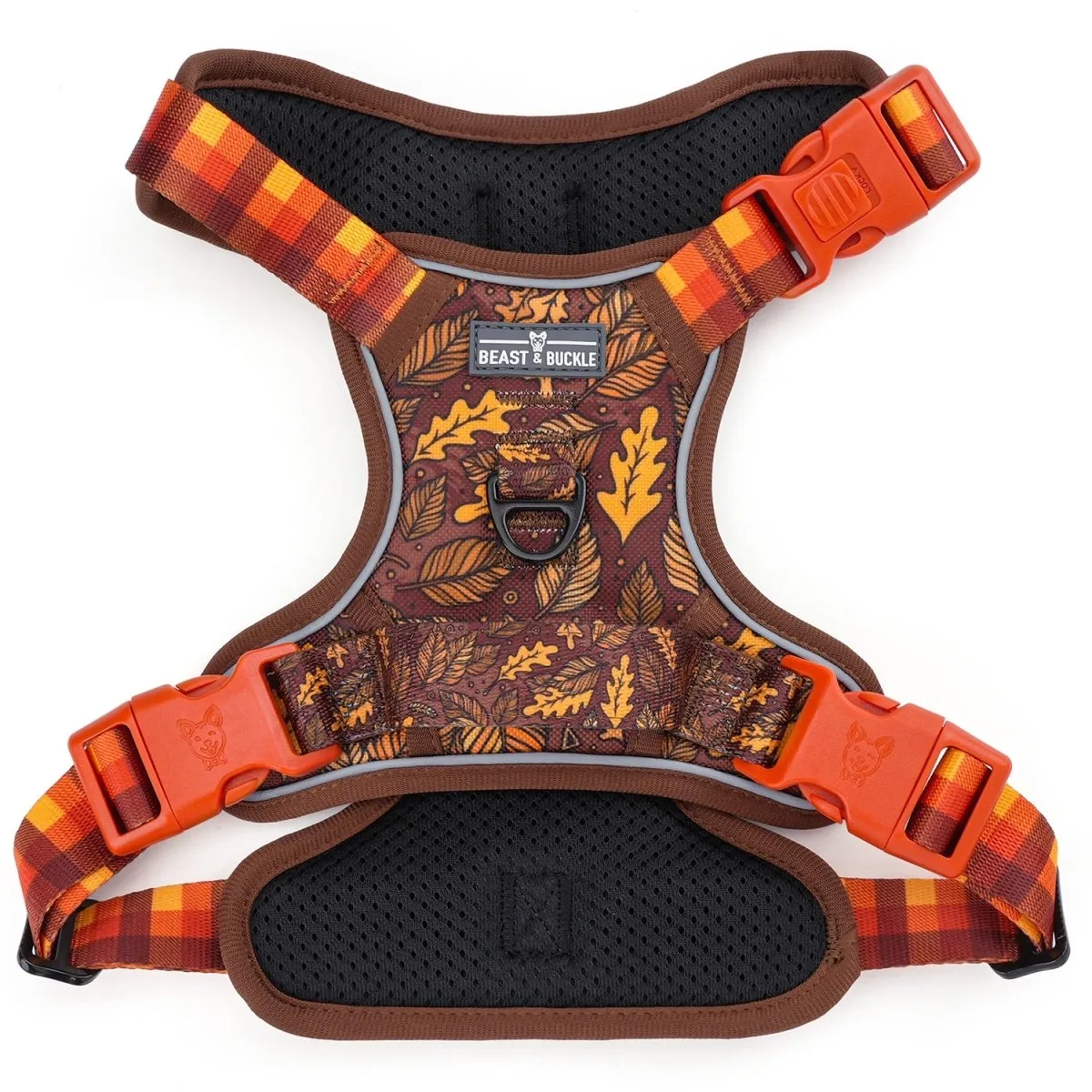
Autumn Vibes No Pull Dog Harness: The harness features D-rings on both sides and a safety handle on the back for emergencies. The dual D-rings let you attach the leash to the front ring for no-pull training or the back ring for casual walks. The handle gives you quick control when needed.
Autumn Vibes No Pull Dog Harness
-
Autumn Vibes No Pull Dog Harness: It uses a three-buckle setup so you don't have to pull the harness over your dog's head. This makes putting on and taking off the harness easier, especially for dogs who dislike things going over their head.
-
Autumn Vibes No Pull Dog Harness: Extra-cushioned padding on the inside provides comfort during walks. The padding helps prevent chafing and keeps your dog comfortable even during longer walks or training sessions.
Step-by-Step Fit and Adjustment
The Autumn Vibes No Pull Harness is available in three sizes: S (15-25 lbs.), M (25-50 lbs.), and L (50-80 lbs.). Start with the size that matches your dog's weight range, then fine-tune the straps.
- 1. Choose the right size: Weigh your dog and select the size that matches their weight. The harness is highly adjustable, so if your dog is between sizes, the straps can compensate for slight differences in neck and body proportions.
- 2. Loosen all straps before fitting: Unbuckle all three buckles and loosen the straps fully. This makes it easier to position the harness on your dog without forcing any adjustments.
- 3. Position the harness on your dog: Place the harness on your dog's back with the D-rings facing upward. The chest piece should sit low on the sternum, not up against the throat. The three-buckle design lets you fasten each buckle without lifting the harness over the head.
- 4. Adjust the neck and chest straps: Tighten the straps evenly so the harness is snug but not tight. You should be able to slide two fingers flat under any strap. The chest strap should sit behind the elbows, and the neck strap should not press into the throat.
- 5. Check the safety handle: The handle on the back should lie flat when not in use. If it's pulling or twisting, the harness may be too loose or unevenly adjusted. Recheck the strap tightness.
- 6. Test the fit with a short walk: Walk your dog a few steps and watch for any rubbing or shifting. If the harness slides to one side or rides up, tighten the straps slightly. The D-rings should stay centered on the back.
What to Watch For After Adjustment
A properly fitted harness should stay in place without needing constant readjustment. If your dog still pulls, try attaching the leash to the front D-ring for gentle steering. The sturdy materials are designed to handle strong pullers, but the harness should never feel restrictive. Check the fit every few weeks as your dog's size or coat changes.