Two 8-Inch Blades, Different Jobs
If you're building a knife kit around Babish's German steel line, the 8-inch chef knife and the 8-inch bread knife cover opposite ends of daily cutting. Both use high-carbon 1.4116 German steel (Rockwell HRC 55 ±2), tempered and ground to a 13° edge angle, but their blade shapes and serrations point them at completely different tasks. Choosing the right one—or deciding whether you need both—comes down to how you cook.
At a Glance: Babish 8-Inch Knives
-
Babish 8-Inch Chef Knife – High-Carbon 1.4116 German Steel Kitchen Knife, Full-Tang Razor Sharp Chef’s Blade for Chopping, Slicing, Dicing & Everyday Prep: Made from high-carbon German Steel, this chef's knife is precision-forged, tempered and hand-ground for maximum sharpness. It features a full tang handle with a strong yet sleek handle for a balanced and comfortable grip. The straight edge and slight rocker make this the go-to for chopping vegetables, slicing meat, and general prep where a clean, push-through cut is needed.
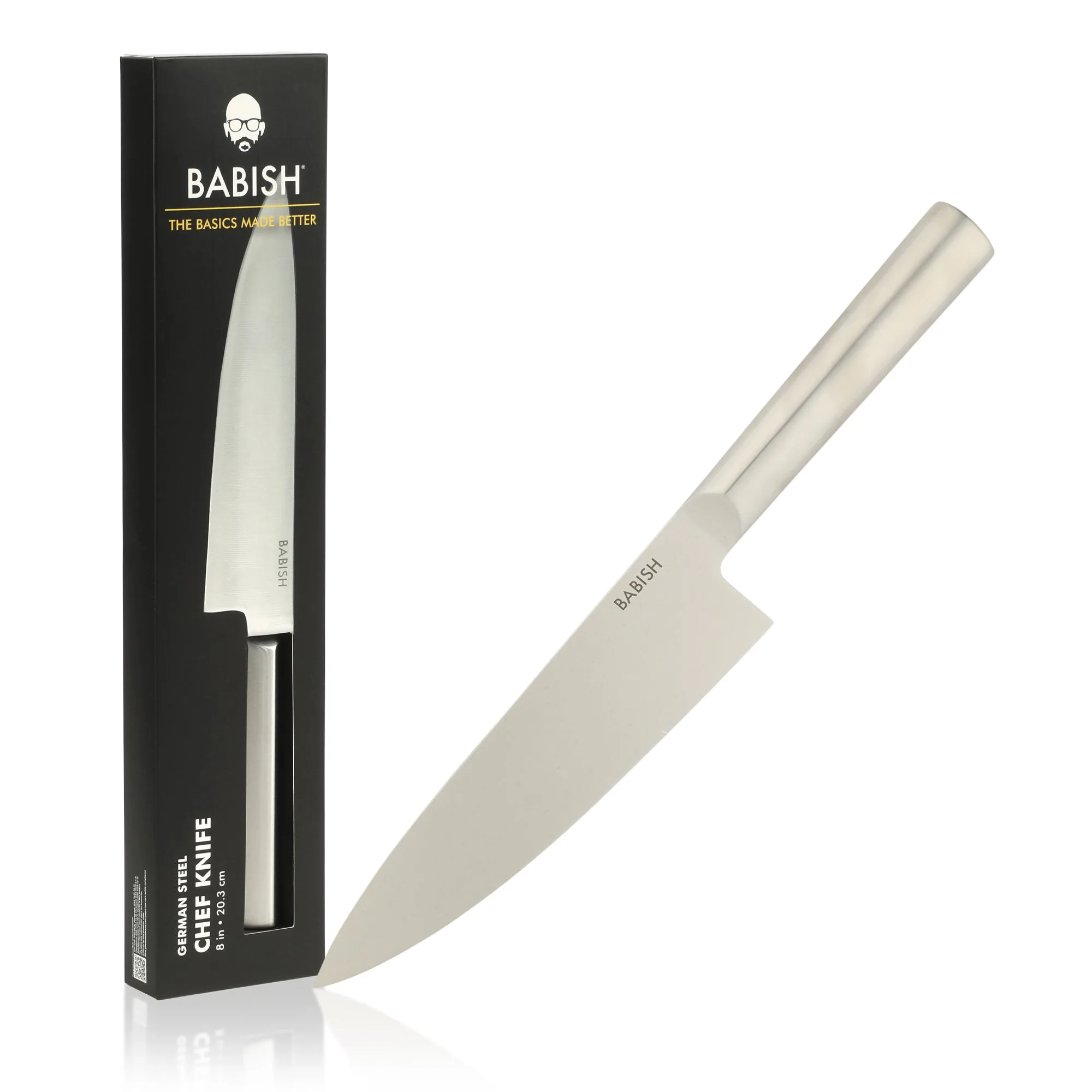
Babish 8-Inch Chef Knife – High-Carbon 1.4116 German Steel Kitchen Knife, Full-Tang Razor Sharp Chef’s Blade for Chopping, Slicing, Dicing & Everyday Prep
-
Babish 8-Inch Bread Knife – High-Carbon 1.4116 German Steel Serrated Knife with Pakka Wood Handle, Full-Tang Razor Sharp Kitchen Knife for Slicing Bread, Crusting & Artisan Loaves: Constructed from 1.4116 German steel, it features a sharp, serrated blade to slice loaves with ease. The engineered Pakka wood handle provides a safe and supported grip for better control, while the forged, full tang construction provides strength and balance to cut through the crispiest crusts. The serrated edge is designed to grip crusty bread without crushing the soft crumb inside—something a straight chef's edge cannot do as cleanly.
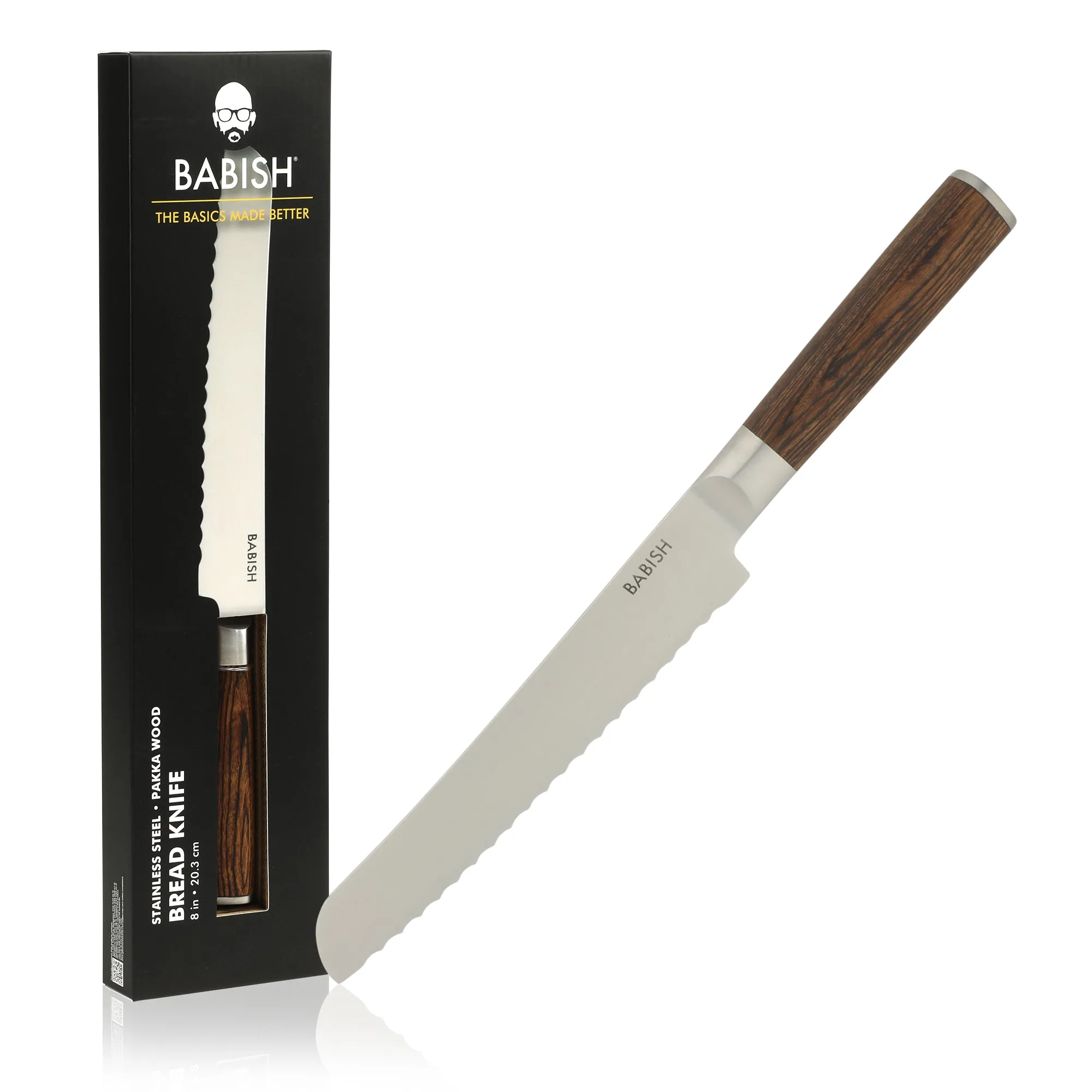
Babish 8-Inch Bread Knife – High-Carbon 1.4116 German Steel Serrated Knife with Pakka Wood Handle, Full-Tang Razor Sharp Kitchen Knife for Slicing Bread, Crusting & Artisan Loaves
Edge Design: Straight vs Serrated
The most important difference is the cutting edge. The chef knife has a smooth, straight blade that you can sharpen on a stone or honing rod. It excels at chopping, slicing, and dicing ingredients that don't have a hard exterior. The bread knife uses a serrated edge—think of it as a row of tiny saw teeth—that grabs the crust and saws through without needing to be razor-sharp. Serrated edges stay sharp longer for their intended use, but they require a specialized sharpener when they eventually dull.
For everyday prep on vegetables, meat, and soft fruits, the chef knife is more versatile. For crusty bread, baguettes, pastries, or even tomatoes with tough skins, the bread knife gives cleaner slices with less effort.
- Straight edge (Chef Knife): Best for chopping, slicing, dicing, and mincing. Requires regular honing and occasional sharpening. Can be sharpened at home with standard tools.
- Serrated edge (Bread Knife): Best for crusty bread, baguettes, pastries, and foods with a hard exterior and soft interior. Stays sharp longer but needs a serrated knife sharpener or professional service.
Handle and Grip Differences
The chef knife uses a seamless stainless steel handle that is part of the full-tang construction. This gives a balanced, comfortable grip that works well for rocking cuts and heavy chopping. The bread knife features an engineered Pakka wood handle, also full-tang, which provides a safe and supported grip. Pakka wood is a layered composite that resists moisture better than natural wood, but it still requires hand washing. Both handles are designed for control, but the wood handle on the bread knife offers a slightly warmer, more textured feel that can help when applying steady sawing pressure.
Care and Maintenance
Both knives require hand washing only. The supplied information does not specify dishwasher safety, so to protect the edge and handle materials, hand wash with mild soap and dry immediately. The chef knife's stainless steel handle is more forgiving if a bit of moisture lingers, while the Pakka wood handle on the bread knife should be dried thoroughly to prevent any swelling or discoloration over time.
For sharpening, the chef knife can be maintained with a honing steel between uses and sharpened on a whetstone or with a pull-through sharpener. The bread knife's serrated edge will need a dedicated serrated knife sharpener or professional service when it eventually loses its bite.
Which One Should You Buy?
If you cook a wide range of meals and need one knife for most prep tasks, start with the Babish 8-Inch Chef Knife. It handles chopping, slicing, dicing, and mincing with a balanced full-tang design and a comfortable stainless steel handle. If you bake bread regularly or often slice crusty loaves, baguettes, or pastries, the Babish 8-Inch Bread Knife with its serrated edge and Pakka wood handle will give you cleaner cuts without crushing the crumb.
Many home cooks eventually own both: the chef knife for everyday prep and the bread knife for bread, tomatoes, and other delicate-skinned produce. The two knives complement rather than replace each other, and both are built from the same German steel foundation with full-tang construction.