Quick answer
Use the Baby Animals Collection art cards by starting with brief high-contrast viewing sessions in the first weeks, then add tummy time and simple naming games as your baby's vision and attention grow.
Why high contrast matters in the early months
Newborns see bold black-and-white shapes more clearly than soft pastels, so high contrast cards give them something their developing eyes can actually lock onto. The Baby Animals Collection uses that principle with animal shapes that gradually come together into patterns and whole images, which means the same set can stay interesting as your baby's visual perception improves.
When to start and how long to keep it going
You can begin using the cards from day one, but short sessions work better than long ones. A few minutes at a time, a few times a day, is enough to capture attention without overstimulation. As your baby grows, the cards can shift from simple viewing to tummy time support and early animal naming, so you do not need a new set for every stage.
How to use the Baby Animals art cards, step by step
- Start with one card at a time: Hold a single card about 8 to 12 inches from your newborn's face during a calm, alert moment. Wait for their eyes to fix on the image before switching. Common mistake: showing several cards at once, which can overwhelm a new viewer. One card, held still, gives your baby the best chance to focus.
- Keep sessions short and follow your baby's cues: Try one to three minutes per session, a few times a day. Stop when your baby turns away, fusses, or loses interest. Common mistake: pushing for a full set when your baby has already had enough. Turning away is a signal to pause, not a failure.
- Use the cards during tummy time: Prop a card upright in front of your baby during tummy time to give them a high-contrast target to lift their head toward. Common mistake: placing the card too far away or flat on the floor where it is hard to see. A card at eye level can make tummy time feel more purposeful.
- Name the animals as you show each card: Once your baby is a few months old, say the animal name clearly as you present the card, then pause. Common mistake: rushing through names without giving your baby time to look and process. A slow, repeated name paired with the image builds early word association.
- Let the cards grow with your child: As patterns become whole images, point out the shapes that make up each animal. Common mistake: retiring the cards too early because they seem too simple. The same set can move from contrast viewing to pattern talk without a new purchase.
Product facts
-
Art Cards for Baby - Baby Animals Collection: The cards use high-contrast black-and-white designs that babies can see from day one. This makes them useful right away for newborn visual stimulation, before color vision develops.
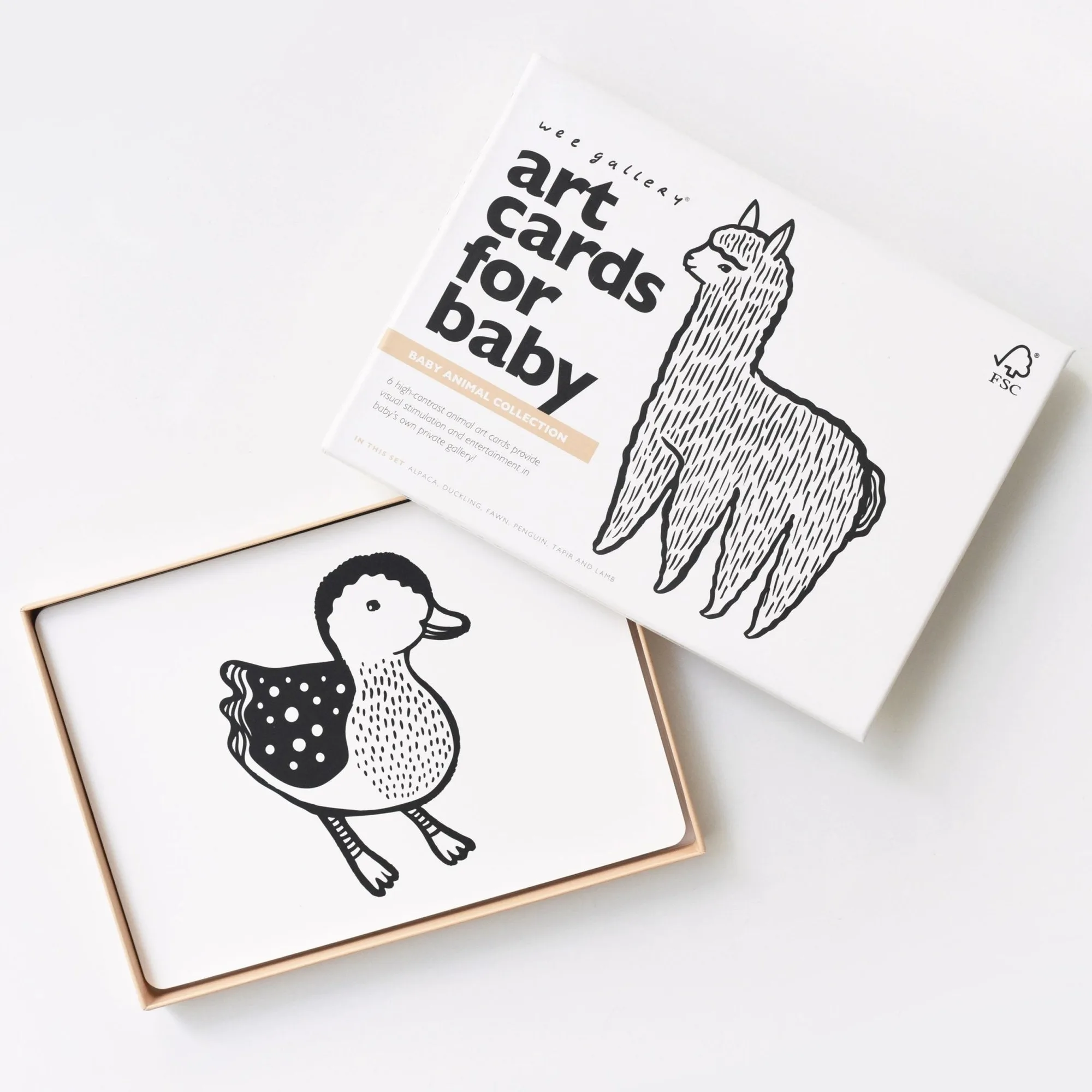
Art Cards for Baby - Baby Animals Collection
-
Art Cards for Baby - Baby Animals Collection: The shapes gradually come together to form patterns and whole images. That progression lets the same cards support both early contrast viewing and later pattern recognition.