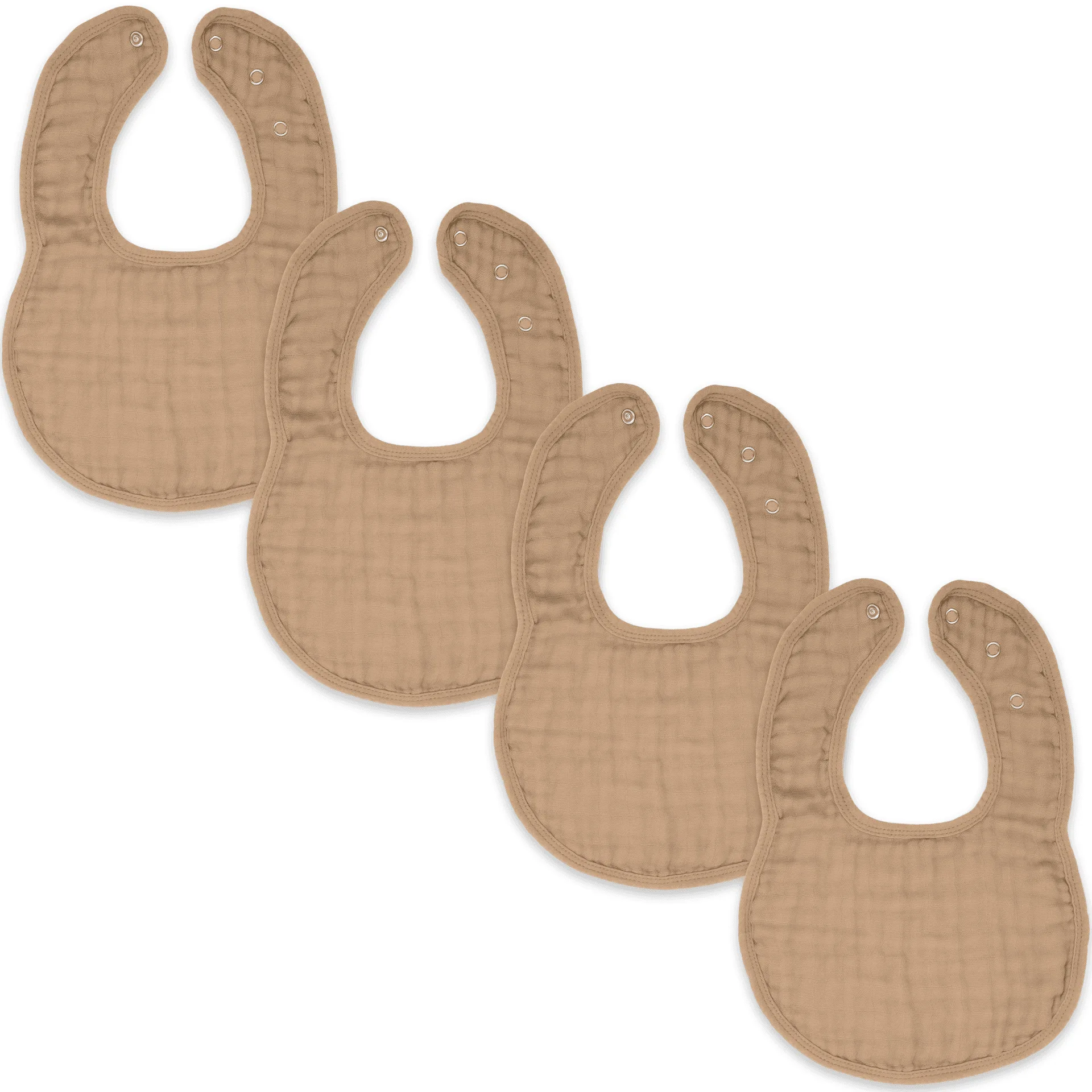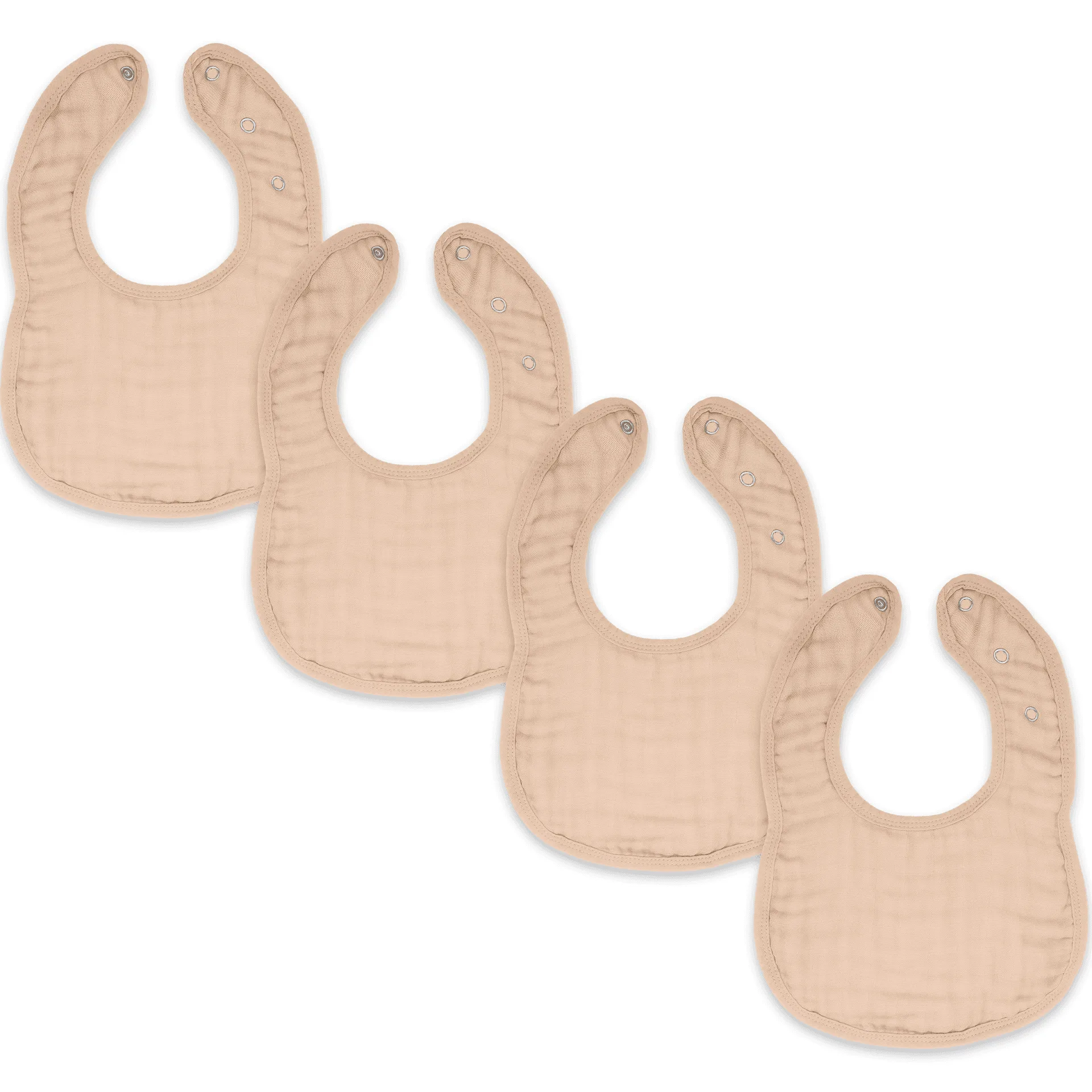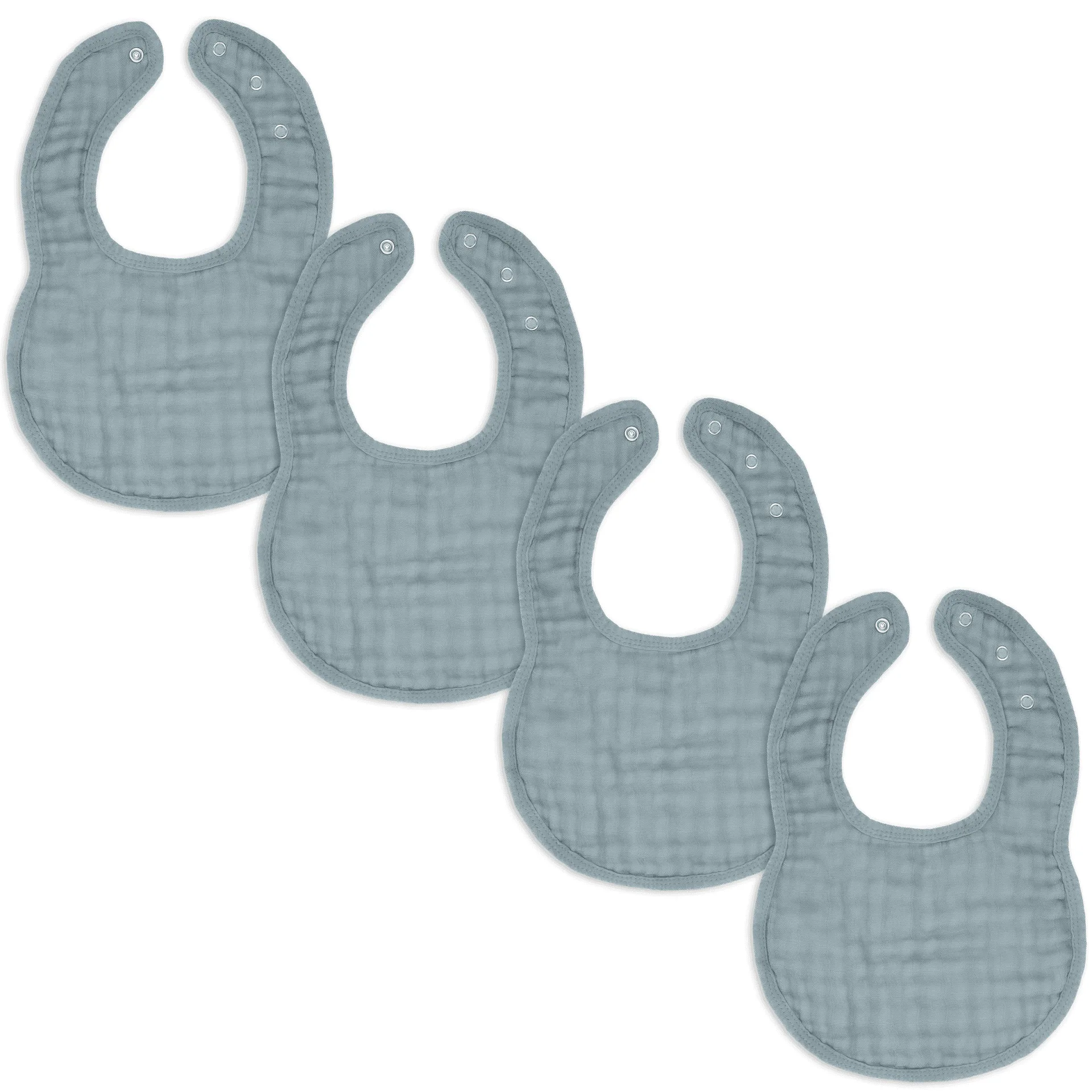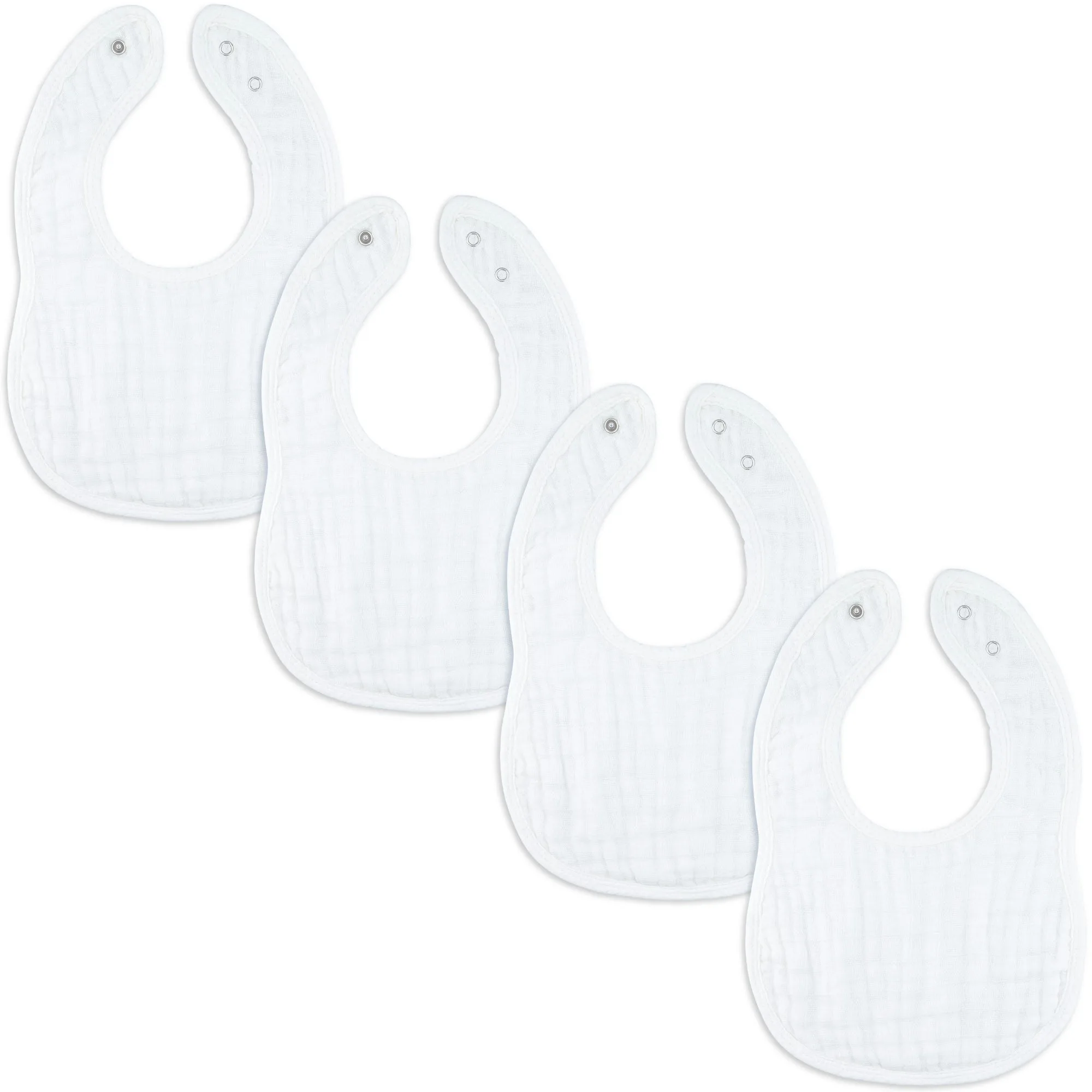
Quick answer
For most teething babies, the best bibs for teething combine high absorbency with a soft, gentle surface: muslin-cotton blends like Comfy Cubs Muslin Bibs handle drool well, while a bandana shape keeps the wet area off the chest. Stock at least four to six bibs so a damp one can be swapped immediately, and change as soon as the fabric feels wet against skin.
What teething actually does to a bib
Teething drool is constant rather than occasional, so a bib's job changes from catching mealtime spills to managing a steady trickle that soaks through fabric and pools at the neckline. That is why the best bibs for teething are judged on absorbency speed, how the fabric feels once damp, and whether the shape keeps moisture away from the chest fold where drool rash tends to start.
A bib that absorbs quickly but stays wet against skin can be worse than a thinner bib you change more often. Plan on rotating bibs through the day rather than expecting one bib to last from morning to nap.
Teething bib fabric: what each option does well
Fabric choice drives almost every trade-off in a teething bib. Muslin-cotton blends, like the 70% bamboo rayon and 30% muslin cotton used in Comfy Cubs muslin bibs, are soft against delicate skin and highly absorbent, which suits the long, low-level drool of teething. The trade-off is that a soft muslin bib is not a barrier bib: it manages drool, not a full cup of spilled liquid.
Plain cotton is durable and easy to wash but can feel coarser once wet, which matters when a baby is already fussy. Fleece-backed or waterproof-backed bibs block moisture from reaching clothing, but the plastic layer reduces airflow, so they are better for short, heavy exposure than all-day wear. If you are comparing a muslin bib against a standard cotton bib, weigh absorbency and skin feel first, then decide how often you are willing to change.
Bandana versus flat bib shapes for drooling
Bandana-style bibs sit higher on the chest and angle downward, so drool runs toward the point instead of soaking the collar. That shape is the main reason bandana bibs dominate teething use. Flat bibs cover more surface area and work well for meals, but they tend to bunch at the neck when a baby is upright and chewing.
If your baby is a heavy drooler, bandana bibs with a snap or hook-and-loop closure let you adjust the neck opening as they grow, which extends usable life. Check that the closure does not sit directly under the chin, where it can rub against already-sensitive skin.
How many bibs you actually need
A practical starting point is four to six bibs per baby, plus two more if you do not run laundry every other day. Teething drool peaks during the day, so having a dry bib within arm's reach in the diaper bag, the car, and the nursery matters more than owning a large matching set.
Wash bibs before first use, then launder with baby-safe detergent and skip fabric softener, which can coat fibers and reduce absorbency over time. Air-drying helps muslin blends keep their softness longer.
Drool rash: what a bib can and cannot fix
A bib reduces how long moisture sits against skin, which is the main lever you control. It cannot replace gentle drying, a barrier cream recommended by your pediatrician, or checking for irritation that does not improve. If you notice persistent redness, broken skin, or a rash that spreads beyond the chin and neck, contact your baby's healthcare provider rather than switching bibs again.
For everyday prevention, pat the chin and neck dry before putting on a fresh bib, and avoid letting a damp bib stay on during sleep.
Decision rules for picking a teething bib
- If drool soaks through clothing by mid-morning: Move to a highly absorbent muslin-cotton blend and a bandana shape that channels moisture to the point rather than the collar. Absorbency plus shape beats thickness alone.
- If skin looks red or irritated after wear: Prioritize a soft, gentle fabric against the skin and check the closure position; a rough or damp edge can cause more irritation than the drool itself. Change the bib the moment it feels wet.
- If your baby chews the bib constantly: Keep fabric-only bibs for drool management and use a dedicated teether for chewing, since a soaked bib left in the mouth stays wet against skin. Separate the chewing job from the absorbency job.
- If you only do laundry twice a week: Buy at least six bibs in the same size and fabric so a dry one is always available without mixing fits. Consistency across a rotation saves guesswork.
Comfy Cubs bibs that fit teething use
- Muslin Bibs in Wine: Muslin Bibs in Wine are made from 70% bamboo rayon and 30% muslin cotton, described as soft and gentle on delicate skin and highly absorbent for catching drools, spills, and messes. The blend targets the two teething priorities at once: a soft surface against sore, drooly skin and enough absorbency to keep clothes dry between changes.
- Muslin Bibs in Sage: Muslin Bibs in Sage use the same 70% bamboo rayon and 30% muslin cotton construction and are listed as highly absorbent bandana drool bibs. Choosing between colorways lets you build a rotation of identical bibs, so fit and absorbency stay consistent even when one is in the wash.
- Muslin Burp Cloths in Lace: Muslin Burp Cloths in Lace are described as super-soft, extra absorbent muslin cloths useful for feeding, changing, or cleaning, and come ready for gift-wrapping. A burp cloth handles the bigger wipe-ups that a bib is not sized for, so pairing one with your bib rotation covers both steady drool and sudden spit-up.
Fit matters as much as fabric
Best for
- Babies in the peak drooling months who need a dry bib swapped several times a day
- Parents who want a soft muslin-cotton bandana bib that stays comfortable against sensitive skin
Not for
- Heavy mealtime messes that need a full-coverage wipeable bib rather than a drool bib
- Babies who need a waterproof barrier for extended periods, where a backed bib is the better choice