Quick answer
The Baby Einstein Glow & Discover Light Bar works best as a tummy-time motivator and early seated-play toy for babies from about 3 to 12 months. Use it flat and just out of reach during tummy time, then move it upright for seated exploration of music, animals, and colors.
Why the light bar suits tummy time better than a full activity gym
Tummy time fails for a simple reason: babies dislike the effort and drop their heads. A compact light bar gives them a single, bright target to lift toward, without the overstimulation of a full mat with dangling toys. The Glow & Discover Light Bar is small enough to sit directly in front of a baby's face, so the reward is close and immediate.
That also makes it a practical second-stage toy if you already own an activity gym. Use the gym for overhead batting and the light bar for floor-level head-lifting practice.
What the three modes actually change
The toy offers three modes of learning and engagement, and the practical difference is what your baby is expected to notice. One mode leans on music and dancing lights, which works as a motivator. Another introduces animals and colors, which suits a baby starting to track and reach. The third combines them, which is better saved for a baby who already responds to the first two.
Start with one mode per session. Switching modes constantly makes it harder to tell what your baby is actually responding to.
Where the toy stops and you take over
The catalog does not specify volume control, auto shutoff, or a maximum age, so treat those as unknowns rather than features. The realistic limitation is that a light-and-music toy cannot teach language on its own. Name the animals and colors out loud while your baby plays, and stop the session when interest fades rather than restarting the lights to keep them engaged.
Age-by-age play questions
When can I start using the light bar?
Introduce it during short tummy-time sessions once your baby is comfortable on their belly, typically around 3 to 4 months. Place it flat on the floor a few inches beyond their reach so they have to lift their head to see the lights. Keep sessions under a few minutes at first and end on a positive note.
How do I use it with a baby who is sitting up?
Move the light bar upright or prop it at eye level so your baby can press, watch, and listen without slumping. Sit beside them and label what appears: the animal, the color, the sound. Seated play is the better fit once your baby can hold their head steady.
Is it a good travel toy?
Its compact size makes it easier to pack than a mat or jumper, but the catalog does not list a volume control or a travel lock. If you need quiet play in a restaurant or on a flight, test the volume at home first and decide whether it is acceptable. Check the sound level before relying on it in public.
How many modes should I use at once?
Use one mode per session. Start with music and lights for motivation, move to animals and colors for naming and tracking, and save the combined mode for a baby who already shows clear preference. Fewer modes per session makes it easier to see what your baby responds to.
What should I do when my baby loses interest?
Stop the session rather than cycling through modes to regain attention. A short, engaged session is more useful than a long one where the toy becomes background noise. Interest fading is a signal to end, not to restart.
Product facts
-
Baby Einstein Glow & Discover Light Bar Activity Station: Compact, multisensory activity station with 3 modes covering music, animals, and colors, plus dancing lights. The small footprint lets you place it directly in a baby's line of sight during tummy time, which is where the head-lifting motivation matters most.
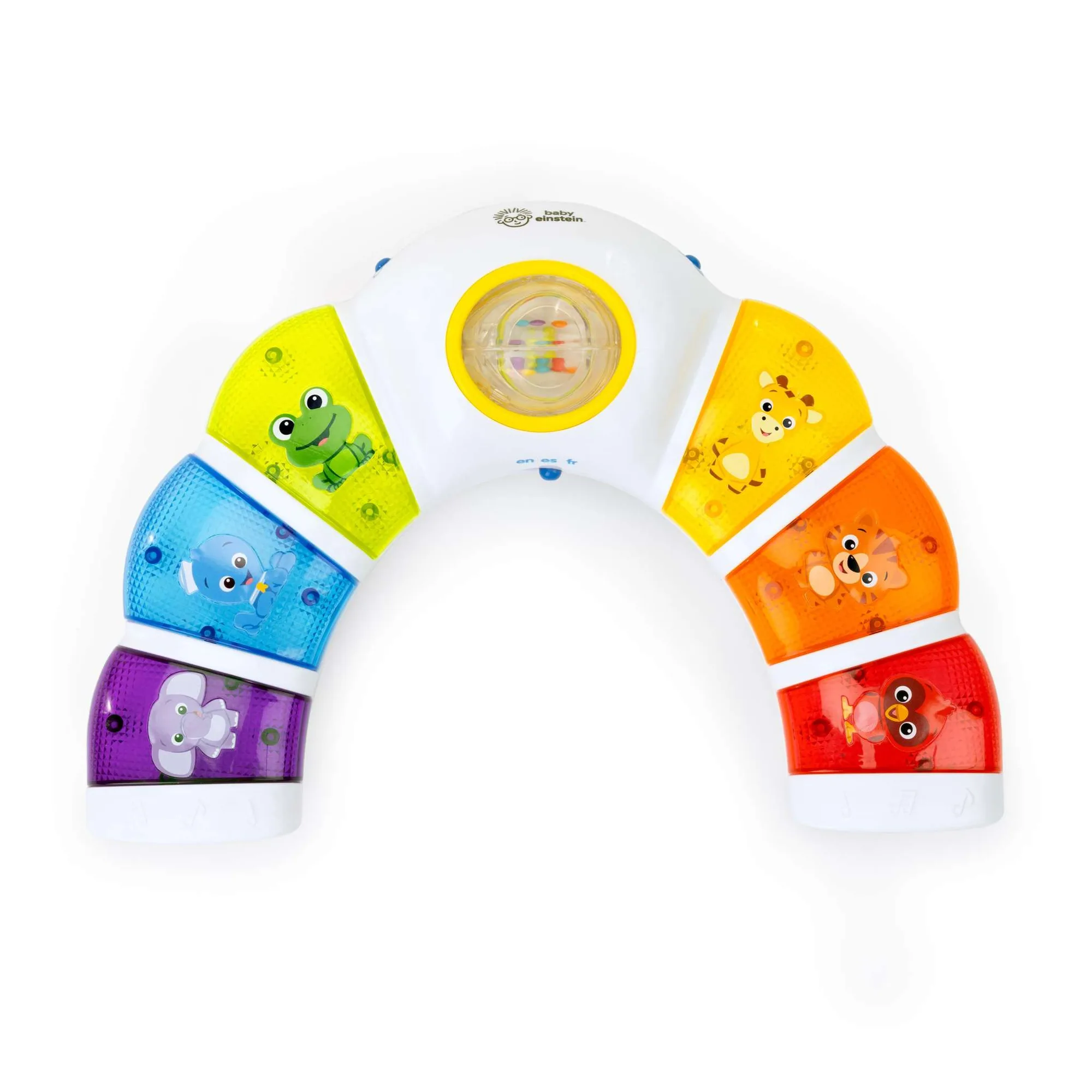
Baby Einstein Glow & Discover Light Bar Activity Station
-
Baby Einstein Glow & Discover Light Bar Activity Station: Designed for both tummy time and seated play. One toy can cover two developmental stages, so it stays useful as your baby moves from floor work to sitting.