Quick Answer
For most babies, choose a rattle made from safe, non-toxic materials with no small parts, sized for small hands, and offering varied sensory stimulation like sound and texture.
Why Material Safety Matters Most
When choosing a rattle, the material is the first thing to check. Babies explore by putting things in their mouths, so the rattle must be free from harmful chemicals and choking hazards. Look for food-grade or BPA-free plastics and non-toxic paints.
Soft fabric rattles, like those made from polyester, are gentle on gums and safe for newborns. They also tend to be lighter, making them easier for tiny hands to hold and wave.
Size and Grip: Designed for Little Hands
A rattle that is too large or too small can be frustrating for a baby. The best rattles are easy to grasp, with finger-sized indentations or soft textures that encourage gripping. This helps develop fine motor skills and hand-eye coordination.
Consider the age of your baby. Newborns have limited grip strength, so a lightweight rattle with a simple shape is ideal. As they grow, they'll enjoy rattles with more complex features like rings or multiple textures.
Sensory Stimulation: More Than Just Sound
While the sound of a rattle is its primary function, modern rattles often include additional sensory features. Crinkly fabrics, different textures, and even teething surfaces can provide extra stimulation, keeping your baby engaged for longer periods.
These features also support cognitive development by encouraging exploration and cause-and-effect learning. When your baby shakes the rattle and hears a sound, they begin to understand that their actions have results.
Decision Rules for Choosing a Rattle
- Check the materials: Ensure the rattle is made from non-toxic, baby-safe materials. For fabric rattles, look for plush, washable fabrics. For plastic, ensure it's BPA-free and free from small parts. Always inspect the label for age recommendations and safety certifications.
- Consider the size and grip: The rattle should fit comfortably in your baby's hand. Look for lightweight designs with easy-to-grip shapes or textures. Avoid rattles with long, thin parts that could be a choking hazard. Test the grip yourself—if it's awkward for you, it's likely too difficult for your baby.
- Evaluate sensory features: Choose a rattle that offers more than just sound. Look for crinkle textures, varied fabrics, or teething elements to provide multi-sensory stimulation. Consider your baby's current interests—do they prefer crinkly sounds or soft textures?
Product Spotlight
-
Baby Rattle Kangaroo - Powder: The Baby Rattle Kangaroo - Powder is made from ultra-soft plush fabric with a recycled polyester filling, a bell for auditory stimulation, and crinkle fabric in the ears for sensory play. This rattle offers multiple sensory experiences—sound, texture, and softness—making it a versatile choice for newborns and older infants.
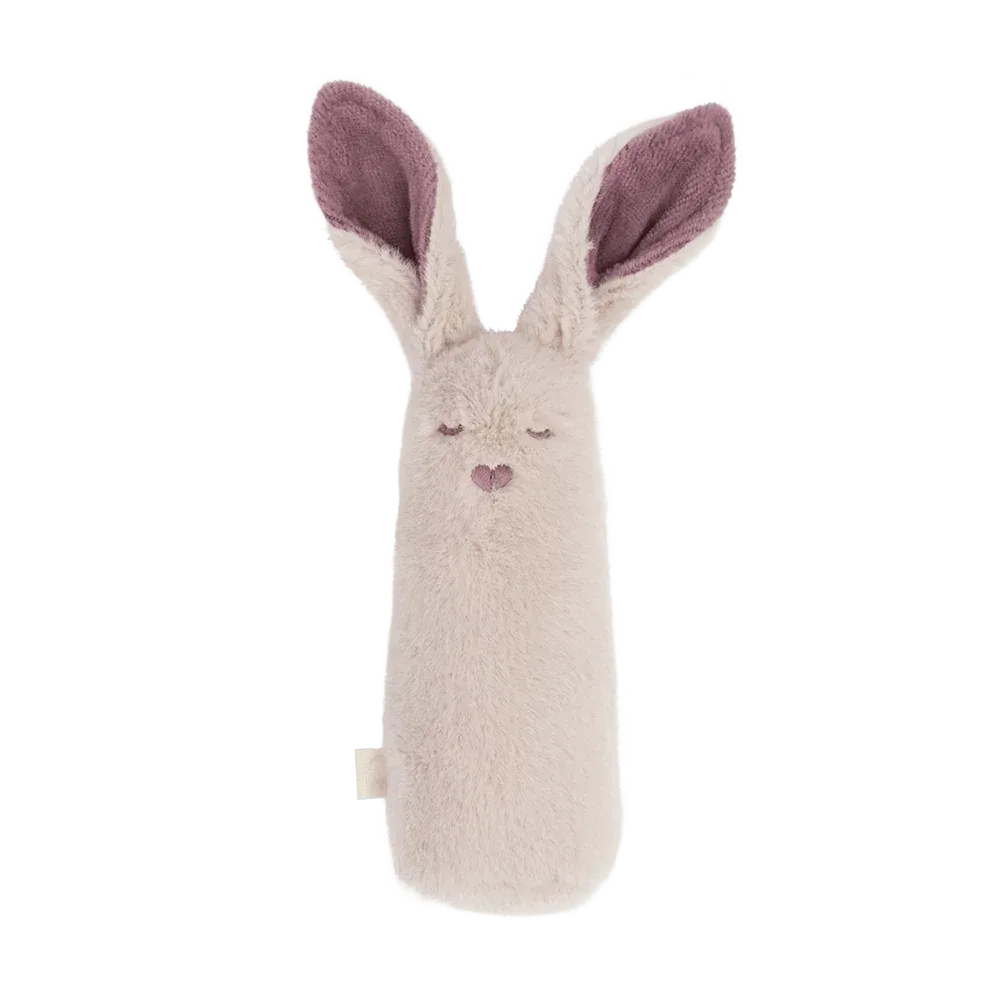
Baby Rattle Kangaroo - Powder
Who Should Choose What
Best for
- Newborns and young infants who need gentle, lightweight stimulation
- Parents seeking a multi-sensory rattle that supports early development
Not for
- Older toddlers who may need more complex toys for advanced motor skills
- Babies who prefer hard plastic rattles for teething relief