Quick answer
Measure your baby's foot length in centimeters, add about 1 cm (or a thumb's width) for growing room, then match that measurement to the size chart for Nora, Carter, or Quinn. For early walkers, prioritize flexible soles and wide toe boxes.
Why fit matters more than size number
Baby shoe sizes vary between brands and even between different styles from the same brand. The number on the tag is less important than how the shoe actually fits your child's foot. A shoe that is too tight can restrict natural foot development, while one that is too loose can cause tripping or blisters.
All three shoes — Nora Sneakers, Carter Sneaker, and Quinn Slip On Sneaker — are designed with zero drop, wide toe boxes, and flexible soles to allow natural foot movement. However, their closure styles affect how you check the fit.
Measuring your baby's feet at home
Place your child's foot on a piece of paper on a hard floor. Mark the longest toe and the back of the heel. Measure the distance between the two marks in centimeters. Do this for both feet — one foot is often slightly larger. Use the larger measurement.
Add 0.8 to 1.2 cm (roughly a thumb's width) to allow for growth and sock thickness. That total is your target insole length. Compare it to the manufacturer's size chart for each shoe style.
Closure type changes how you check fit
The Quinn Slip On Sneaker has no laces or straps, so you rely entirely on the initial size selection. Make sure the heel does not slip when your child walks. If it does, size down or try a different style.
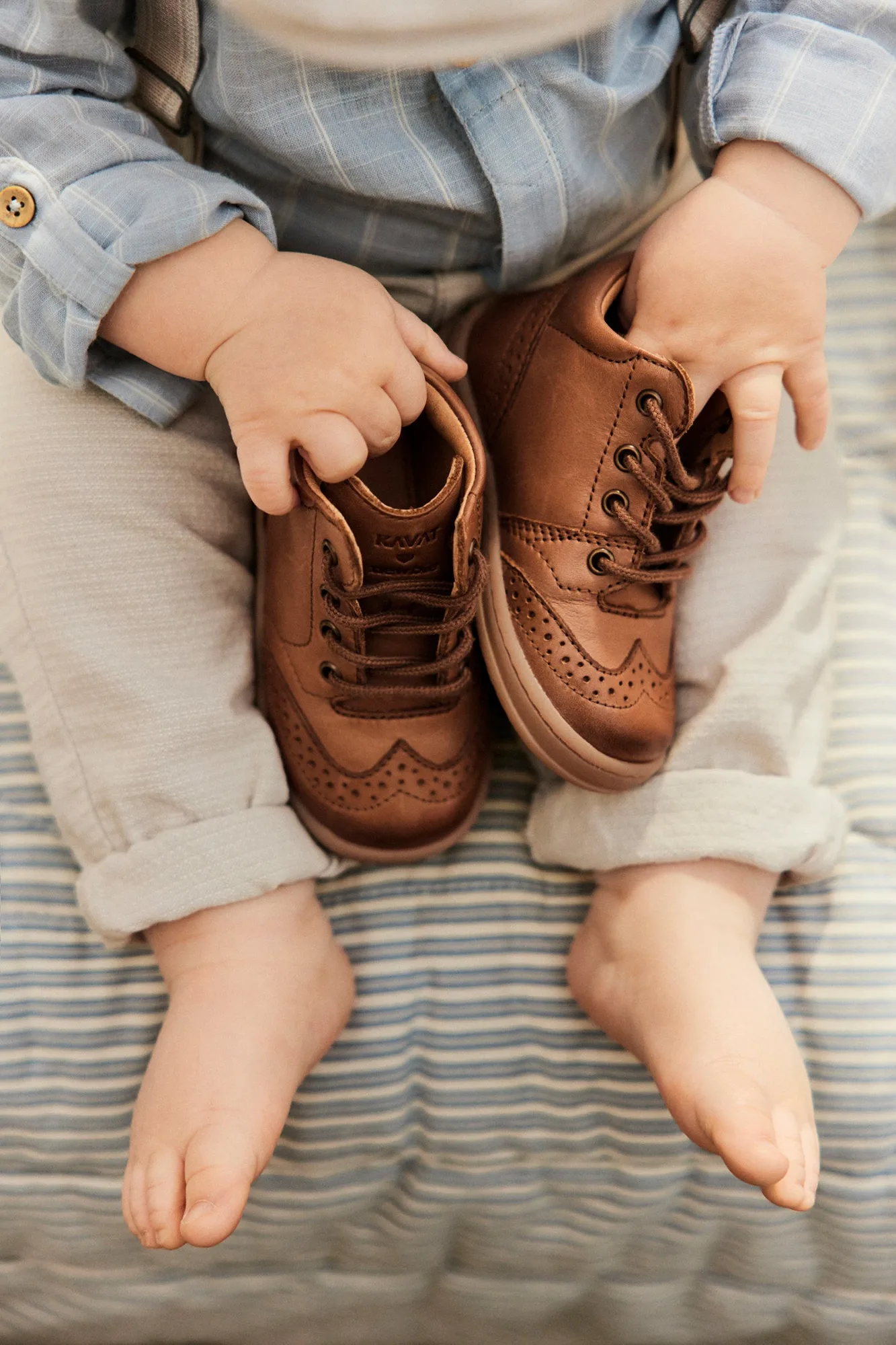
The Nora Sneakers and Carter Sneaker feature easy on/off closures that stay put. You can adjust the fit slightly, but the toe box width is fixed. Always check that the widest part of your child's foot aligns with the widest part of the shoe.
Decision rules for baby shoe sizing
- Measure both feet: Always measure your child's feet while standing (if they can stand) or sitting with weight on the foot. Use the larger foot as your reference.
- Add growing room: Add 0.8–1.2 cm to the measured foot length. This equals about a thumb's width from the longest toe to the end of the shoe.
- Check the toe box: Press gently on the top of the shoe. You should feel the toes, but they should not be cramped. The widest part of the foot should sit comfortably in the widest part of the shoe. If the toes are pressed against the front, size up. If there is more than a thumb's width of space, size down.
- Test heel slip: After lacing or fastening, try to slide a finger between the heel and the back of the shoe. If you can easily insert a finger, the heel may slip. For slip-on styles like Quinn, heel slip is a sign the shoe is too large.
- Walk test: Let your child walk in the shoes for a few minutes indoors. Watch for tripping, excessive slipping, or signs of discomfort like rubbing or fidgeting. Recheck fit after the first wear. Feet swell during activity, so a shoe that felt fine at rest may feel tight after 30 minutes of play.
Shoe features that affect sizing
-
Nora Sneakers: Nora Sneakers have zero drop, wide toe boxes, and flexible soles designed to mimic barefoot movement. The wide toe box accommodates natural toe splay, so you don't need to size up just for width — focus on length instead.
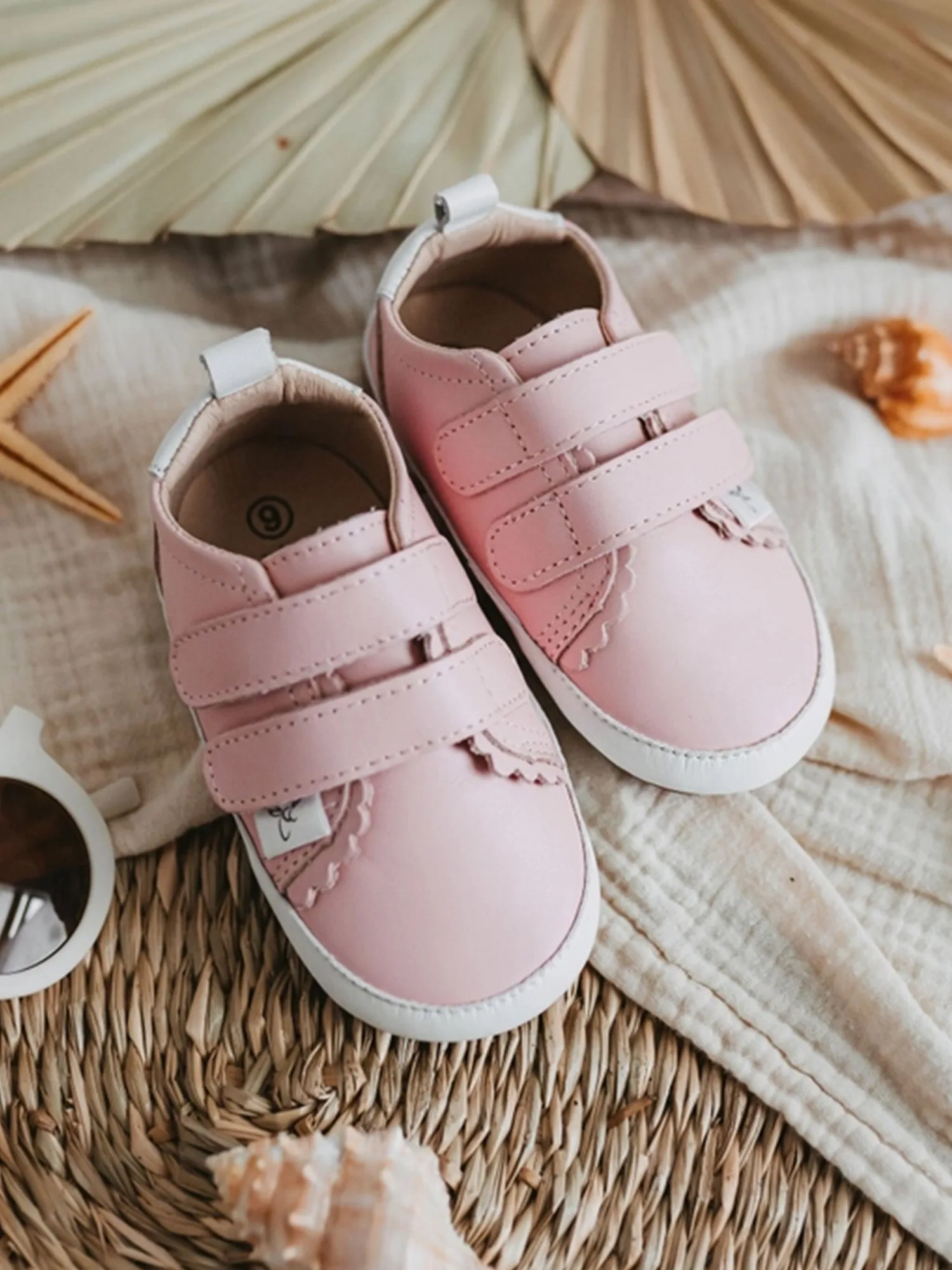
Nora Sneakers
-
Carter Sneaker: Carter Sneaker shares the same zero-drop, wide toe box, flexible sole design and comes with an easy on/off closure that stays put. The secure closure means less chance of the shoe slipping off, but you still need to verify that the heel is snug and the toe has room.
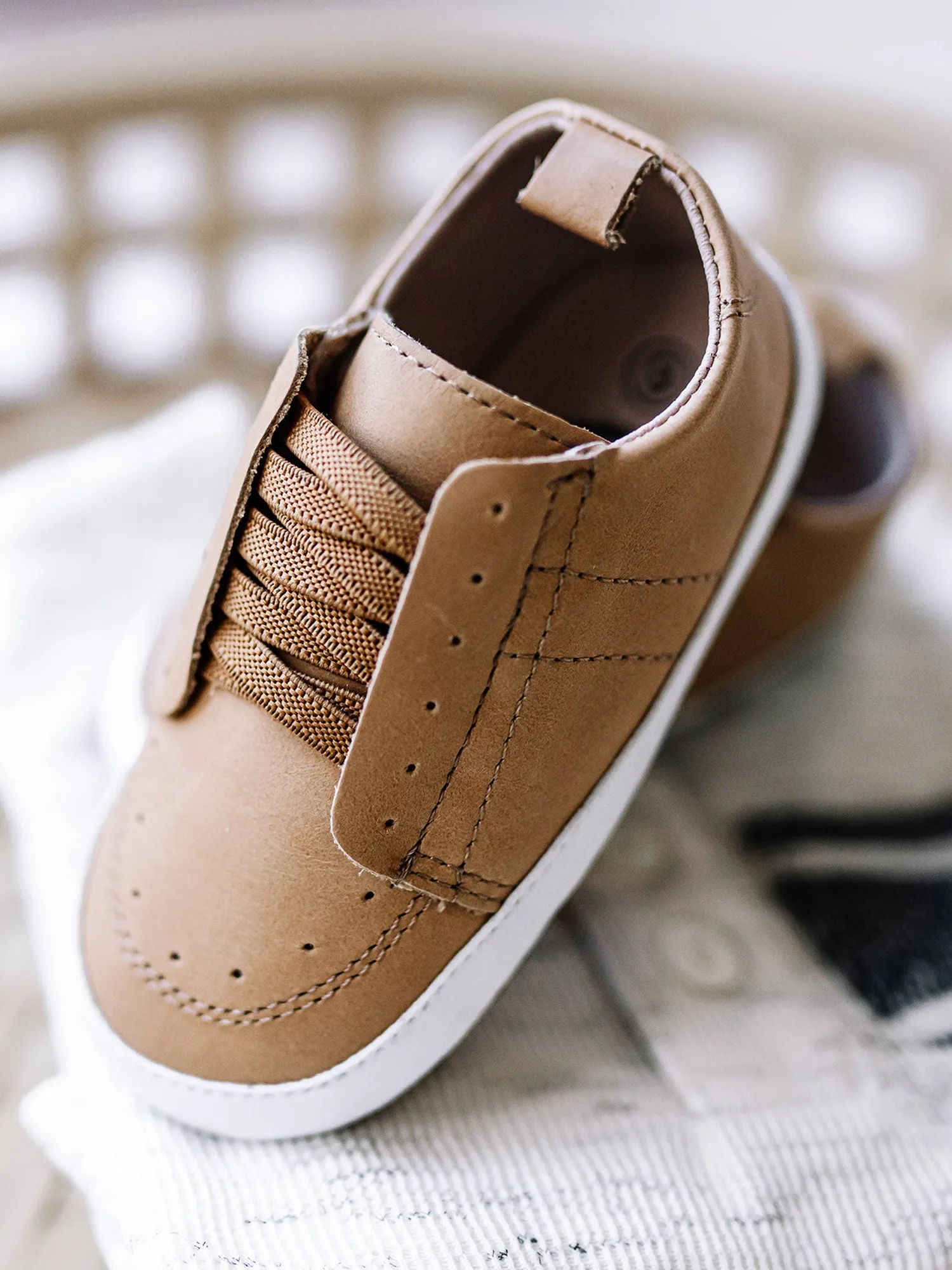
Carter Sneaker
-
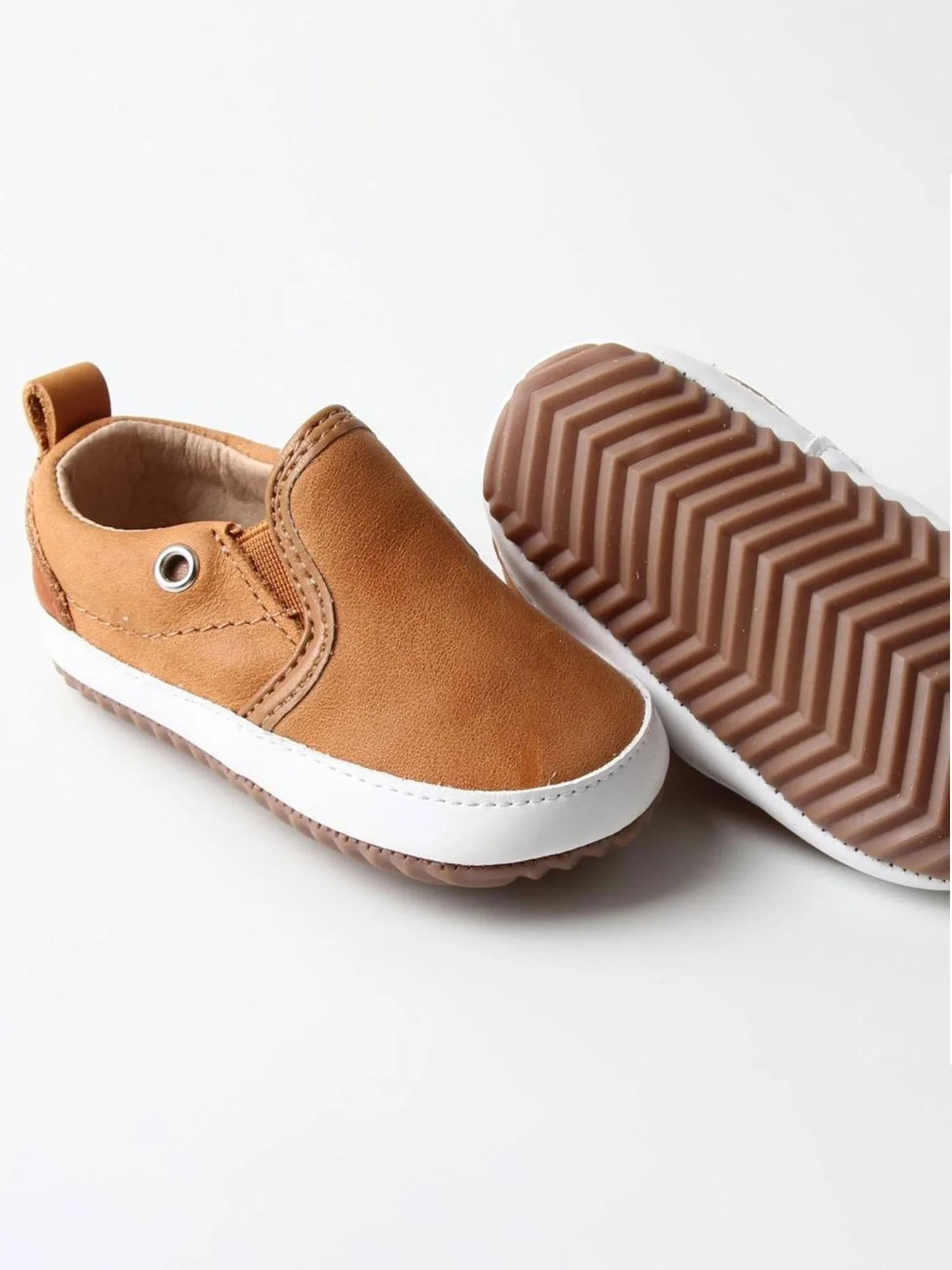
Quinn Slip On Sneaker: Quinn Slip On Sneaker also features zero drop, wide toe boxes, and flexible soles, but with a slip-on design. Because there is no adjustable closure, getting the length right is critical — too loose and the shoe may fall off; too tight and it will be uncomfortable.
Which shoe fits your child's stage?
Best for
- First walkers who need a secure, adjustable fit — choose Carter Sneaker or Nora Sneakers with their easy on/off closures
- Toddlers who can pull on their own shoes and prefer a slip-on style — choose Quinn Slip On Sneaker
Not ideal for
- Babies who are not yet walking independently — barefoot or soft-soled pre-walking shoes are a better choice
- Children with very narrow feet — the wide toe box design may feel too roomy