Why This Comparison Matters for Baby Sun Safety
When you're heading outdoors with your little one, protecting their delicate skin from the sun is a top priority. Two common options are a baby sun hat and sunscreen. Each has strengths and limitations, and understanding the differences helps you choose the right approach for different situations.
A baby sun hat provides physical coverage that doesn't wash off or require reapplication, while sunscreen offers chemical or mineral protection for exposed skin. The best strategy often involves using both, but knowing when each is most effective can simplify your daily routine.
Baby Sun Hat vs Sunscreen: Key Differences at a Glance
Here's how a sun hat and sunscreen compare for baby sun safety.
- Coverage: A sun hat with a wide brim shades the face, neck, and ears. Sunscreen protects only the skin it's applied to, and must cover every exposed area.
- Duration of Protection: A hat stays in place as long as your baby keeps it on. Sunscreen requires reapplication every two hours and after swimming or sweating.
- Ease of Use: Putting on a hat is quick and doesn't involve rubbing or waiting. Sunscreen needs careful application, especially around the eyes, and a waiting period to absorb.
- Allergy and Sensitivity: A hat is hypoallergenic for most babies. Sunscreen can cause irritation, especially for sensitive skin, and requires patch testing.
- When It Works Best: A UPF hat is ideal for everyday walks, beach trips, and anytime you want reliable shade. Sunscreen is essential for arms, legs, and any skin the hat doesn't cover.
What a Baby Sun Hat Offers: Evidence from the Catalog
Two Hudson Baby sun protection hats from the catalog show what a well-designed baby sun hat can do.
-
Hudson Baby Sun Protection Hat, Sailboat: Hudson Baby Sun Protection Hat, Sailboat features a wide brim for optimal face and neck shade, an adjustable chin strap for a secure fit, and lightweight, quick-drying materials. The wide brim provides physical sun protection for the face and neck without any chemicals. The chin strap keeps it in place, and the quick-drying fabric is practical for beach or pool use.
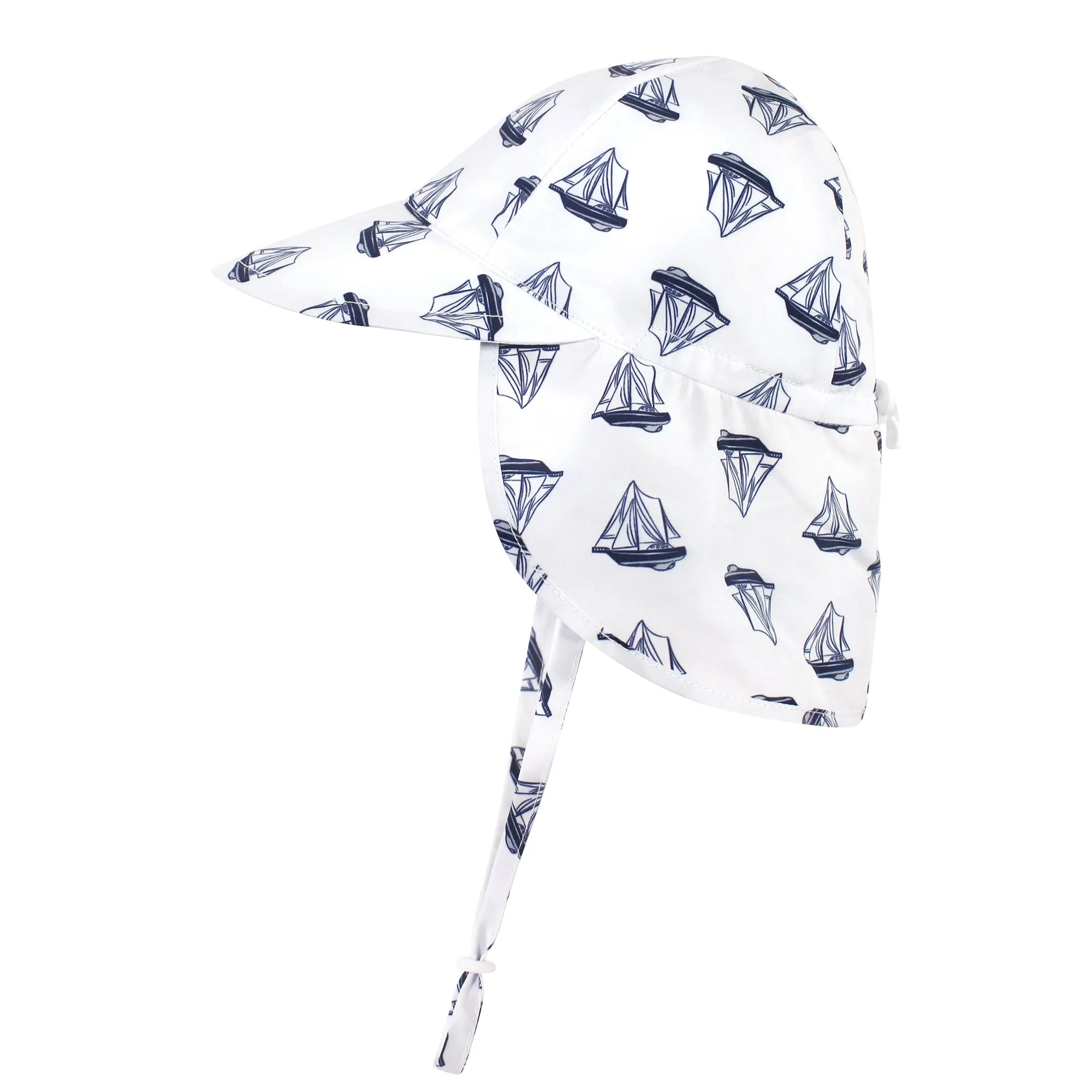
Hudson Baby Sun Protection Hat, Sailboat
-
Hudson Baby Sun Protection Hat, Dark Blue Whale: Hudson Baby Sun Protection Hat, Dark Blue Whale blocks harmful UV rays, has a wide brim for extra shade, and includes an adjustable strap for a snug fit. UV-blocking fabric offers reliable protection that doesn't wash off or degrade during play. The adjustable strap helps the hat stay on active toddlers.
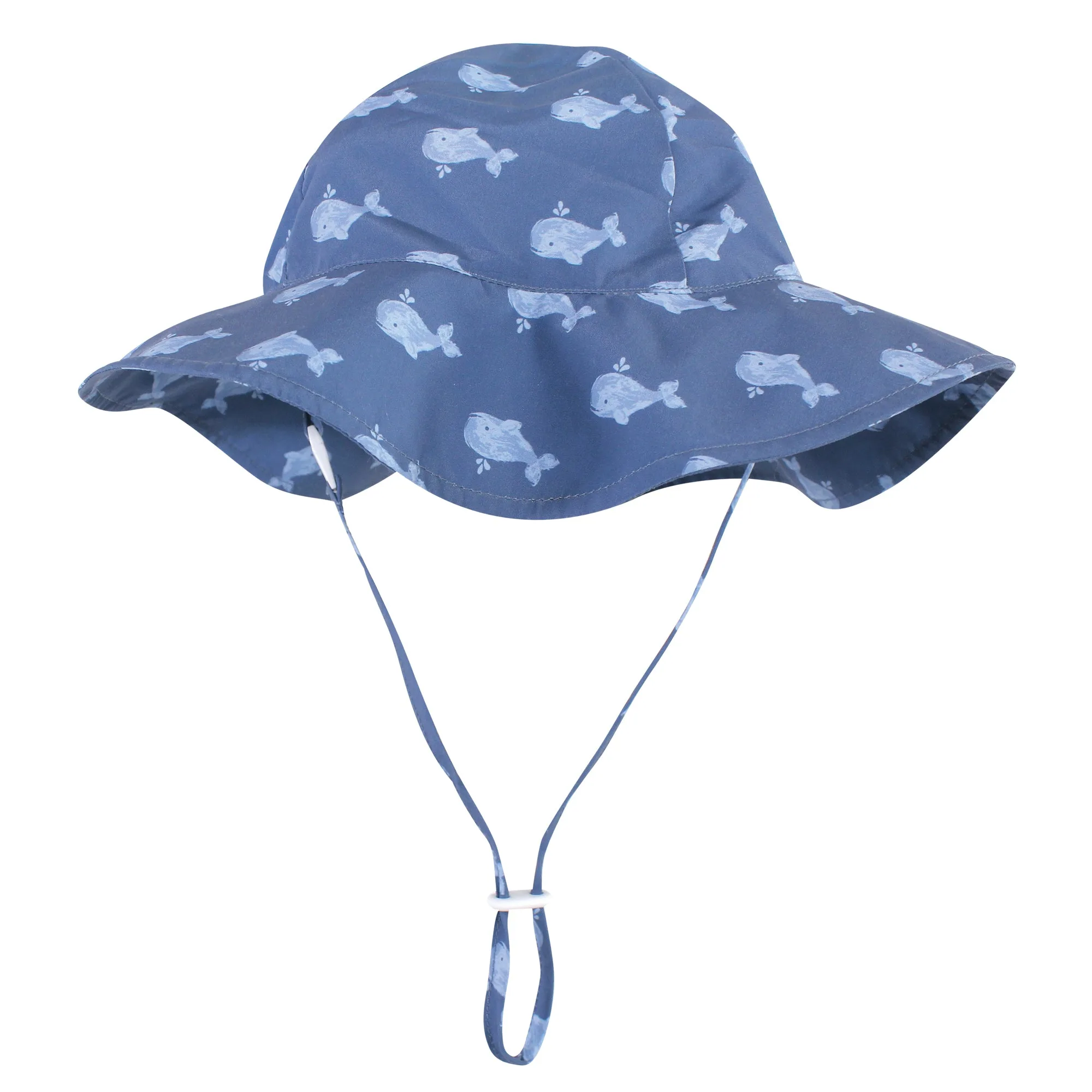
Hudson Baby Sun Protection Hat, Dark Blue Whale
When a Sun Hat Is the Better Choice
A baby sun hat is especially useful when:
- You need protection for the face, neck, and ears without applying sunscreen near the eyes.
- Your baby is very young (under 6 months), when sunscreen is generally not recommended by pediatricians.
- You're in and out of water or sweating, where sunscreen would need frequent reapplication.
- You want a simple, one-step solution for short outings like a walk or trip to the park.
The Hudson Baby hats come in sizes that fit babies from 0-6 months up to 2T-4T, making them a practical choice from early infancy through toddlerhood.
When Sunscreen Is Necessary
Sunscreen is still important for full sun protection:
- It covers arms, legs, and other exposed skin that a hat cannot shade.
- It can be used on older babies and toddlers when combined with protective clothing and a hat.
- It offers protection even if your baby takes off their hat.
The key is to choose a broad-spectrum, mineral-based sunscreen designed for babies and apply it generously to all uncovered areas.
How to Combine Both for Maximum Baby Sun Safety
For the best sun protection, use a baby sun hat and sunscreen together:
- Start with a UPF-rated sun hat to shade the head, face, and neck.
- Apply sunscreen to all other exposed skin, including arms, legs, and the back of the neck if the hat doesn't cover it fully.
- Reapply sunscreen every two hours and after swimming or heavy sweating.
- Choose a hat with a chin strap to help it stay on, especially for active babies.
This layered approach minimizes the amount of sunscreen needed while ensuring no skin is left unprotected.