Start with the confirmed setup facts
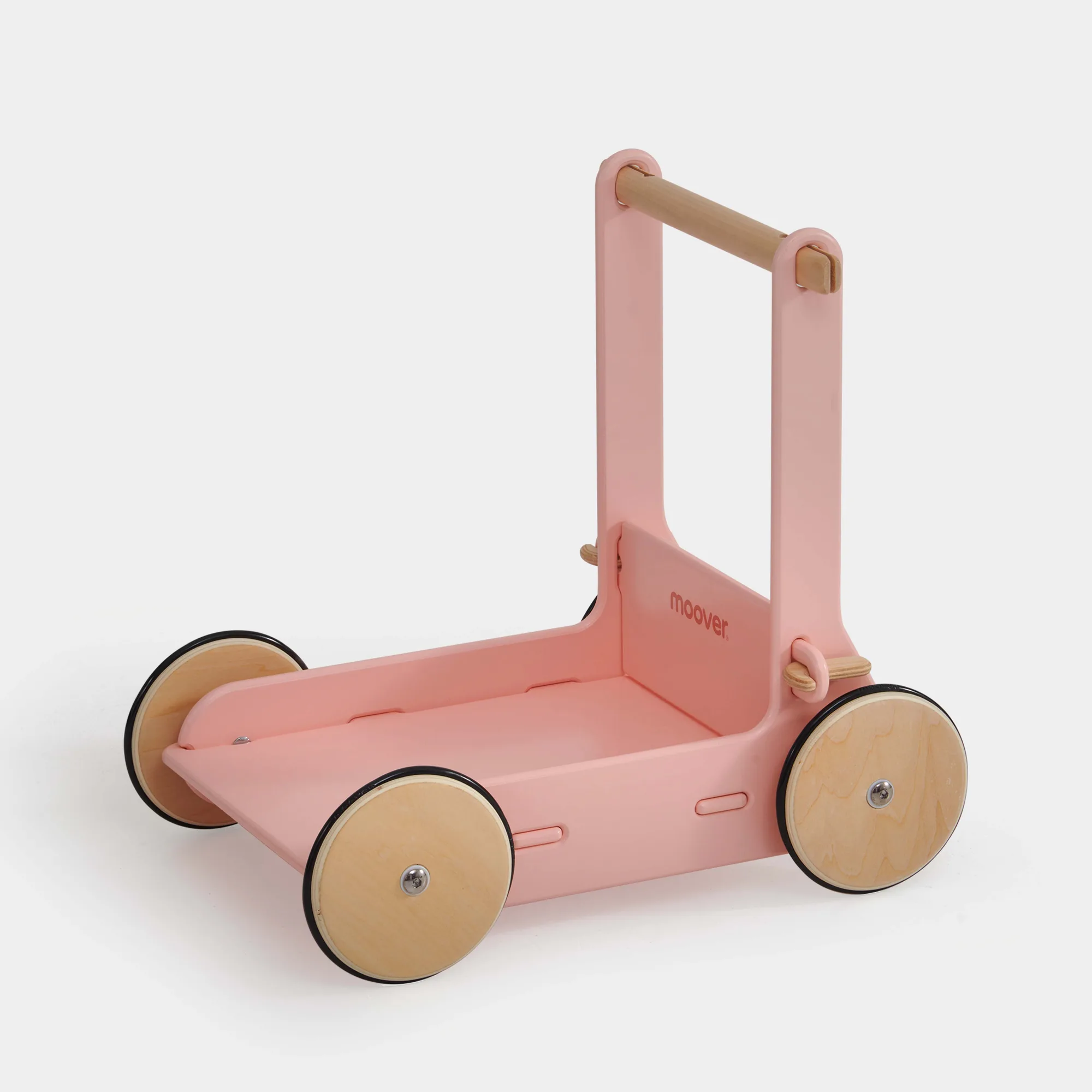
Most first-steps frustrations with a wooden walker come down to setup, surface, or stage of readiness rather than a fault in the toy. Before you troubleshoot anything, check the basics that the product record confirms for the Baby Walker Pink 2337. It is designed for ages 12 months and up, measures 45 x 53.5 x 21 cm (17.7 x 21 x 8.3 inches), and requires assembly. Those three facts explain a lot: if your child is younger than 12 months, the walker is not the right tool yet; if the assembled footprint does not suit your floor space, pushing will feel cramped; and if assembly is incomplete or loose, wobble is expected.
The walker is made from FSC-certified Russian Birch Plywood and finished with environmentally friendly, non-toxic paints. That construction is sturdy, but it also means the walker has a fixed shape and weight. It is not a collapsible or adjustable-frame walker, and the supplied information does not describe any tension or wobble adjustment. So when something feels off, the fix is usually to check assembly, the floor, and how your child is using it, not to tighten a hidden mechanism.
Baby Walker Pink 2337 details that affect troubleshooting
-
Baby Walker Pink 2337: Suitable for ages 12 months and up. If your baby is younger, the walker is not intended for them yet, and pushing before that stage can make the walker seem unstable when the real issue is readiness.
Baby Walker Pink 2337
-
Baby Walker Pink 2337: Assembly is required; assembled size is 45 x 53.5 x 21 cm (17.7 x 21 x 8.3 inches). An incomplete or rushed assembly is the most common source of wobble, and the footprint tells you whether your pushing route is realistic.
-
Baby Walker Pink 2337: Crafted from FSC-certified Russian Birch Plywood with environmentally friendly, non-toxic paints. The materials are durable and child-safe as supplied, but they are not described as adjustable, so wobble fixes should focus on assembly and surface rather than modifying the frame.
The wobble fix: work through these checks in order
A wobbling walker is the most common complaint, and the supplied information points to assembly and surface as the first places to look. The record does not describe a built-in wobble adjustment, so do not loosen or modify the frame. Instead, work through this sequence.
- Recheck every assembled joint: Because assembly is required, a partially seated panel or a fastener that was not fully tightened can make the walker rock. Revisit the assembly step by step and confirm each connection is fully seated before using the walker again.
- Match the walker to the floor: The walker rolls on its own wheels, and the supplied information does not describe wheel type or braking. On thick carpet or uneven flooring, pushing will feel different from a smooth hard floor. Try the walker on a clear, level surface before concluding the frame is at fault.
- Check the pushing height: The handle is fixed at the height the walker is built to, and the record does not describe height adjustment. A child who is much taller or shorter than the intended 12-months-plus user may push at an awkward angle, which can look like wobble. If your child is outside that stage, wait rather than force it.
- Clear the route: The 45 x 53.5 x 21 cm footprint needs a clear path. Rugs, thresholds, and toy clutter can catch the wheels and make the walker tip or stall. Set up a straight, open pushing route before each session.
When the problem is readiness, not the walker
The Baby Walker Pink 2337 is intended for sit-to-stand, roll, push, and first steps from 12 months and up. If your child is not yet pulling to stand or bearing weight on their legs, the walker will feel like a prop they lean on rather than a tool they push. That is a stage issue, not a product fault. The supplied information does not describe developmental benefits or a minimum physical readiness checklist, so use your own observation and your health visitor's guidance rather than forcing a timeline.
A common first-steps problem is a child who stands at the walker but will not push. The record confirms the walker supports rolling and pushing, but it does not describe grip aids, resistance settings, or parent-controlled speed. In practice, the useful fixes are environmental: place the walker on a smooth, clear floor, stand at the far end so there is a destination, and keep sessions short. If your child consistently refuses to push, put the walker away for a few weeks and try again; the walker will still be there when they are ready.
A simple at-home routine for first steps with the walker
The supplied information does not include a manufacturer's operating procedure, so this routine is general home-use advice built around the confirmed facts, not a set of official instructions.
- Assemble fully before first use: Complete the assembly and check every joint. The walker is not intended to be used partially assembled.
- Choose a clear, level route: Set the walker on a smooth, open floor with the 45 x 53.5 x 21 cm footprint in mind. Remove rugs and obstacles from the path.
- Start from sitting or standing: Let your child pull up on the walker or stand behind it. The walker is designed for sit-to-stand and push, so let them initiate rather than placing them in motion.
- Keep sessions short and supervised: The record does not state a maximum session length, so use your judgment. Stay within arm's reach, especially on hard floors, and stop when your child loses interest or tires.
- Store it flat and dry: The birch plywood and painted finish are durable, but the supplied information does not include specific cleaning or storage instructions. Wipe with a damp cloth and keep the walker away from prolonged moisture.
What the supplied information does not cover
The product record confirms the age range, materials, dimensions, assembly requirement, and the sit-to-stand-to-push design. It does not confirm wheel type, braking, height adjustment, folding, weight limits, or a maximum user weight. It also does not include a manufacturer's cleaning or maintenance schedule. If your concern depends on one of those details, treat it as unconfirmed rather than assuming the walker has or lacks a feature. For anything related to your child's physical development or gait, ask your health visitor or pediatric professional rather than relying on a toy listing.