Quick answer
A traditional baby walker with a seat can delay walking and pose tipping hazards, while an activity walker (a push toy without a seat) encourages natural movement and is generally safer for toddlers learning to walk.
Why the distinction matters for safety
Many parents use the term "baby walker" for any wheeled device that helps a child move, but the design difference has real safety implications. Seated walkers let babies glide before they are ready, which can lead to falls, stair accidents, and delayed muscle development. Activity walkers, on the other hand, require the child to stand and push, building strength and balance naturally.
The American Academy of Pediatrics has called for a ban on seated baby walkers due to injury risks. Activity walkers, also called baby push toys, avoid those risks because the child is upright and in control.
What to look for in a safe activity walker
When shopping for a baby push toy, check that it has a wide, stable base to reduce tipping. Weight is also a factor: a walker that is too light may tip when the child leans, while one that is too heavy can be hard to push. Look for models with rubberized wheels or wheel brakes on hard floors for better control.
Wooden walkers offer a sturdy, classic feel and often include activity panels that engage a child's curiosity. They are a popular choice for indoor play and tend to last through multiple children.
Baby walker vs activity walker: trade-offs at a glance
- Seated baby walker: Has a suspended seat that lets a baby move by pushing with their feet while sitting. Often includes trays with toys. Can delay walking and increase fall risk; not recommended by pediatric safety groups.
- Activity walker (push toy): No seat. The child stands, holds the handle, and pushes the walker forward. May include activity panels for play. Supports natural walking development and is generally safer, but still requires supervision.
- Wooden activity walker: A specific type of activity walker made from wood, often with a classic design and built-in puzzles or spinning toys. Heavier and more stable than plastic alternatives, but may be harder to push on carpet.
Product facts
-
Wooden Activity Walker: Wooden construction offers a sturdy, classic feel for indoor play. A wooden activity walker is less likely to tip than lightweight plastic models, giving your toddler a stable base as they learn to balance and push.
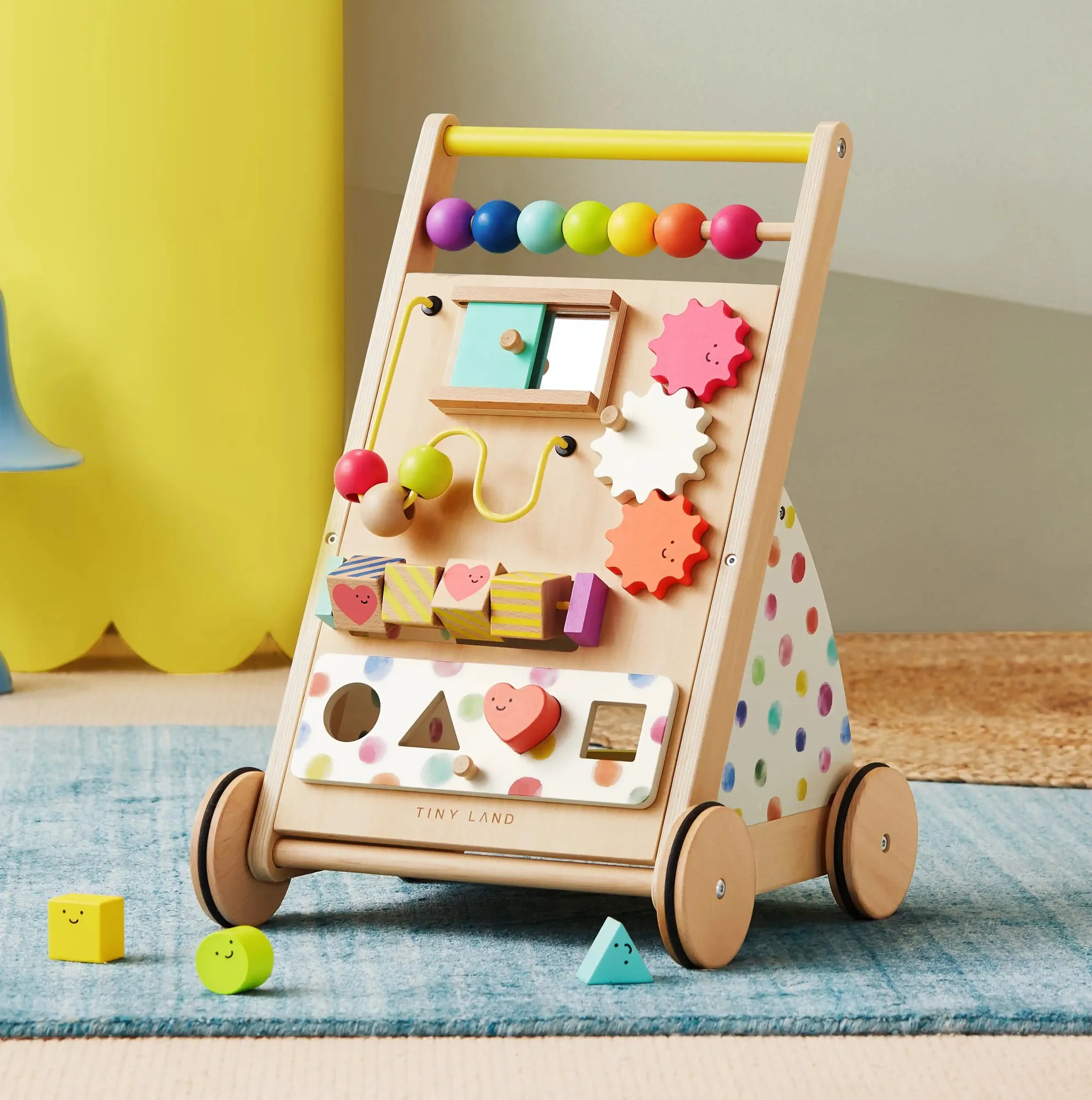
Wooden Activity Walker
-
Wooden Activity Walker: Designed for toddlers aged 1 to 2 years, this push-and-pull toy encourages movement and exploration. This age range matches the period when most children begin walking independently, so the walker supports natural development rather than rushing it.
Which one is right for your toddler?
Best for
- Parents who want a safe, developmentally appropriate tool for a child who is already pulling up to stand
- Families looking for a durable wooden toy that doubles as an activity center
Not for
- Babies who cannot yet stand with support — a seated walker is not a substitute for supervised floor play or a stationary activity center