Baby wipes questions answered
How many baby wipes should you use per diaper change?
There is no single number that fits every change. A wet diaper usually needs fewer wipes than a soiled one, and a blowout can take several. Start with one or two and add more as needed rather than pulling a large stack at once. The supplied product information for Pipette Baby Wipes does not include a recommended count per change, so let the mess guide you and keep the pack within reach so you are not guessing mid-change.
Are baby wipes safe for newborns?
The supplied information describes Pipette Baby Wipes as water-based, fragrance-free, and gentle and safe for baby's sensitive skin, formulated with plant-derived glycerin. It does not specify a minimum age or a newborn-specific instruction. If you are changing a newborn's diaper, that absence is a decision point: ask your pediatric care provider whether wipes are appropriate for your baby's skin at this stage, and follow their guidance over any general article.
Can you use baby wipes on your baby's face?
The supplied product information describes Pipette Baby Wipes as multipurpose and gentle, but it does not list face use as a confirmed instruction. For everyday face cleanup, a soft cloth with water is a conservative default. If you choose to use a wipe on the face, keep it away from the eyes and mouth, and stop if the skin looks irritated. The listing does not settle face use either way, so treat it as your call rather than a labeled direction.
Are these baby wipes flushable?
The supplied product information does not state that Pipette Baby Wipes are flushable. Do not flush them. Even wipes marketed as flushable can stress plumbing, and this listing makes no such claim. Dispose of used wipes in the trash or diaper pail.
How should you store baby wipes?
The supplied information does not include specific storage instructions for Pipette Baby Wipes. A practical approach is to keep the pack closed between changes so the wipes stay moist, and to store it at room temperature away from direct sun. If you decant wipes into another container, check that it seals well. The listing does not confirm a maximum storage time after opening, so use the pack within a reasonable period and reseal it every time.
What the Pipette Baby Wipes listing actually tells you
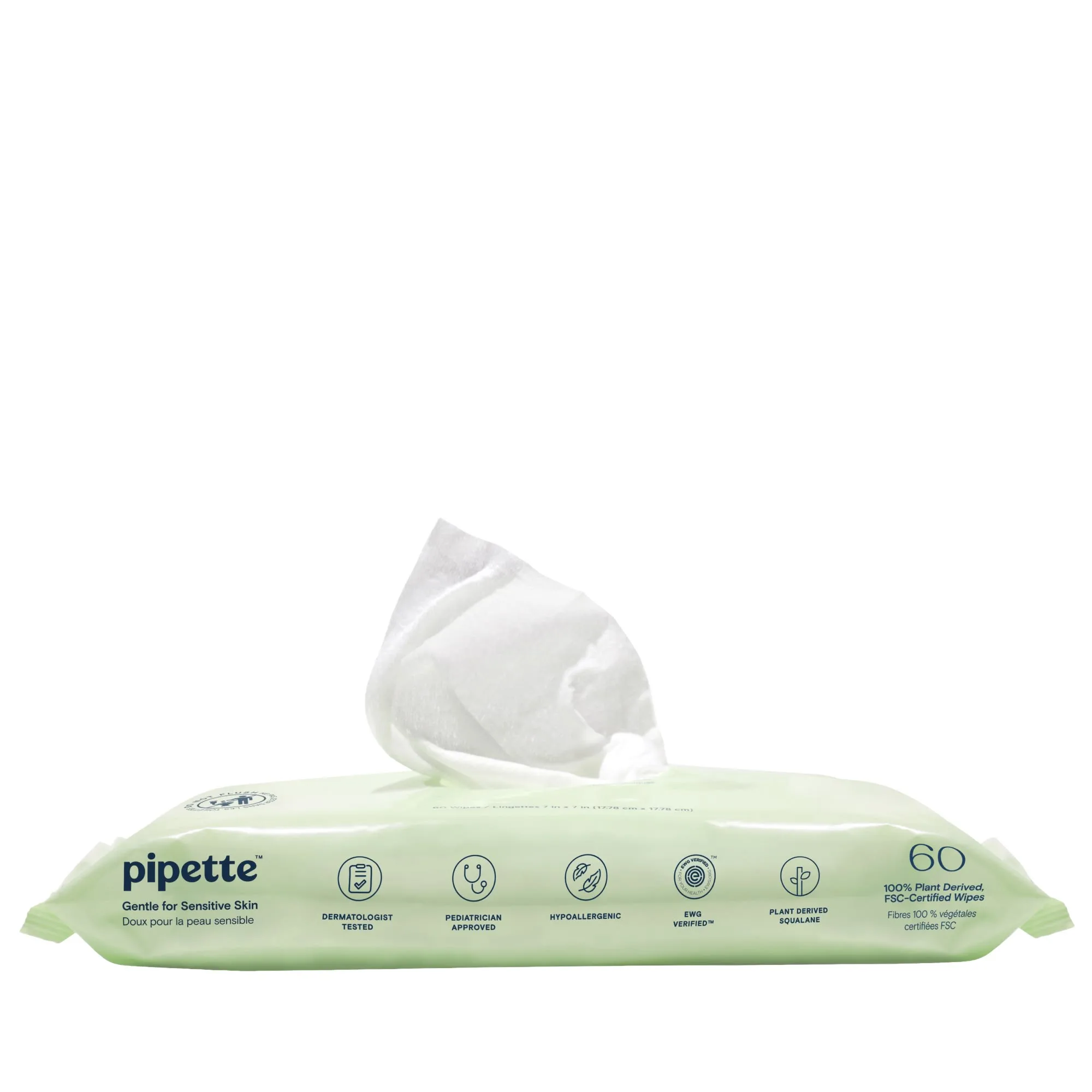
Pipette Baby Wipes are described as cloud-soft, water-based, and fragrance-free, made from 100% plant-derived, FSC-certified cloth fibers. The formula includes sugarcane-derived squalane and plant-derived glycerin, and the listing says the wipes are non-drying and gentle and safe for baby's sensitive skin. They come in a 1 Pack (60 ct) and a 4 Pack (240 ct).
What the supplied information does not include matters just as much: no age minimum, no face-use instruction, no flushability claim, and no storage directions. That is not a knock on the product. It simply means those questions are not settled by the listing, and you should not treat this article as a substitute for your own judgment or your pediatric provider's advice.
The wipes in this routine
-
Baby Wipes: Water-based, fragrance-free wipes made from 100% plant-derived, FSC-certified cloth fibers. Fragrance-free and water-based are the two details parents most often look for when choosing wipes for sensitive skin.
Baby Wipes
-
Baby Wipes: Formulated with plant-derived glycerin, described as a naturally hydrating ingredient known to help retain baby skin's moisture. Supports the listing's non-drying claim, which is relevant if you wipe frequently during diaper changes.
-
Baby Wipes: Infused with sugarcane-derived squalane and described as cloud-soft, with natural fibers that flex more easily. Explains the softness the listing emphasizes, which matters when you are wiping delicate skin several times a day.
-
Baby Wipes: Available in 1 Pack (60 ct) and 4 Pack (240 ct). The smaller pack suits a diaper bag or a trial run; the larger pack suits a changing station you restock less often.
A practical wipe routine for diaper changes
The supplied information does not include a step-by-step changing procedure, so the following is general diaper-change guidance rather than a manufacturer instruction. Adjust it to your baby and your setup.
- Set out one or two wipes before you start: Pulling wipes one at a time mid-change is slower and messier. Having a small stack ready keeps one hand free.
- Wipe front to back: This is standard diaper-change practice to reduce the spread of stool toward the genital area. Use a fresh wipe for each pass if needed.
- Reseal the pack right away: Closing the pack between changes helps keep the remaining wipes moist, especially if the pack sits in a warm room.
- Pat dry if the skin looks damp: A brief air-dry or a soft pat before closing the diaper helps. The listing does not give a required drying time, so use your judgment.