Quick answer
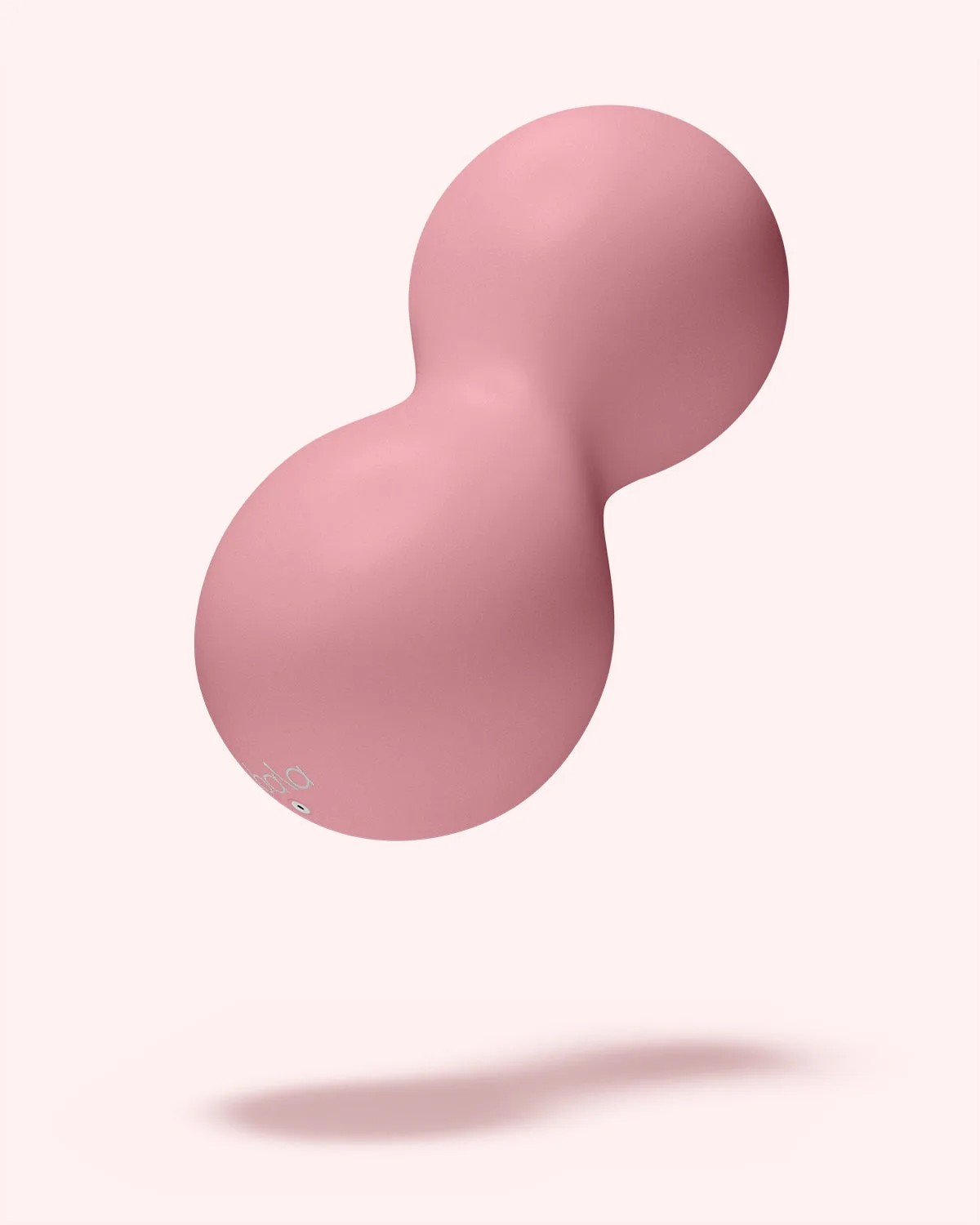
The Bala Birthday Peanut is a versatile resistance tool that adds gentle support and challenge to core workouts, pilates exercises, and stability training. Its hourglass shape encourages pelvic alignment and deep core engagement.
Why the hourglass shape matters for core work
Unlike a round ball, the peanut's narrow waist lets you squeeze it between your thighs or knees, activating your inner thighs and pelvic floor. This makes it especially useful for postnatal recovery or anyone wanting to improve core stability without straining the lower back.
The soft, grippy surface stays put on a mat or floor, so you can focus on form instead of chasing a rolling ball.
When to choose the Birthday Peanut over a standard ball
If you need a tool that stays stable between your legs during supine work or that supports your lower back in a restorative position, the peanut wins. A round ball works for dynamic movements like crunches, but the peanut excels at isometric holds and alignment cues.
It also doubles as a gentle prop for opening the pelvis during labor, so it has a dual life as a birth prep tool.
How to use the Bala Birthday Peanut for core workouts
- 1. Seated pelvic tilts: Sit tall on a mat with the peanut under your sit bones, narrow waist facing front. Gently rock your pelvis forward and back, keeping the peanut still. This wakes up your deep core and pelvic floor. Common mistake: arching your lower back instead of moving from the pelvis. Keep ribs stacked over hips.
- 2. Supine thigh squeeze: Lie on your back, knees bent, feet flat. Place the peanut between your thighs, just above the knees. Squeeze gently for 5 seconds, then release. Repeat 10 times. Common mistake: holding your breath. Exhale as you squeeze to engage the transverse abdominis.
- 3. Bridge with peanut hold: From the same supine position, keep the peanut between your thighs. Press through your heels to lift your hips into a bridge. Hold for 3 breaths, squeezing the peanut the whole time. Common mistake: letting the knees splay outward. Keep thighs parallel to maintain inner-thigh engagement.
- 4. Side-lying leg lift: Lie on your side with the peanut between your ankles. Lift your top leg slowly, keeping the peanut in place. Lower with control. Do 8-10 reps per side. Common mistake: using momentum. Lift and lower in a slow, controlled motion to keep the core braced.
- 5. Seated spinal twist: Sit cross-legged with the peanut under your left sit bone. Inhale to lengthen, exhale to twist to the left, using the peanut for feedback. Switch sides. Common mistake: twisting from the neck instead of the ribcage. Keep the twist coming from your mid-back.
Product facts
-
Bala Birthday Peanut: The Bala Birthday Peanut's hourglass shape helps ease discomfort, encourage dilation and keep the pelvis open during labor and delivery. That same shape makes it ideal for core stability work because it stays securely between your legs and supports proper pelvic alignment.
Bala Birthday Peanut