Start with the fit the shoe is designed for
Ballet slipper baby shoes are not meant to feel like a roomy sneaker. The Winterberry Ballet Slipper is built with a tight, sock-like fit, and the leather is expected to stretch with wear. That single design choice changes how you should size and judge the shoe: a little snugness at try-on is part of the intended fit, not automatically a sign you ordered too small.
This guide walks through the size and style choices available for the Winterberry Ballet Slipper, how to check the fit on a tiny foot, and how to care for the leather so the shoe keeps its shape.
What the Winterberry Ballet Slipper record confirms
-
Winterberry Ballet Slipper Baby Shoe: Made by hand from premium leather with a classic Ballet Slipper design, criss-cross elastic straps, and a soft insole. The elastic opening and soft insole are the features that shape how the shoe goes on and how it feels during the sock-like break-in period.
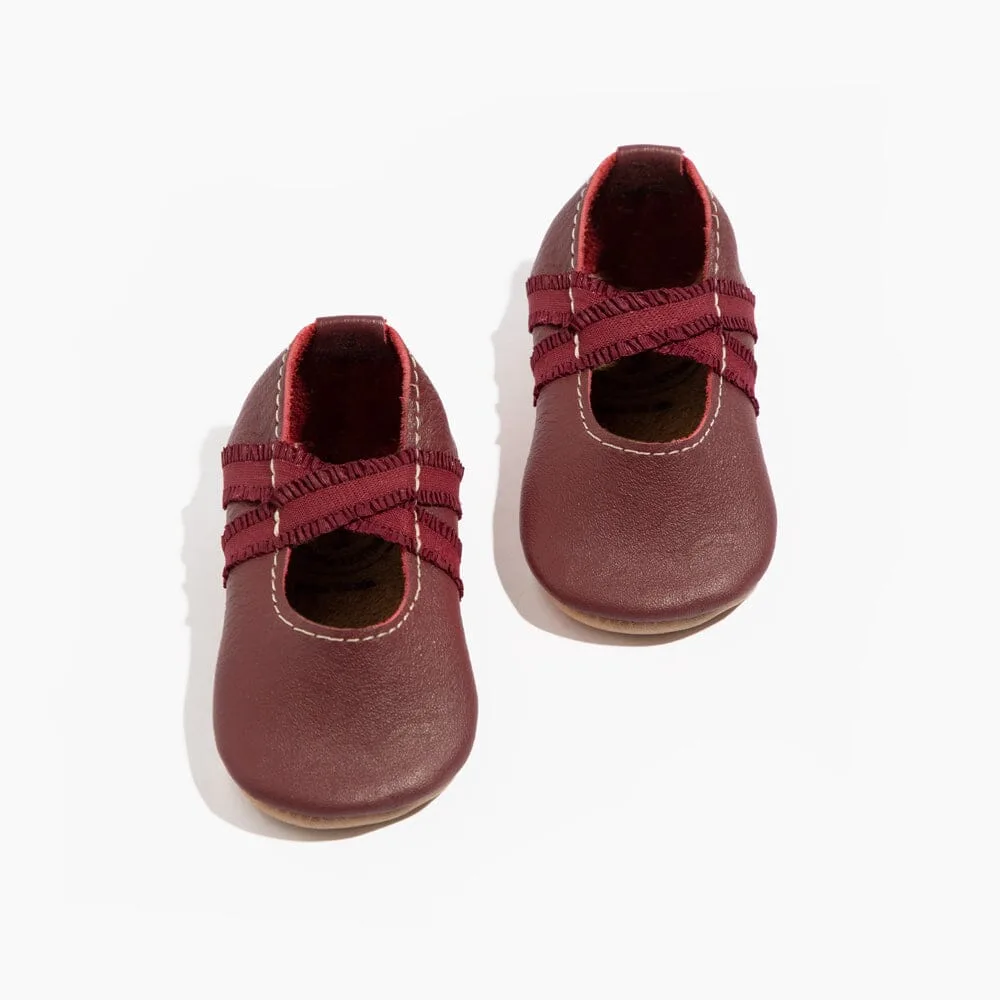
Winterberry Ballet Slipper Baby Shoe
-
Winterberry Ballet Slipper Baby Shoe: Premium Leather Baby Shoes are intended to have a tight, sock-like fit, as the leather will stretch with wear. This is the manufacturer's stated fit intention, so use it as your baseline when deciding between sizes rather than judging the shoe like a standard sneaker.
-
Winterberry Ballet Slipper Baby Shoe: Available in Soft Sole sizes 1 through 5 and Hard Sole sizes 3 through 5. The size and style options decide which version you can order, so check the style first and then the size within that style.
Soft Sole vs Hard Sole: which version fits your stage
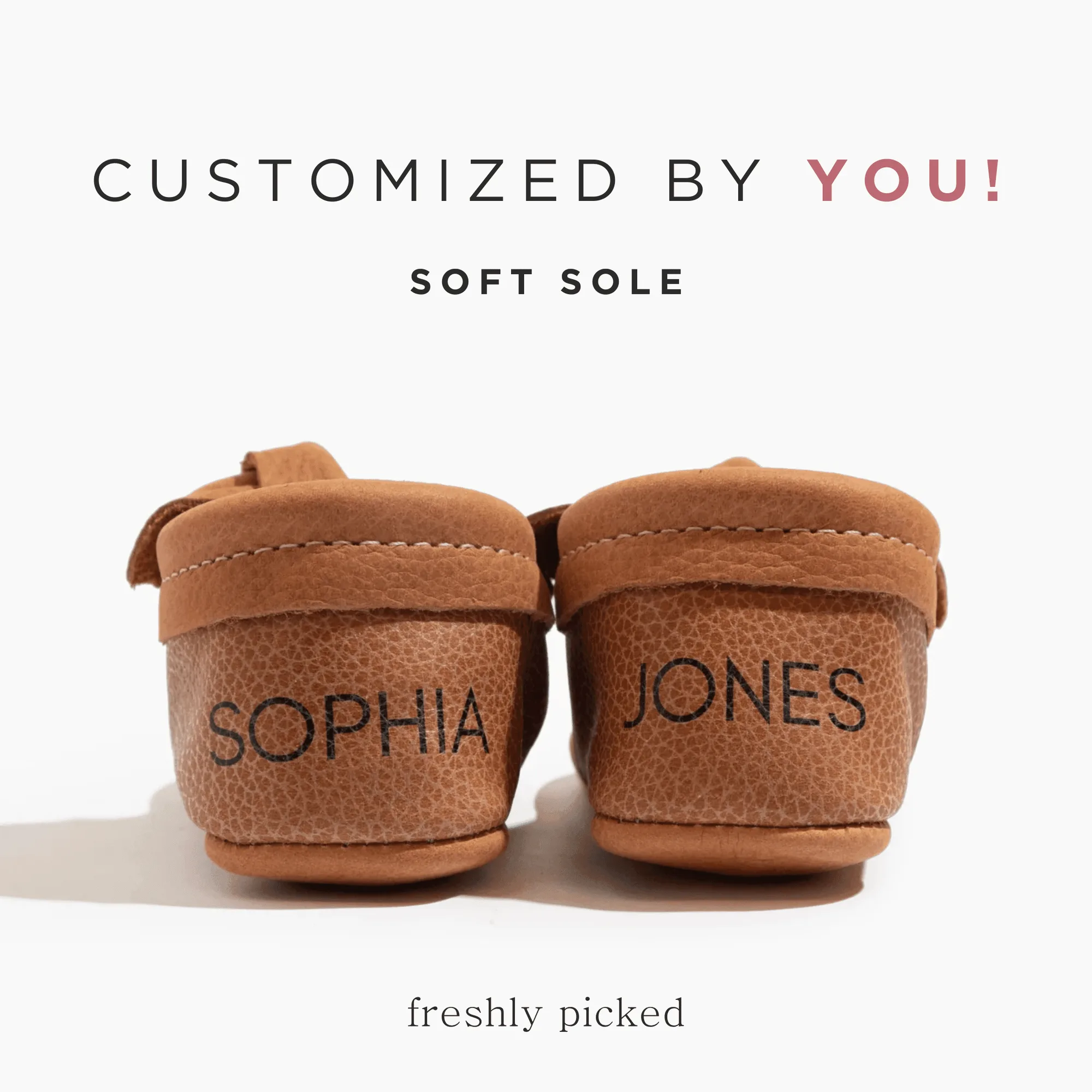
The Winterberry Ballet Slipper comes in two sole styles, and the available size ranges differ. Soft Sole covers sizes 1 through 5. Hard Sole covers sizes 3 through 5. If you need a size 1 or 2, the Soft Sole is the version available in the supplied records.
- Soft Sole, sizes 1-5: The widest size range in the record. Choose this style when you are shopping the smaller end of the size run or want the soft sole construction.
- Hard Sole, sizes 3-5: Available only from size 3 upward. If you are considering the Hard Sole, confirm your size falls within 3 to 5 before ordering.
How to check the fit on a tiny foot
Because the shoe is intended to fit tight and stretch with wear, the try-on is about confirming the opening goes on comfortably and the leather sits close to the foot without obvious pressure points. The supplied information does not include a measuring chart, toe-room allowance, or age-to-size conversion, so use the size you select as the starting point and judge the fit on the foot.
- 1. Put the shoe on through the elastic opening: The criss-cross elastic straps and easy-on elastic opening are designed for slip-on wear. Check that the opening passes over the foot without needing to force it.
- 2. Confirm the sock-like fit: The leather should sit close to the foot. The record states a tight, sock-like fit is intended, so expect a close fit rather than a loose, roomy one.
- 3. Check for pressure points: Look at the heel, the top of the foot, and around the elastic. The intended fit is snug, but you should not see the leather digging in or the foot being pushed out of shape.
- 4. Recheck after wear: The leather will stretch with wear. Try the shoe on again after a few wears to see how the fit has changed before deciding whether the size is right.
Sizing questions to settle before you order
The supplied record does not include a size chart, foot-length measurements, or age ranges for each size. Treat those as open questions rather than assuming a size matches a particular age. What the record does give you is the style and size matrix, so use that to narrow the order.
- Which sizes exist in each style?: Soft Sole: 1, 2, 3, 4, 5. Hard Sole: 3, 4, 5. If you want a size 1 or 2, the Soft Sole is the only style in the supplied record.
- Should I size up for growth?: The record does not give a growth allowance or a recommended size-up rule. It does state the leather stretches with wear and the intended fit is tight, so the shoe is designed to adapt somewhat rather than start loose.
- What if the fit feels snug at first?: A snug feel is consistent with the stated sock-like fit. Check for pressure points and recheck after wear as the leather stretches.
Caring for the leather so the fit holds
The supplied care information covers cleaning and drying. Stuff the shoes with something like a sock or rag for structure, saturate the shoe with a cleaning solution, and use a gentle baby detergent with a damp cloth. Then let them sit and dry. The leather might dry a little darker but will lighten up shortly after.
Stuffing the shoe while it dries also helps it keep its shape, which matters for a shoe designed to fit close to the foot. The record does not list a machine-washing instruction or a heat-drying method, so stick to the supplied steps.
What the record does not confirm
The supplied information does not include a size chart, foot-length measurements, age ranges, or a recommended toe-room allowance. It also does not confirm newborn suitability, safe-sleep or car-seat compatibility, or developmental benefits. Use the style and size options plus the stated sock-like fit as your decision tools, and treat anything beyond that as unconfirmed by the available record.