Quick answer
Choose organic cotton interlock for a soft, breathable, and easy-care everyday option that’s gentle on sensitive skin. Choose bamboo for a silky, stretchy feel that drapes beautifully and resists wrinkles, ideal for active babies and warmer weather. Both are excellent, but your priority—whether it’s simplicity or that luxurious hand-feel—will tip the scale.
When you’re shopping for baby clothes, the fabric choice can feel overwhelming. Two popular options—bamboo and organic cotton interlock—both promise softness and comfort, but they behave differently in daily wear. Understanding these differences helps you pick pieces that match your baby’s needs and your lifestyle.
This comparison breaks down the key traits of each fabric, using real product examples, so you can decide with confidence. We’ll cover feel, stretch, breathability, care, and how each fabric fits into a practical baby wardrobe.
What is organic cotton interlock?
Organic cotton interlock is a double-knit fabric that’s smooth on both sides, making it soft against your baby’s skin without needing a separate lining. It’s breathable, absorbent, and gets softer with each wash. Because it’s made from 100% organic cotton, it’s free from harsh chemicals, which is a plus for sensitive skin.
In practice, organic cotton interlock holds its shape well and doesn’t stretch out easily. It’s a sturdy choice for everyday basics like tees and shorts that see lots of wear and washing. The fabric’s structure also makes it easy to layer under sweaters or over onesies.
- Breathable and absorbent, ideal for warm days or active play.
- Machine washable and holds up to frequent washing without pilling.
- Smooth on both sides, so it feels comfortable directly against the skin.
What is bamboo fabric?
Bamboo fabric, specifically the viscose from bamboo blend used in many baby clothes, is known for its silky, smooth texture. It’s made from bamboo pulp that’s processed into a semisynthetic fiber, often blended with a small amount of Lycra for stretch. This combination creates a fabric that drapes softly and moves with your baby.
Bamboo is also naturally temperature-regulating and moisture-wicking, which helps keep your baby comfortable in both warm and cool conditions. It’s lightweight and less bulky than cotton, making it a great choice for sleepwear or layering pieces. However, bamboo requires gentler care—cold washes and low heat drying—to maintain its softness and shape.
- Silky smooth texture that feels luxurious against the skin.
- Naturally moisture-wicking and temperature-regulating for comfort.
- Stretchy and lightweight, ideal for active babies and layering.
Key differences in feel and stretch
The most noticeable difference is texture. Organic cotton interlock has a soft, slightly brushed feel that’s cozy and familiar. Bamboo, on the other hand, feels slick and cool to the touch—almost like a high-end athletic fabric. If you run your hand across both, bamboo will feel more slippery, while cotton interlock feels more substantial.
Stretch is another differentiator. Bamboo blends with Lycra offer more give, making them easier to pull over a wiggly baby’s head and more forgiving during growth spurts. Cotton interlock has less stretch but retains its shape well, so it doesn’t sag at the knees or elbows after repeated wear.
Breathability and temperature control
Both fabrics are breathable, but they excel in different ways. Organic cotton interlock allows air to circulate and absorbs moisture, which helps prevent overheating on warm days. It’s a reliable choice for summer outfits or for babies who tend to run warm.
Bamboo takes breathability a step further with natural moisture-wicking properties. It pulls sweat away from the skin and evaporates it quickly, keeping your baby dry during active play or in humid climates. This makes bamboo a strong contender for sleepwear or for babies who sweat easily.
Care and durability: what to expect
Organic cotton interlock is low-maintenance. You can toss it in the washing machine with similar colors and dry it on a low setting. It becomes softer with each wash and resists pilling, so it’s a practical choice for busy parents who don’t want to hand-wash every item.
Bamboo requires a bit more attention. To keep its silky feel and prevent stretching, it’s best washed in cold water on a gentle cycle and laid flat or hung to dry. While bamboo is durable, it can be more prone to snags and wrinkles if not handled carefully. If you’re okay with a little extra care, the payoff is a fabric that feels amazing and lasts.
Trade-offs at a glance
- Softness: Organic cotton interlock is soft and cozy, while bamboo is silky and smooth. If you prefer a classic cotton feel, choose interlock; if you love a luxurious glide, choose bamboo. Both are gentle on skin, but texture preference is personal.
- Stretch and fit: Bamboo blends with Lycra offer more give, making them easier to put on and more forgiving during growth spurts. Cotton interlock holds its shape better but has less stretch. For wiggly babies or quick changes, bamboo’s stretch is a win.
- Care effort: Cotton interlock is machine-wash friendly and low maintenance. Bamboo needs cold, gentle washes and air drying to maintain its feel and shape. If you want easy care, cotton interlock is the practical pick.
Real examples from kate quinn
- sleeveless kate top | iris | organic cotton interlock: Features gathered drop waist and back button-down placket. Made from the softest 100% organic cotton interlock material. This top shows how organic cotton interlock can be both structured and soft—the gathered waist adds shape without sacrificing comfort, and the back buttons make dressing easier.
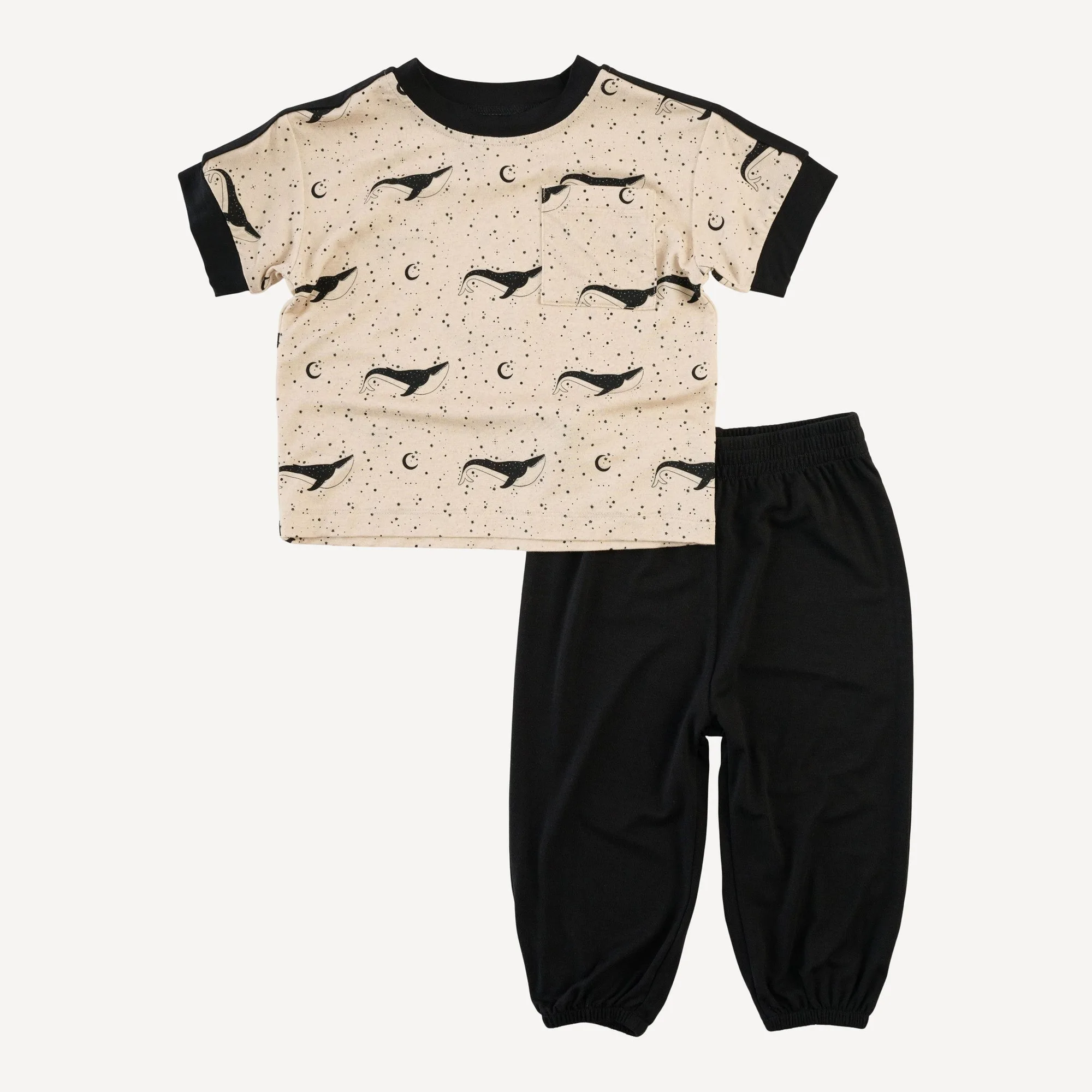
- jamie short set | clementine | organic cotton interlock: Features a boxy fit tee with topstitch detail, sleeve cuffs, and bottom band paired with matching shorts with elastic waistband and leg cuffs. Made from the softest 100% organic cotton interlock material. A set like this highlights the durability and shape retention of cotton interlock—the cuffs and bands stay put through active play and frequent washing, making it a reliable everyday outfit.
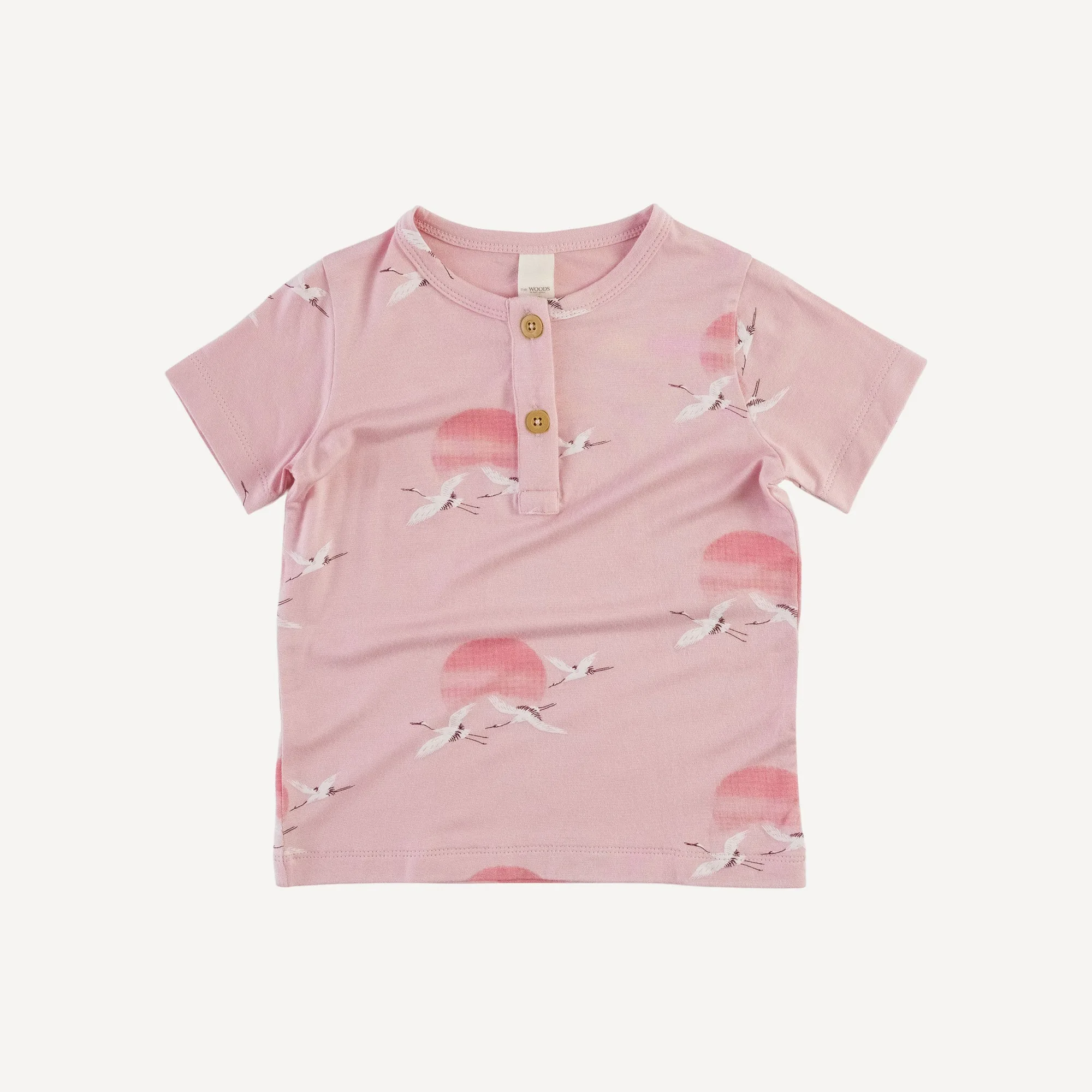
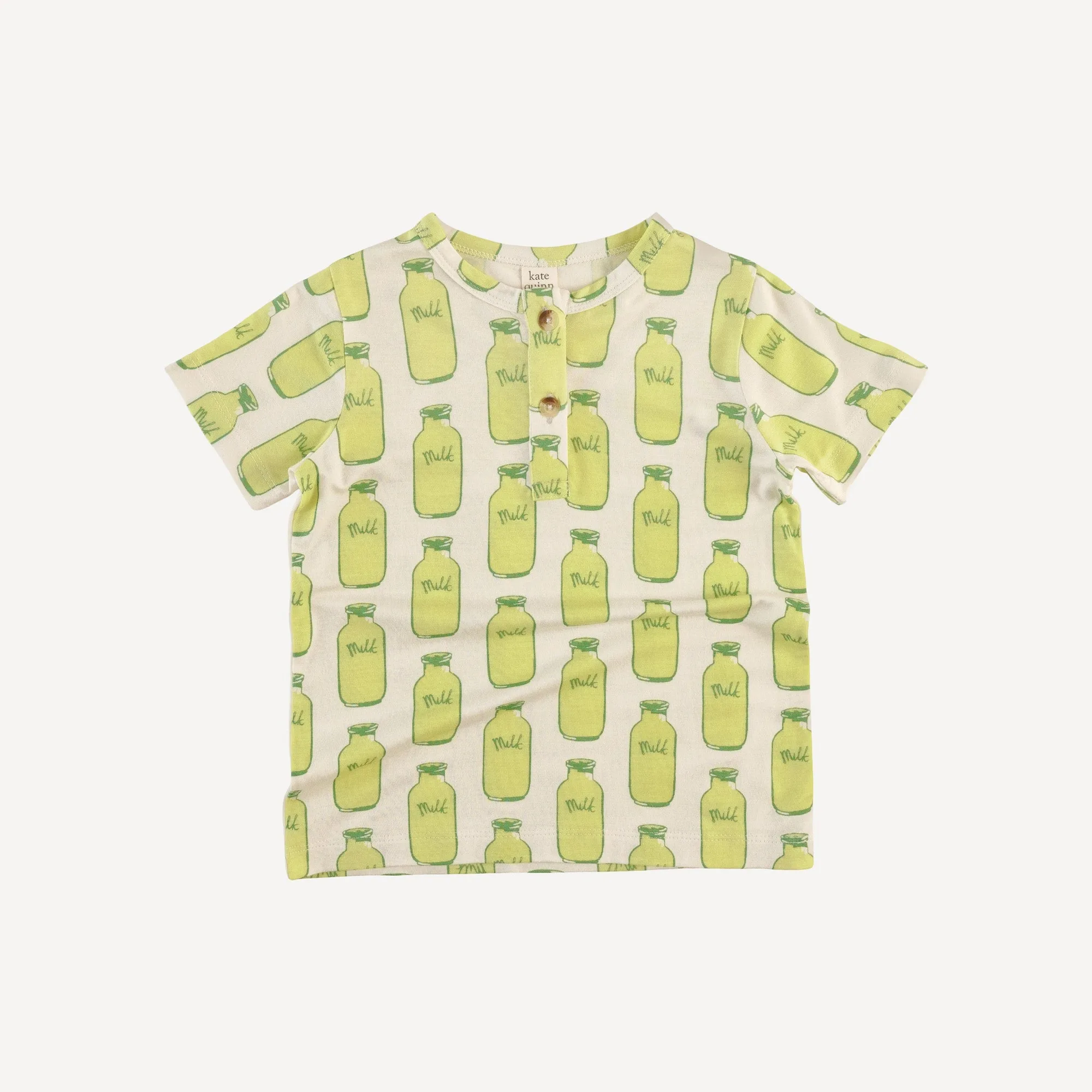
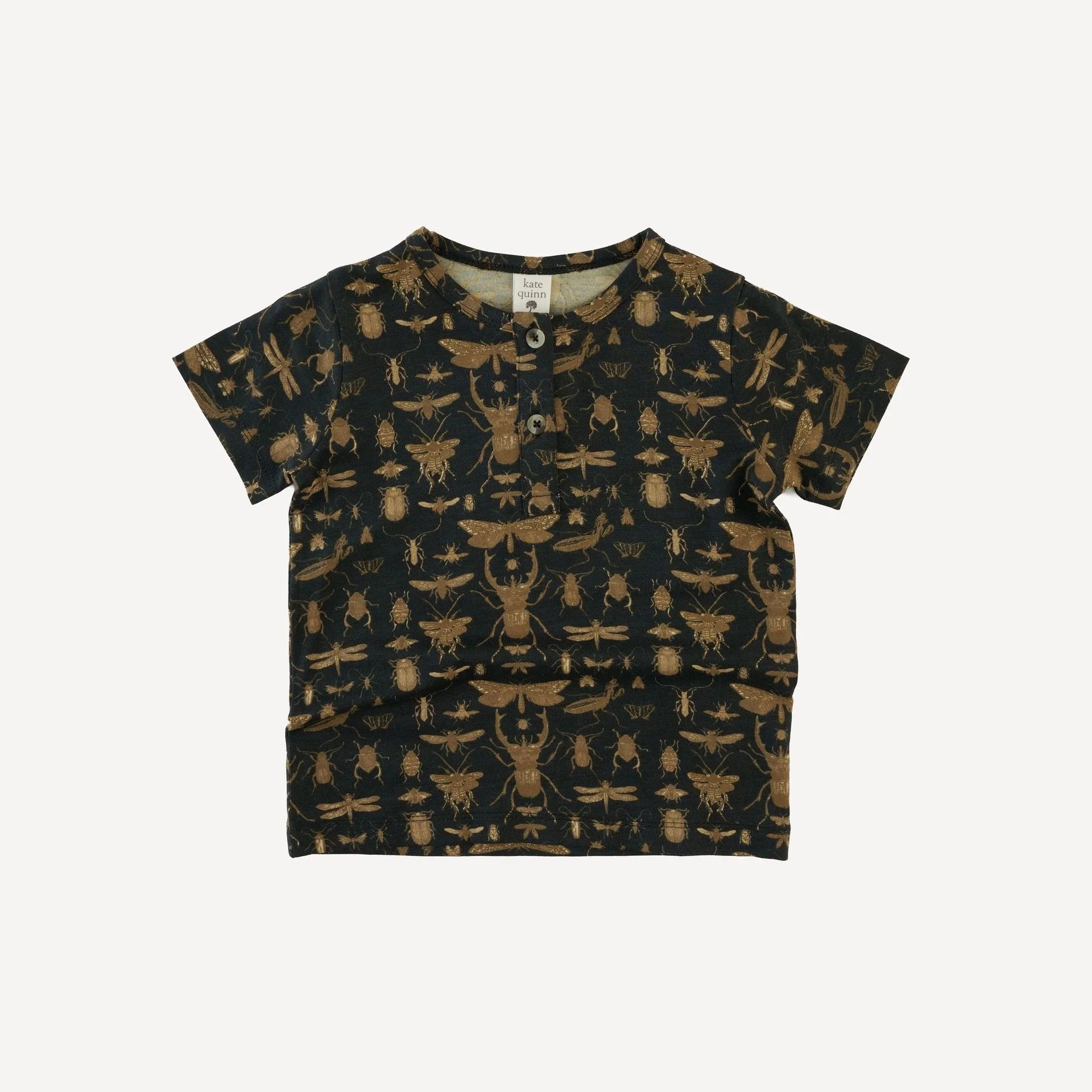
- short sleeve basic henley tee | rocket | bamboo: Features henley front button placket and hip length. We use a blend of 96% viscose from bamboo and 4% Lycra that creates a super silky and easy-to-wear textile. The bamboo blend’s silky texture and stretch make this henley easy to pull over your baby’s head, and the hip length offers extra coverage—great for pairing with leggings or shorts.
- cuffed jogger | gull | bamboo: Features elastic waistband and leg cuffs. We use a blend of 96% viscose from bamboo and 4% Lycra that creates a super silky and easy-to-wear textile. Joggers with elastic cuffs benefit from bamboo’s stretch—they move with your baby and stay in place, making them ideal for crawling or active toddlers.
Which fabric fits your baby best?
Best for
- Organic cotton interlock: parents who want a low-maintenance, durable fabric that’s breathable and easy to wash, ideal for everyday play and layering.
- Bamboo: parents who value a silky feel, natural stretch, and temperature regulation, especially for sleepwear or babies who are sensitive to overheating.
Not ideal for
- Bamboo: if you prefer a fabric that can handle hot water washing and high-heat drying without worry, bamboo’s care requirements may feel restrictive.
- Organic cotton interlock: if you’re looking for maximum stretch and a super lightweight, drapey feel, cotton interlock may feel too structured.
Both bamboo and organic cotton interlock are excellent choices for baby clothing, each with its own strengths. Organic cotton interlock wins on ease of care and classic softness, while bamboo offers a silky, stretchy, temperature-regulating experience. Consider your baby’s activity level, your laundry habits, and your preference for texture to make the right choice. With the right fabric, you’ll keep your little one comfortable and happy—no matter which you pick.