Quick answer
Choose banana plugs for convenience and frequent swapping, especially if your binding posts accept them directly. Choose spades for a mechanically secure, low-contact-resistance connection that resists loosening over time. If you value easy installation and your amp has standard binding posts, banana plugs are the practical default. If you prioritize a rock-solid, long-term connection and your terminals can be tightened firmly, spades are worth the extra effort.
How banana plugs and spades actually differ
Banana plugs are cylindrical, spring-loaded connectors that insert into the end of a binding post. They rely on friction and spring tension to stay in place. Spades are flat, fork-shaped connectors that slide around the binding post and are secured by tightening the post's cap. The key difference is the mechanical interface: banana plugs depend on spring pressure, while spades depend on clamping force.
This matters for signal transfer and long-term reliability. A properly tightened spade creates a large, stable contact area that resists vibration and thermal cycling. Banana plugs are faster to connect and disconnect, but over time the spring can weaken, and the contact may become less secure—especially in systems with heavy vibration or frequent cable swaps.
When banana plugs make more sense
Banana plugs shine in setups where you change components often, such as reviewing gear or swapping speakers for different listening sessions. They are also easier to insert in tight spaces behind a rack because you don't need to fully unscrew a binding post. If your amplifier or speaker has binding posts that accept banana plugs directly (common on many modern models), they offer a clean, tool-free connection.
One trade-off: banana plugs can work loose if the spring tension weakens or if the binding post is slightly undersized. In high-vibration environments—like a room with a subwoofer on a suspended floor—they may need periodic reseating. For most home setups, however, they are reliable and convenient.
When spades are the better choice
Spades are ideal when you want a connection that stays put. Because the binding post cap clamps the spade firmly, the contact is mechanically locked and less likely to loosen from vibration or accidental tugs. This makes spades a strong option for permanent installations, high-power systems, and setups where you rarely disconnect cables.
The trade-off is installation effort. You need to unscrew the binding post cap, slide the spade around the post, and tighten it down—often in cramped quarters. Spades also require that your binding posts can be fully tightened; some spring-clip terminals won't accept them. If your amp uses spring clips or proprietary connectors, banana plugs or bare wire may be your only options.
Matching connector to cable gauge and terminals
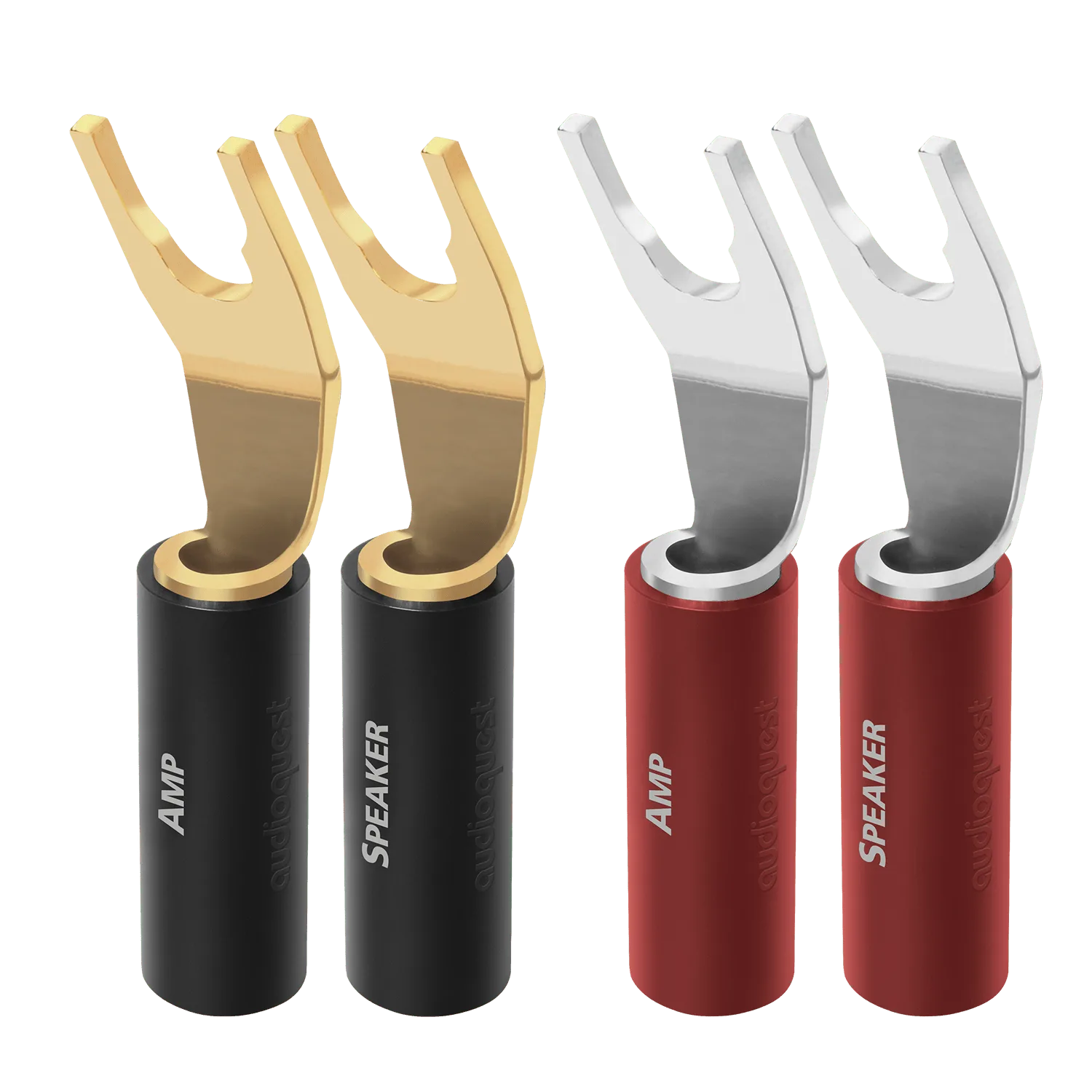
Before choosing, check two things: your speaker cable gauge and your equipment's binding posts. Spades come in different sizes to fit specific post diameters, and they must also accommodate your cable's gauge. For example, the SureGrip® 100 Multi-Spade fits up to 9AWG speaker cables and is compatible with universal binding posts, with speaker and amp ends clearly labeled on non-metallic ABS casings for easy installation.
If your cable is thicker than 9AWG, you'll need a larger spade or a different termination method. Banana plugs typically accept a narrower range of gauges, so verify compatibility before ordering. Also confirm whether your binding posts are standard 4mm banana-compatible or use a smaller European style; some adapters exist, but they add another connection point.
Installation tips for either connector
Whichever you choose, preparation matters. Strip only enough insulation to fit the connector's barrel—usually about 1/2 inch—and avoid nicking the conductor strands. For spades, slide the spade over the stripped wire and crimp or solder according to the manufacturer's instructions. For banana plugs, insert the wire into the plug body and tighten the set screw or crimp the barrel.
After termination, check for stray strands that could bridge across terminals and cause a short. Tighten binding posts firmly but don't overtighten, which can strip threads or damage the connector. Periodically inspect both types for looseness, corrosion, or discoloration, especially in humid environments.
Trade-offs at a glance
- Connection security: Spades clamp firmly under a binding post cap, resisting vibration and accidental pulls. Banana plugs rely on spring tension and can loosen over time. Choose spades for permanent, set-and-forget systems; banana plugs for setups you change often.
- Installation ease: Banana plugs insert directly into compatible binding posts with no tools. Spades require unscrewing the post cap, sliding the spade on, and tightening—often in tight spaces. If access behind your gear is difficult, banana plugs save time and frustration.
- Compatibility: Spades need binding posts that can be fully tightened and come in sizes to match post diameter. Banana plugs fit standard 4mm posts but may not fit spring clips or proprietary terminals. Check your amp and speaker terminals before buying; adapters add extra connection points.
Product facts
- SureGrip® 100 Multi-Spade: SureGrip® 100 Multi-Spade features high-purity purple copper and direct-silver plating without a nickel layer, reducing distortion. It fits up to 9AWG speaker cables and has clearly labeled speaker and amp ends on non-metallic ABS casings. This spade is a strong choice if you want a secure, low-distortion connection and your cable is 9AWG or thinner. The labeling simplifies correct polarity hookup.
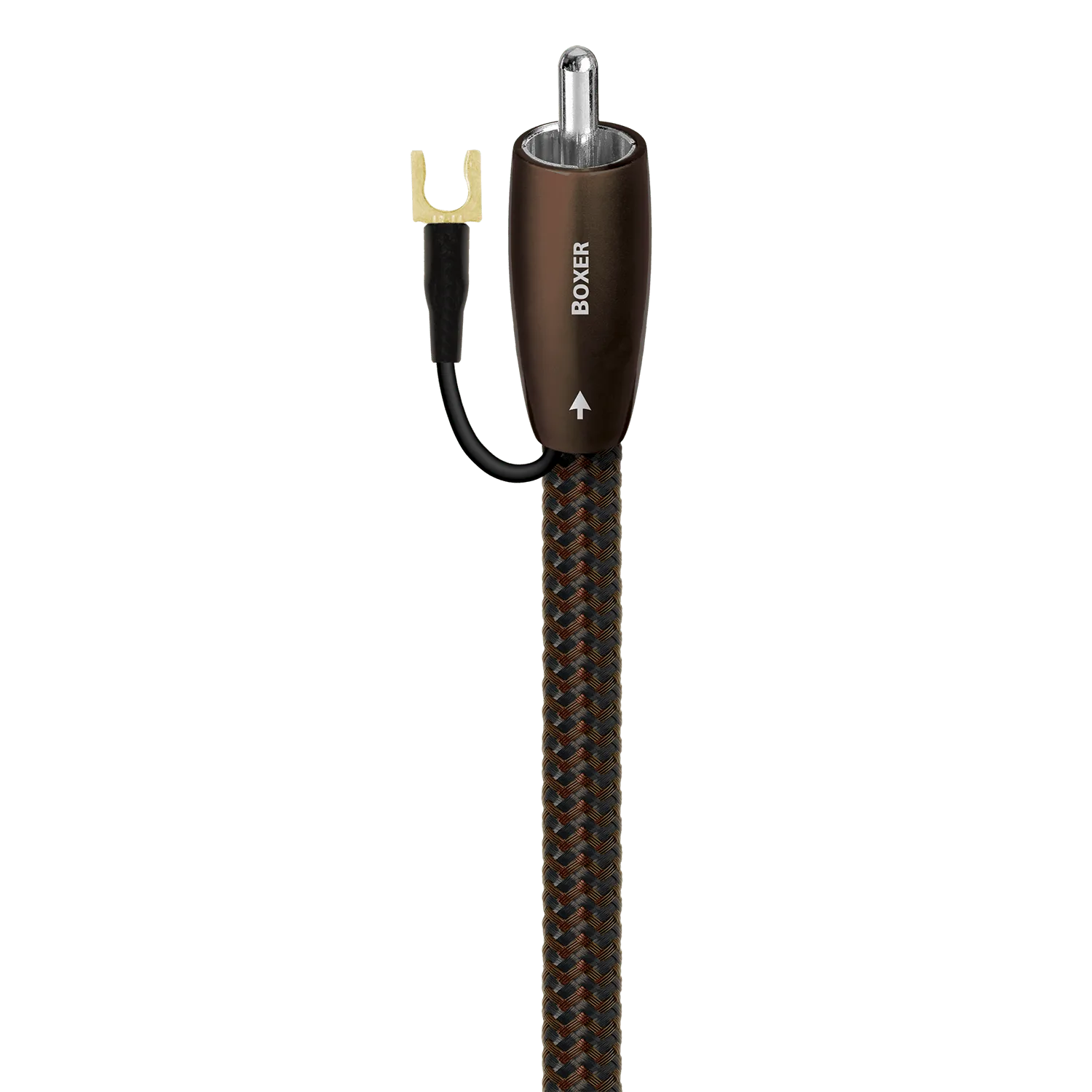
- Boxer RCA Factory Certified Refurbished: Boxer RCA Factory Certified Refurbished uses solid 1.25% silver-plated copper conductors and a carbon-based 3-layer noise-dissipation system to prevent RFI from modulating the ground reference. If you're also upgrading your subwoofer cable, this refurbished option offers AudioQuest's noise-dissipation technology at a lower cost than new, with the same factory certification.
Which should you choose?
Best for
- Listeners who swap speakers or amplifiers frequently and want tool-free changes
- Systems with standard 4mm binding posts and moderate cable gauges
- Anyone who values quick setup and easy polarity checks
Not for
- High-vibration installations where connections must never loosen
- Very thick speaker cables (above 9AWG) unless a compatible spade is available
- Equipment with spring-clip terminals that cannot accept spade lugs