Quick answer
Start the Banwood Eco Scooter Olive on smooth, flat pavement such as a driveway or empty tennis court. Grass, gravel, and uneven ground make balancing harder for new riders, so save those surfaces until your child is confident steering and stopping.
Why surface choice matters more than speed for first rides
New riders spend most of their energy learning to steer and balance, not going fast. A smooth surface lets the scooter roll predictably, so your child can focus on the handlebar and their feet. Rough ground adds vibration and sudden slowdowns that can knock a beginner off balance.
The Banwood Eco Scooter Olive has a three-height adjustable handlebar (70 cm, 75 cm, and 80 cm). Set it low enough that your child can grip comfortably while standing tall, because a cramped stance makes uneven ground feel even less stable.
The trade-off: grass feels safer but rides harder
Many parents start on grass thinking falls will hurt less. That is true, but grass also slows the scooter quickly and hides small bumps, so a beginner may struggle to build any momentum. Use grass only for stationary balance practice, such as standing on the deck and lifting feet, not for actual scooting.
Once your child can glide a few meters on pavement, move to a packed dirt path or short grass stretch to practice control. Expect shorter rides and more effort; that is normal, not a sign the scooter is wrong.
When gravel and wet pavement are a firm no
Loose gravel and wet pavement reduce grip and make steering unpredictable, especially for a child still learning to brake with their foot. Skip these surfaces until your rider has reliable balance and can stop on command. The catalog does not list wheel type or brake specifications for the Banwood Eco Scooter Olive, so treat surface limits as a general beginner rule rather than a scooter-specific rating.
Common questions about riding surfaces and first practice
Can kids scooters ride on grass?
Yes, but grass is best for stationary balance practice, not for gliding. The thick turf slows the wheels and hides bumps, so a new rider will likely stall or tip. Use a flat, short grass patch only after your child can glide on pavement. Test grass only after your child can stop reliably on smooth pavement.
What is the best first practice surface?
Choose a smooth, flat, car-free area such as a driveway, empty basketball court, or paved park path. Check for cracks, loose stones, and slopes before your child starts. A slight incline can be helpful for learning to glide, but avoid steep hills until steering and braking are automatic.
How do I set up the scooter for a new rider?
Adjust the T-shaped handlebar to the lowest height that lets your child grip with slightly bent elbows while standing comfortably on the deck. The Banwood Eco Scooter Olive offers 70 cm, 75 cm, and 80 cm settings. A too-high bar forces them to lean and makes pavement bumps feel bigger. Recheck handlebar height every few months as your child grows.
What should my child wear for first scooter practice?
A properly fitted helmet, closed-toe shoes, and knee pads are a sensible baseline for any scooter session, even on smooth pavement. Avoid loose clothing that can catch on the deck or wheels. The catalog does not include safety gear with the scooter, so plan to supply it separately.
How long should first rides last?
Keep early sessions to 10–15 minutes and end while your child is still having fun. Short, frequent practices on the same smooth surface build confidence faster than one long session on mixed terrain. Stop immediately if your child looks tired or starts dragging their feet. End on a successful glide, not on a fall or frustration.
Is the Banwood Eco Scooter Olive easy to transport to a practice spot?
The scooter has a spring pin under the steering system that lets you detach the handlebar quickly for transport. That makes it practical to drive to a quiet court or park path instead of practicing on a busy sidewalk.
Product facts for the Banwood Eco Scooter Olive
-
BANWOOD ECO SCOOTER - OLIVE: Suitable for children aged 3 years and older. Use this as a minimum age guide; younger toddlers may need a different first ride-on before trying a scooter on pavement.
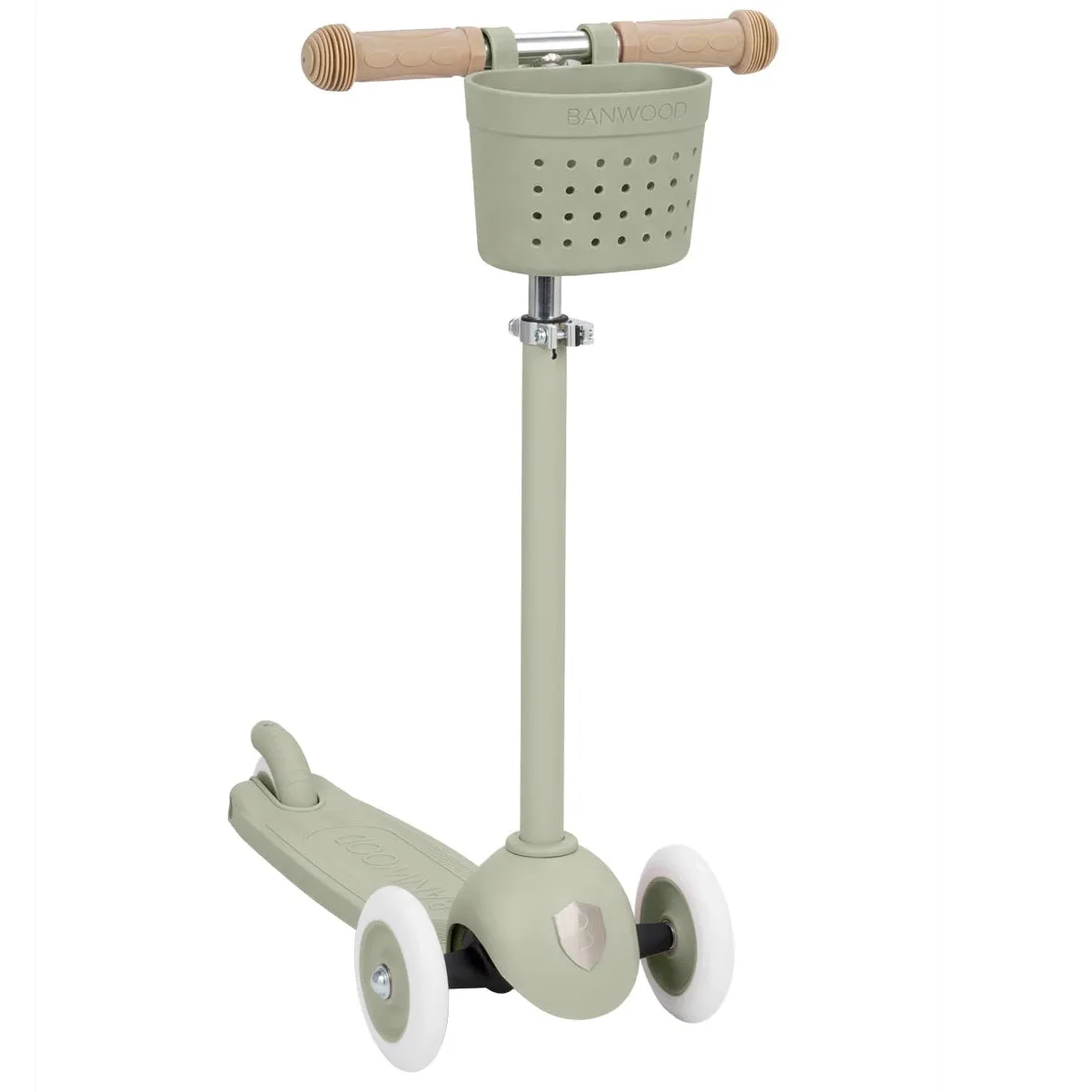
BANWOOD ECO SCOOTER - OLIVE
-
BANWOOD ECO SCOOTER - OLIVE: Equipped with Banwood’s patented Easy Ride Steering System for intuitive and smooth maneuvering. Smooth steering helps on flat pavement, but it does not replace the need to practice on predictable ground first.
-
BANWOOD ECO SCOOTER - OLIVE: T-shaped handlebar with three adjustable heights (70 cm, 75 cm, and 80 cm). Adjust the height so your child stands upright; a comfortable stance makes balancing on any surface easier.