Start with the 1809 uniform, not the paint rack
The Victrix Bavarian Infantry box represents the 1809 pattern, when Bavarian infantry adopted a more French-style kit instead of the slung backpack and gaiters. That single detail should shape your painting plan: you are not painting earlier Bavarian line with heavy packs and gaiters, so keep the silhouette clean and let the blue uniform and the firing and marching poses carry the unit.
Before you open a paint bottle, sort the 58 figures into the roles the box actually provides. The breakdown is 36 marching figures, 16 firing figures, 4 command figures and 2 mounted colonels. Some catalog listings also phrase these as 32 marching units, 16 firing units, 4 command units and 2 mounted colonels, so check the contents against the physical box rather than relying on a single line of text. Either way, the mix is large enough to build a full line unit with a command group and mounted leadership.
What the box gives you to work with
-
Bavarian Infantry: The set includes 58 highly detailed figures representing Bavarian infantry from 1809. The 1809 date fixes the uniform style you are painting, so you can choose references and colours for that pattern rather than a later or earlier Bavarian line.
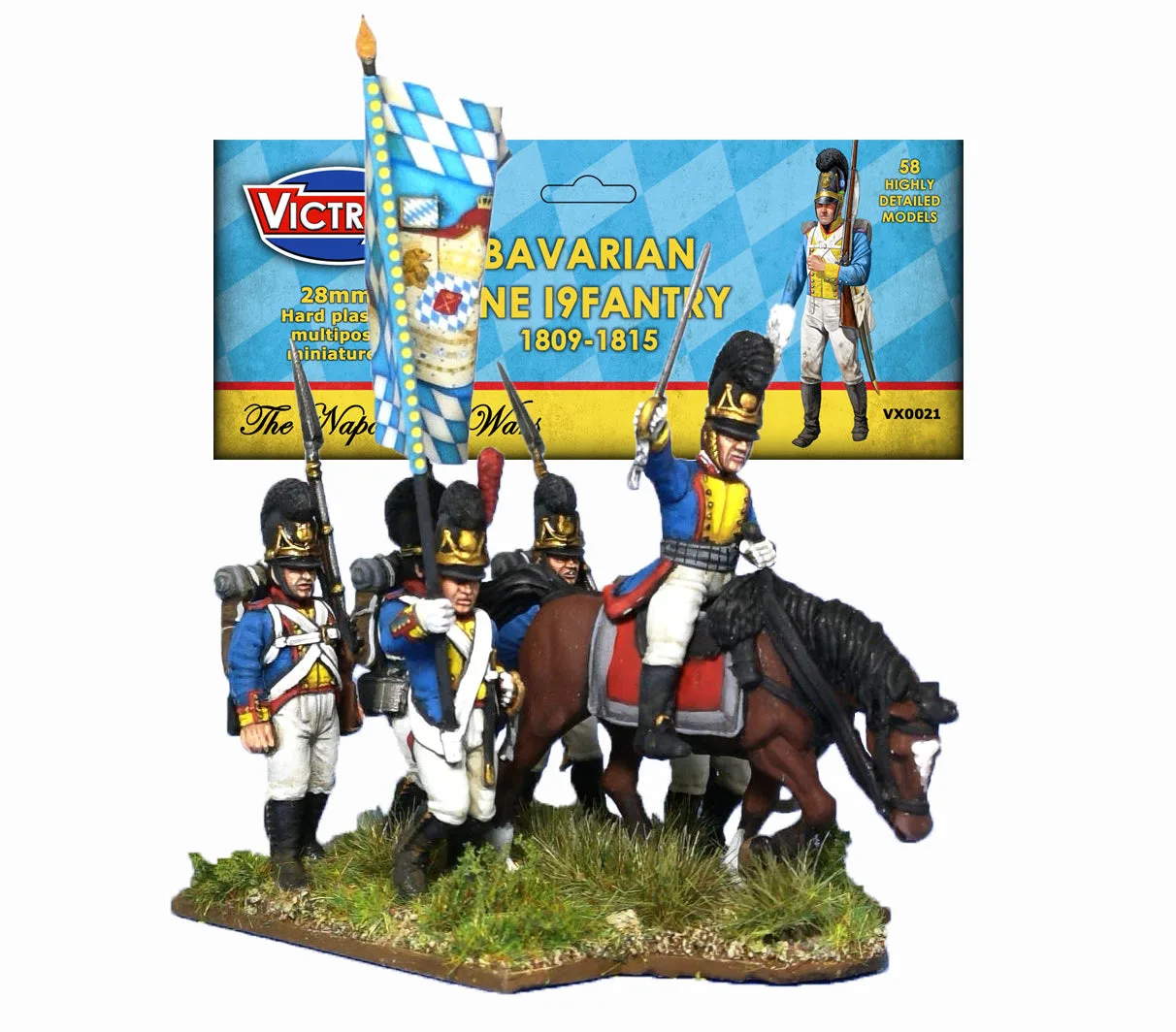
Bavarian Infantry
-
Bavarian Infantry: The breakdown is 36 marching figures, 16 firing figures, 4 command and 2 mounted colonels. This tells you how many figures can be painted as rank and file, how many as a firing line, and how many command and mounted figures need separate treatment.
A painting order that keeps 58 figures manageable
Batch painting is the only realistic way through a box this size. The order below keeps the mounted colonels and command figures from becoming a last-minute afterthought.
- Clean and prime in groups: Separate the marching, firing, command and mounted figures before priming. Prime the 36 marching figures first, since they are the bulk of the unit, then the 16 firing figures, and leave the 4 command and 2 mounted colonels for a separate batch.
- Block in the blue uniform: Paint the coats and trousers as one batch. Keep the blue consistent across marching and firing figures so the unit reads as a single body of troops on the tabletop.
- Paint command figures with extra care: The 4 command figures and 2 mounted colonels are the focal points of the unit. Give them slightly cleaner lines and a little more contrast than the rank and file, but keep the same blue uniform family so they still belong to the same battalion.
- Finish faces and equipment last: Work through faces, hands and equipment in the same batch order. This avoids reopening a finished figure just to touch up a cuff or a musket.
Painting Bavarian blue without losing the 1809 silhouette
The 1809 change from the slung backpack and gaiters to a more French-style kit means the back and legs of the figures should not be cluttered with the earlier equipment. When you paint the blue uniform, avoid adding heavy shading or texture that suggests a pack where the figure does not have one. Keep the coat and trousers in the same blue family, then use the facing colours and the mounted colonels' horses to add visual variety across the unit.
The supplied product information does not specify exact paint codes or facing colours, so choose a blue that matches your preferred reference for 1809 Bavarian line infantry. Test it on one marching figure before committing to all 36. If the blue looks too dark under your usual lighting, lighten it slightly rather than repainting the whole batch.
Basing the marching, firing and command figures
The box does not supply base sizes or a recommended unit footprint, so your ruleset and existing collection should decide the basing plan. The figure mix itself suggests a practical split.
- Marching figures: The 36 marching figures are the core of the battalion. Base them in consistent ranks so the unit looks like a line on the move rather than a random collection of individual figures.
- Firing figures: The 16 firing figures work well as a firing line or as skirmish-style elements. Keep their bases consistent with the marching figures so the whole unit can be combined or separated as your rules require.
- Command figures: The 4 command figures need enough space for their poses and any standard or instrument they carry. Base them together as a command stand if your rules use one, or place them individually at the centre of the line.
- Mounted colonels: The 2 mounted colonels are best based separately from the infantry. Give each horse enough room for the base and any groundwork, and keep the basing style consistent with the rest of the army.
What to check before you commit to a full unit
The supplied information confirms the figure count and the 1809 uniform style, but it does not confirm base sizes, assembly instructions, paint guides or rules compatibility. Treat those as decisions for your own collection and ruleset. The safest approach is to assemble and paint one marching figure, one firing figure, one command figure and one mounted colonel first. That small test batch will show you whether your blue, your basing plan and your command figure placement work together before you repeat the process across all 58 figures.
If you are building a larger Bavarian force, the 58-figure box gives you enough figures for a substantial line unit with command and mounted leadership. The trade-off is that the mounted colonels and command figures take proportionally more time than the marching figures, so plan your painting schedule around the figures that will draw the most attention on the tabletop.