Quick answer
If your blow-dry falls flat at the roots, takes too long, or the comb snags and drags, the BD321 Vent Styler is built to address those three issues. Its vent design lets hot air pass through while you style, and its smooth teeth reduce friction — but it won't replace a round brush for bend or a curling tool for shape.
Why a vent comb changes the blow-dry, not just the tool
A vent brush and a vent comb both use open spaces to let airflow through, but they behave differently. A vent brush carries bristles that add tension and bend; a vent comb has teeth that separate and guide strands with less pull. The BD321 Vent Styler sits in the comb camp: it's for smoothing, lifting at the root, and keeping sections clean while you dry, not for building a rounded end.
That distinction matters when you're diagnosing a bad blow-dry. If the problem is flat roots, a comb that lets you get close to the scalp without bristles blocking airflow can help. If the problem is lack of shape at the ends, a comb alone won't fix it.
Where the BD321 stops being the right tool
The BD321 Vent Styler is a styling comb, not a brush. If you need maximum bend, a round brush is the better choice. If your hair is very thick or highly textured and resists comb tension, a comb may not give you the grip you need to smooth it. And if your goal is defined curls rather than a blow-dry, a curl-specific tool is a more direct route.
The comb's heat and chemical resistance supports use during blow-drying and with styling products, but it doesn't make the comb a substitute for heat protection or for controlling temperature. Those remain separate decisions.
Diagnose your blow-dry problem
- Symptom: roots fall flat within minutes: Likely cause: you're drying the surface of the hair rather than lifting at the scalp. Corrective action: use the BD321 Vent Styler to lift a section at the root and direct air through the vent toward the scalp, holding the section up until it's dry, then release. Stop and choose a round brush instead if you want a rounded, turned-under finish rather than root lift. Dry the root first, then move down the strand.
- Symptom: blow-drying takes longer than expected: Likely cause: airflow is blocked by a dense brush or by styling too large a section. Corrective action: switch to the vent comb, work in smaller sections, and let the vent carry air through the hair rather than pressing the comb flat against the scalp. If your hair is very dense, the comb may still be slower than a brush with open bristles — test one section before committing to the whole head. Section size affects drying time as much as the tool does.
- Symptom: the comb snags or pulls through the hair: Likely cause: the hair is tangled, product-heavy, or the section is too wide. Corrective action: detangle first, apply product sparingly, and take narrower sections. If snagging continues on clean, detangled hair, the comb's tooth spacing may not suit your texture — a different comb or a brush is the better option. Persistent snagging is a fit problem, not a technique problem.
- Symptom: the finish looks fuzzy rather than smooth: Likely cause: you're combing damp hair without enough tension or airflow. Corrective action: dry each section until almost dry, then run the vent comb through with the airflow following the comb to smooth the cuticle. Stop if the hair is already dry and still fuzzy — that points to damage or product buildup, not the comb. Smoothness comes from drying direction, not pressure.
Product facts
-
BD321 Vent Styler: Vent design is intended for blow-drying, letting air pass through the comb as you style. That airflow is what makes the comb useful for lifting roots and speeding up drying rather than just detangling.
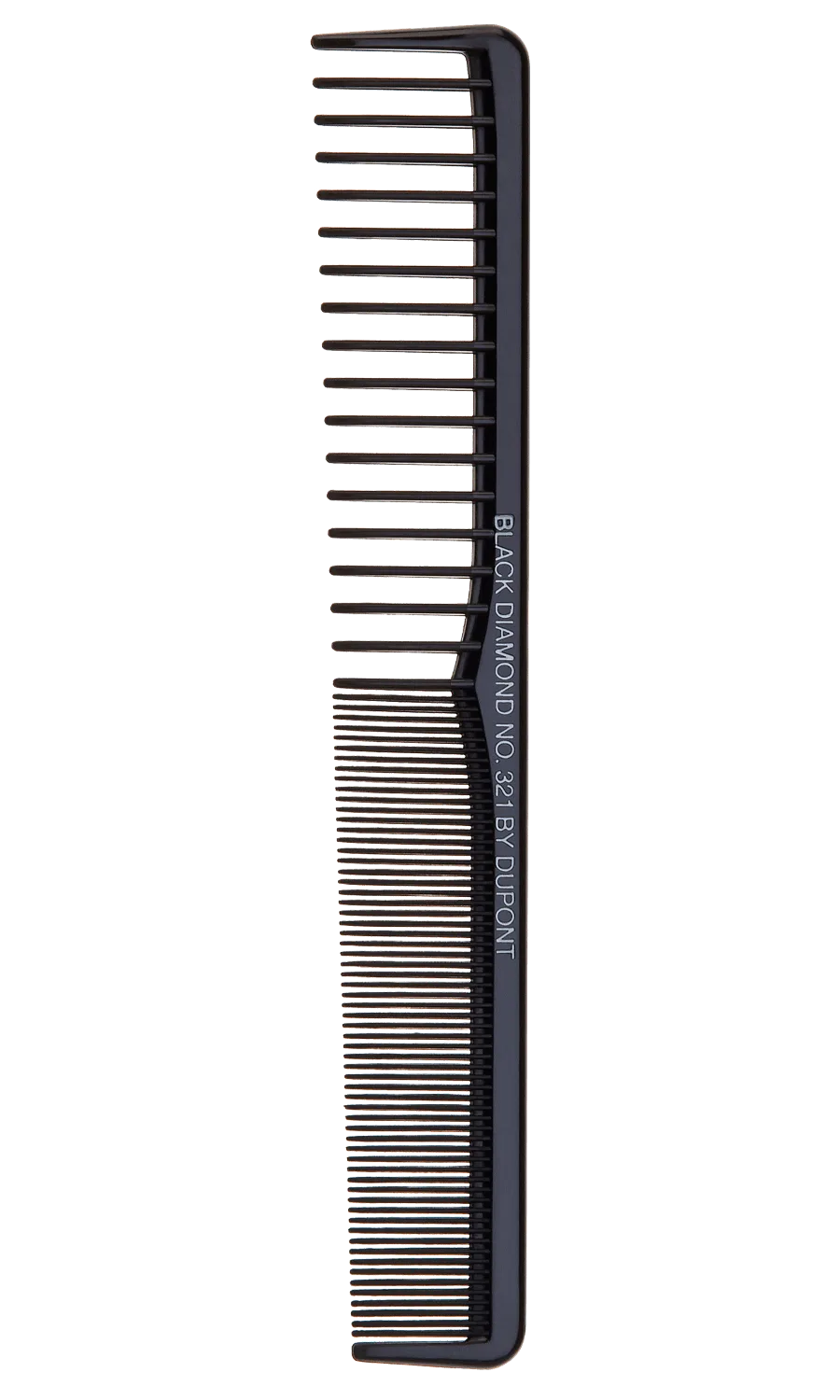
BD321 Vent Styler
-
BD321 Vent Styler: Super-smooth teeth are designed to minimise drag and friction. Less drag means you can move through a section without pulling, which helps when you're re-drying the same area for volume.
-
BD321 Vent Styler: Made in the UK and heat and chemical resistant. It can handle repeated blow-dry sessions and contact with styling products without the comb itself becoming the weak point.