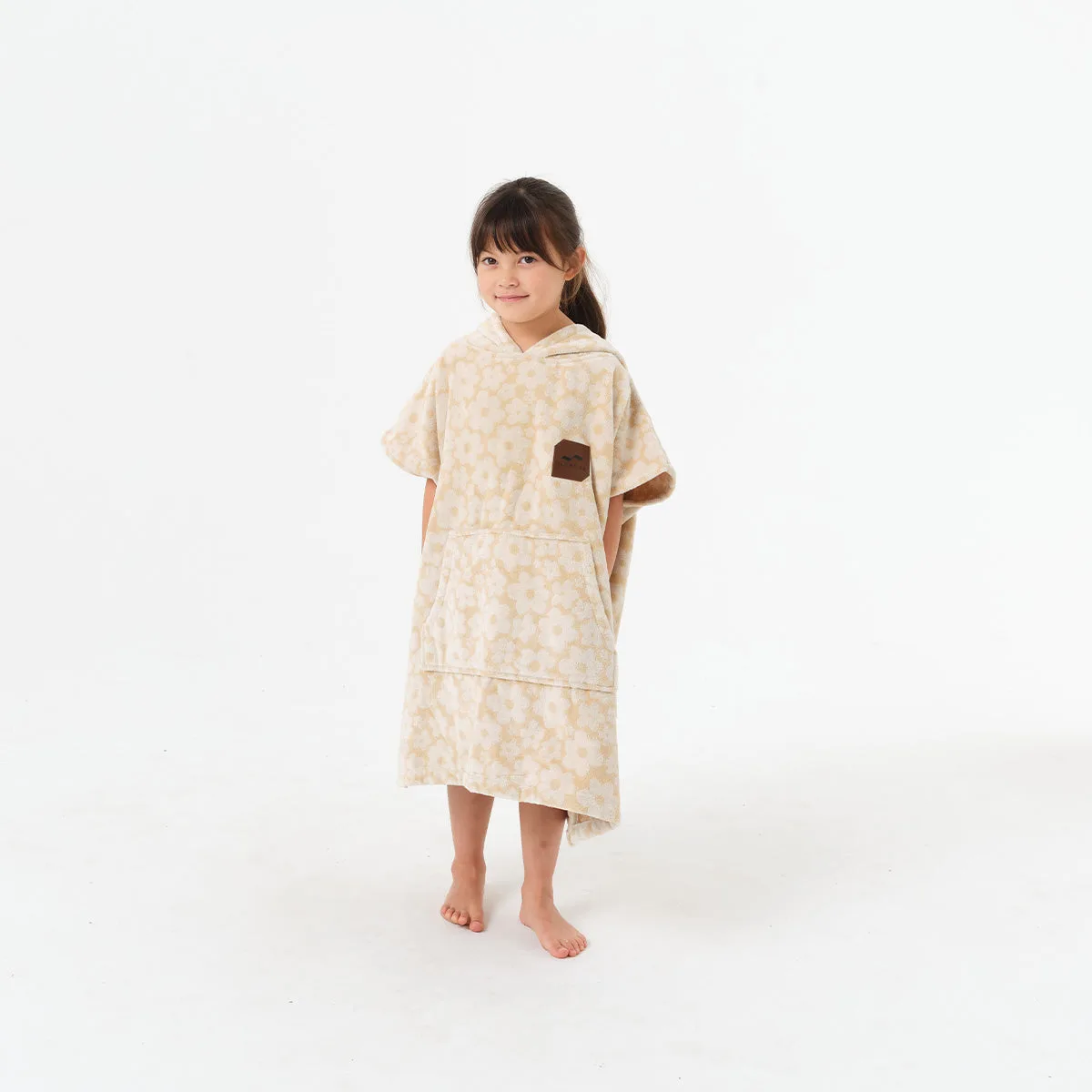
The short answer: the poncho is the microfiber towel, worn
If you are comparing a beach poncho with a microfiber kids towel, start with the material. The Quut Beach Poncho is made from quick-drying, sand-repellent microfiber, so the drying question is less about which fabric wins and more about how each format works on a beach day. A standard microfiber towel and this poncho share the same core advantage: they are designed to dry quickly and travel light.
The real difference is coverage and hands-free wear. A poncho keeps the towel on your child while they move, play, or change. A flat towel is more versatile for drying off but needs to be held or wrapped. Neither is universally better; the right choice depends on your child's age, the weather, and how much time you spend at the beach.
What the Quut Beach Poncho record confirms
-
Beach Poncho – Quick-Drying Microfiber Kids Towel: Made from quick-drying, sand-repellent microfiber. This is the same material advantage you would expect from a microfiber kids towel, so drying speed is comparable at the fabric level.
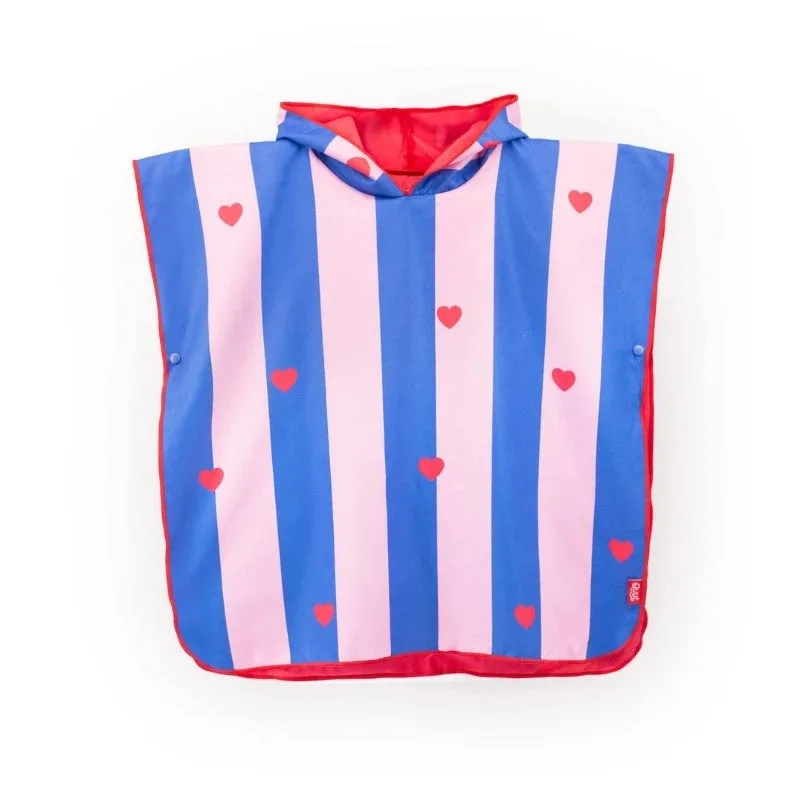
Beach Poncho – Quick-Drying Microfiber Kids Towel
-
Beach Poncho – Quick-Drying Microfiber Kids Towel: Lightweight and compact, travel-friendly. Packs small like a microfiber towel, so it fits the same beach bag space.
-
Beach Poncho – Quick-Drying Microfiber Kids Towel: Designed for children aged 1–6 years. The poncho format is sized for young children, which is the main audience for a kids beach poncho.
-
Beach Poncho – Quick-Drying Microfiber Kids Towel: Available in Banana Blue and Banana Pink. Color choice is the only variant, so you pick based on preference rather than performance.
Drying speed and sand: what actually differs
Both the poncho and a microfiber towel are quick-drying by material. The poncho's sand-repellent microfiber is a specific claim from the product record; a generic microfiber towel may or may not have the same sand-shedding finish. That is a point in the poncho's favor for beach use.
- Drying after swim: The poncho's quick-drying microfiber is confirmed. A microfiber towel is also quick-drying by nature, but the record does not specify a drying time for either, so we cannot say one dries faster in minutes.
- Sand repellence: The Quut Beach Poncho is explicitly sand-repellent. A standard microfiber towel may hold sand more readily unless it has a similar treatment.
- Coverage while changing: A poncho offers hands-free coverage for changing or walking; a flat towel requires holding and wrapping.
- Versatility: A microfiber towel can be used flat for drying, as a picnic mat, or for wiping down gear; a poncho is primarily worn.
When a microfiber kids towel still makes more sense
A flat microfiber towel is easier to use for drying a child thoroughly after a swim, especially if they are standing still. It also doubles as a surface to sit on or a quick wipe for sandy feet. If your child is outside the 1–6 age range, a standard towel may fit better. The poncho record only confirms sizing for ages 1–6, so older kids may find it small.
Also consider that the poncho is a wearable format. Some children dislike pulling a poncho over their head, especially when wet. A towel gives them more control.
When the Quut Beach Poncho is the better beach companion
For beach days with young children (1–6), the poncho's hands-free coverage and sand-repellent microfiber reduce the hassle of keeping a towel wrapped. It stays on during play and transitions, and it packs compactly. If your priority is keeping a child warm and clean after swimming with minimal fuss, the poncho is the more practical choice.
The poncho also solves the changing problem: it provides cover without needing to hold a towel. That is a genuine kids beach poncho benefit that a flat towel cannot match.
What the supplied information does not settle
The product record does not provide a specific drying time, fabric weight, or care instructions for the Quut Beach Poncho. It also does not compare directly to any other towel. So while we can say both are quick-drying microfiber, we cannot declare a winner in minutes. Your choice should hinge on format and fit rather than a drying race. For ages 1–6, the poncho's wearable design and sand repellence are the clearest advantages.