Start with the loom and materials you actually have
The Bead Weaving Loom Kit gives you a wood and metal loom, over 1,000 glass seed beads in multiple colors, a colorful variety of cords, and an illustrated instruction booklet. That combination is enough to begin weaving patterned bracelets, necklaces, and other small pieces without hunting for extra supplies.
Before you thread anything, check the illustrated booklet that comes with the kit. It is the most specific guide for this loom, and the steps below are a general beginner framework to help you understand the process—not a replacement for the manufacturer's instructions.
What the kit includes
-
Bead Weaving Loom Kit: Wood and metal loom, over 1000 glass seed beads in multiple colors, a colorful variety of cords, and an illustrated instruction booklet. Knowing the components helps you plan your first project and confirm you have the core materials before you start.
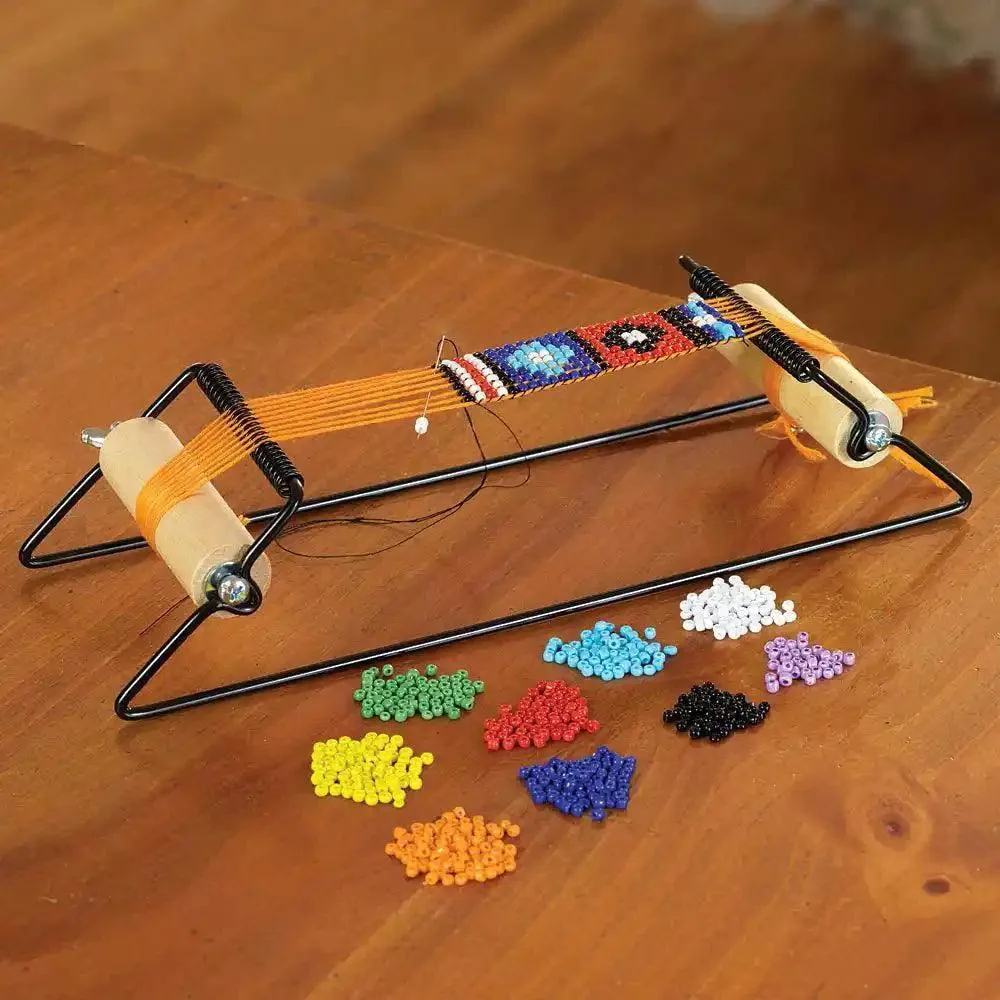
Bead Weaving Loom Kit
-
Bead Weaving Loom Kit: Recommended for ages 14+; includes small parts; adult supervision recommended. These age and safety notes matter when deciding whether the kit suits the person who will use it.
How to set up a bead loom for your first weave
These steps outline the typical warp-and-weave sequence for a simple loom. Use them alongside the included booklet, which will show the exact threading points for this wood and metal loom.
- 1. Choose your cord and count your warp threads: Select one cord color from the variety included. The number of warp threads determines the width of your bracelet or band, so decide on a width before you tie on.
- 2. Tie the warp cord to the loom: Secure one end of the cord to the loom frame, then run it back and forth across the loom to create evenly spaced parallel threads. Keep tension firm but not so tight that the frame bows.
- 3. Secure the far end: Tie off the warp at the opposite end of the loom. Give each thread a gentle pluck—they should sound similar, which suggests even tension.
- 4. Thread your weft and add the first row: Pass a second cord (the weft) through the warp, then slide beads onto the warp threads above it. The first row sets the pattern width, so check that the beads sit snugly side by side.
- 5. Weave the next rows: Pass the weft back through the warp above the bead row, add the next row of beads, and repeat. Alternate the direction of the weft each row to lock the beads in place.
Making a beaded bracelet on a loom: pattern choices for a first project
The kit invites you to weave different color beads together to create interesting patterns and designs. For a first bracelet, keep the pattern simple: choose two or three bead colors and repeat a short sequence across each row. This makes it easier to spot a mistake before it becomes a long undo.
If you are weaving with a younger beginner, the age guidance on the kit is 14+, so bead loom patterns for kids should be chosen with that recommendation in mind. The small parts and the need for adult supervision are part of the kit's supplied details, not an afterthought.
Checkpoints while you weave
- Tension check: If the warp threads sag, the beads will shift; if they are too tight, adding beads becomes difficult. Adjust before you weave another full row.
- Bead count per row: Count the beads in each row for the first several rows. A missed bead throws off the pattern and is easier to fix early.
- Weft direction: Alternate the direction of the weft each row. This is a common beginner habit that helps keep the weave stable.
Finishing and using your first piece
When the woven band reaches the length you want, tie off the weft and remove the piece from the loom. The kit's cords can be used to create a closure or to attach a clasp, though the supplied information does not specify a particular finishing method. Check the illustrated booklet for the closure style it recommends.
The Bead Weaving Loom Kit is presented as an easy-to-use jewelry maker for designing colorful, personalized gifts for friends and family. That makes it a reasonable choice for a first project you intend to give away—provided the recipient is old enough for a small-parts craft kit.