Quick answer
Read Bear Feels Sick together, then use the story as a springboard for simple conversations and play that help your toddler name feelings and practice empathy. Start with one or two short activities and follow your child's lead.
Why Bear Feels Sick works for toddler conversations
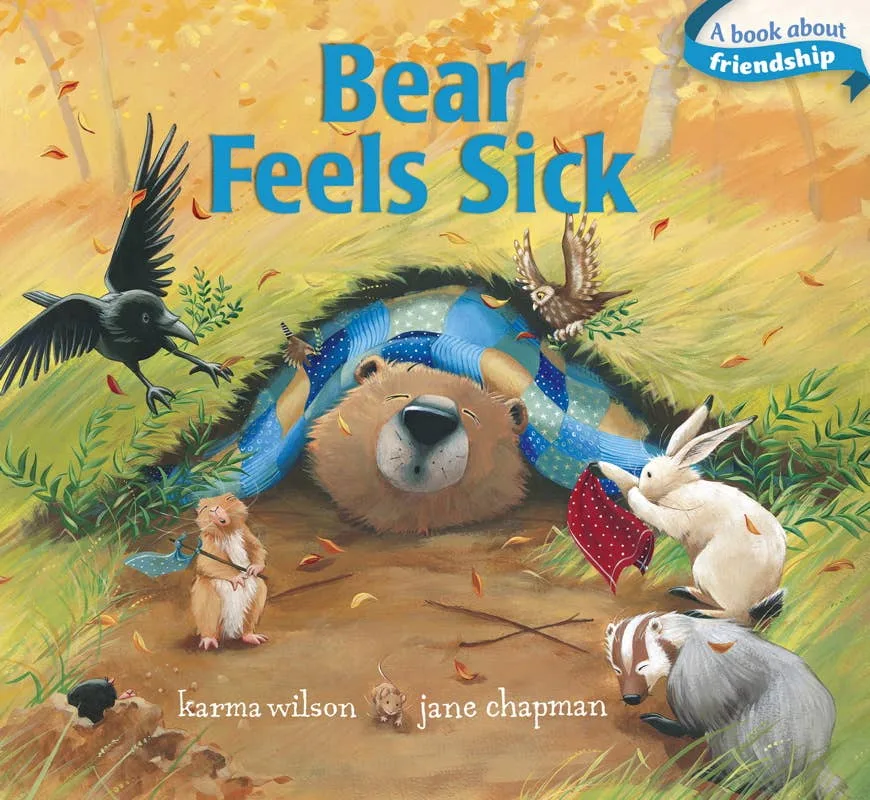
Bear Feels Sick presents illness through a gentle, relatable story. Bear is achy, sneezy, and wheezy, and his forest friends—Mole, Hare, Mouse, and others—rally to help him rest and recover. This narrative gives toddlers a concrete way to understand sickness and care without fear.
The board book format is sturdy for little hands, and the rhyming text and warm illustrations by Karma Wilson and Jane Chapman keep young children engaged. With over a million copies of Bear books sold, it's a trusted choice for introducing empathy.
When to use this book (and when to wait)
This book is ideal when your toddler is healthy but curious about sickness, or when a family member is ill and you need a gentle conversation starter. It's also useful before a doctor's visit or during cold and flu season.
If your child is currently sick and easily frightened, you might wait until they're feeling better—the story is gentle, but some toddlers may still feel anxious. Use your judgment and keep the tone reassuring.
How to talk about illness using Bear Feels Sick
- Read the story together: Sit together and read Bear Feels Sick aloud. Pause to point at the illustrations and let your toddler turn pages. Keep the pace slow and cozy. Checkpoint: Notice if your child seems worried; if so, reassure them that Bear's friends are helping him feel better.
- Name the feelings: After reading, ask simple questions like 'How does Bear feel?' or 'What do his friends do to help?' Help your toddler label emotions such as sad, tired, or happy. Common mistake: Avoid asking too many questions at once; one or two is enough for a toddler.
- Connect to your child's experience: Share a brief, positive story about a time your toddler was sick and someone helped them, or talk about a time they helped someone else. Keep it short and reassuring. Checkpoint: If your child brings up a scary memory, acknowledge it and emphasize how they recovered.
- Try a simple activity: Draw a picture of Bear with your toddler, or act out the story with stuffed animals. You can also practice 'gentle care' by pretending to give a toy a blanket or a drink. Common mistake: Don't force the activity; if your child loses interest, come back to it later.
- Revisit the book regularly: Keep Bear Feels Sick in your regular reading rotation. Repeated readings build familiarity and reinforce the message of empathy and care. Checkpoint: Use the book as a reference when your child encounters sickness in real life—'Remember how Bear's friends helped him?'
Product facts
-
Bear Feels Sick: Bear Feels Sick is a Classic Board Book by Karma Wilson and Jane Chapman, with over one million copies of Bear books sold. The board book format is durable for toddlers, and the popularity signals a well-loved story that many families trust.
Bear Feels Sick